Piercing the Silence – Day 17

Prompt – A time that the role you played in your family cracked or stopped fitting.

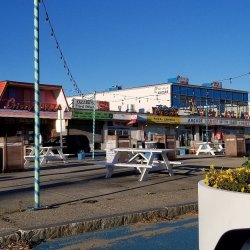
I never found Salisbury Beach to be subtle. It did not whisper. It announced itself with salt hanging heavy in the air, fried dough grease clinging to clothes, and the low mechanical groan of rides that had already lived several lifetimes past their prime. The boardwalk felt stitched together from weathered planks, cigarette butts, suntan lotion, and memory, each step resting on layers of use and neglect that no one bothered to hide.

The boardwalk was loud in a way that felt earned, and I understood that kind of noise, as I lived close to Massachusetts, rough and entirely unapologetic. Arcade bells rang like slot machines, triggered by quarters warmed in palms that had already lost far too many and still kept feeding the machines anyway. Everything about Salisbury felt temporary and permanent at the same time. Rust showed through peeling paint. The ancient ocean breathed steadily just beyond the chaos, indifferent to the noise, the prizes, and the bravado. And still, the boardwalk pulsed with life, a narrow strip of wood holding together sound, sugar, salt, and the stubborn insistence that summer might last just a little longer.

I watched teenagers strut in loose packs, performing indifference while carefully cataloging everything around them. Eyes slid past one another on purpose, yet nothing escaped notice: tank tops, cutoffs, and hair stiff with salt and AquaNet. Every glance carried calculation, and every laugh landed a little too loud, revealing confused confidence. Everyone was playing a role and trying on identities that only summer allowed. Some aimed for tough, others for untouchable, desired, dangerous, or simply older than they were. The boardwalk served as the stage, the crowd became the mirror, and becoming someone new felt possible as long as the lights stayed on and the night refused to end.

I went to Salisbury Beach in Buckie’s 1982 brown Ford LTD that smelled like vinyl, heat, and his mother’s lipstick stained Virginia Slims butts still sitting in the ashtray. I wanted to get my ear pierced on the boardwalk. I wanted proof that I could change something about myself, even if it was small and permanent at the same time. I knew my father would flip out. I carried that knowledge with me the whole ride, heavy but no longer enough to stop me. I was sixteen and exhausted from being quiet and observant. I was tired of shrinking. Tired of watching life happen from the edges. That hole made by the needle was not about jewelry. It was about choosing to be heard, choosing to be seen, and deciding that silence was no longer the safest version of who I could be.

When I got home, my father did exactly what I expected. He unloaded every fear he carried about himself into me as certainty. I would never find a job. I was unworthy. I was a failure, just like my brother. The words came fast and sharp. But something had shifted. The role I had played my whole life no longer fit the moment. Observation failed me. Silence offered no protection. Keeping the story suddenly felt like complicity.

So I spoke. Not carefully. Not strategically. I told him to go fuck himself.

That was the crack. The moment the observer stopped being useful. The moment the storyteller stepped into the story and risked becoming the problem instead of the witness. I did not become safer that night. I became louder. And once I crossed that line, there was no returning to the quiet child who believed that watching was enough.

January 2026
M T W T F S S
 1234
567891011
12131415161718
19202122232425
262728293031  

Storms Outside, Stories Inside – Day 3

Prompt – A childhood place that made you feel safe.

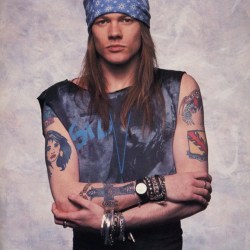
Axl Rose sang about a warm, safe place where, as a child, he would hide and pray for the thunder and the rain to quietly pass. When I sang those lyrics, I kept circling that place in my mind, like walking past a house at night and wondering who lives there and what stories are inside. Where was it? What did it look like? Did it smell like rain, or like dust, or like a home that has been carrying histories longer than I had ever experienced. Was there room for another heart, or was it meant to be a solitary shelter? I also wondered why thunder and rain carried fear at all. Guns N’ Roses never revealed any detail about the space, but they hinted at a world without violent streets, without addiction, without love that wounds, and without that deep, rattling question of whether I deserve to exist here. They hinted at a place where the mind loosens, the body unclenches, and the soul finally exhales. A place that leans close and whispers that I matter. Everyone needs a space like that, especially in the years when the world grows louder than any child can tolerate.

My safe place was never a single room or secret hiding spot. My refuge arrived as words. School became the doorway, books the shelter, and language the quiet country I could travel without asking permission. Inside sentences, storms that belonged to me lost their teeth. Inside stories, I could breathe. I could sit with characters who carried their own griefs, their own bewilderment, and still somehow moved forward. In those pages, a different kind of safety revealed itself, not the kind that erases the world, but the kind that steadies a body long enough to survive it.

Nine schools before graduation. New towns. New faces. New rules about belonging. Again and again. The desks I occupied became the closest thing to permanence. The classroom did not care about orders, moving trucks, or how many times a heart could be asked to reset. Bulletin boards held more order and consistency than the houses I called home. School libraries felt like cathedrals, quiet and alive, each book humming with an invitation: Sit. Listen. Stay awhile. On air bases that never quite turned into home, the constants were teachers taking attendance, paper waiting for stories, and books wide enough to hold a kid who needed a place to land.

Over time, I learned something that felt almost sacred. Safety is not always locked behind a door. Sometimes it lives inside a paragraph, inside a voice on the page telling the truth without apology. Sometimes it lives in the discipline of showing up, sitting down, and letting language hold what feels too heavy to carry alone.

That was my warm, safe place. Not made of walls. Not built with wood or brick. My shelter came stitched together with words, strong enough to weather the thunder, patient enough to wait for the rain to pass, and honest enough to remind me that I matter, even when the world forgets to say it out loud.

January 2026
M T W T F S S
 1234
567891011
12131415161718
19202122232425
262728293031  

East of Hoth – Day 2

Prompt – The first time you realized the world was bigger than your house.

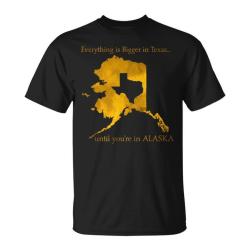
Alaska is a large state. So large, in fact, that it pumps Alaskan egos up enough that people have created shirts with the outline of Texas carved out of Alaska with some smart-ass one liner bannered across the chest. For folks from Texas, this lands about as good as a well-done ribeye and a warm beer at a Sunday tent revival in west Texas.

Jeremy had lived his entire life on Randolph Air Force Base outside San Antonio. Same streets. Same house. Same bedroom. His father never had orders to move. Not once. Then, suddenly, they were ripped from south-central Texas along the San Antonio River and dropped at Elmendorf Air Force Base, somewhere just east of Hoth.

All this kid talked about was how bad Alaska sucked and how amazing Texas was. It was exhausting because I had no understanding of the words he spoke. I had never lived anywhere long enough to grow brand loyalty, root for the home team, or care two shits about the dump we were calling home that year. But Jeremy loved Texas. Fiercely. It was his. It was his home. And he reminded everyone that his home was better than this frozen hellhole.

Until Jeremy, I had never stood next to someone who had actually belonged to a place. The military does not usually allow that. On paper, the reasons sound noble. Rotations create experience. Rotations build leaders. Rotations prevent complacency. New base. New mission. New commander. Pack the boxes. Sign the forms. Start over.

But that is the polished version.

Underneath, constant movement serves the system more than the families inside it. When people stay rooted too long, they grow networks. They build equity. They find their own worth outside the rank on their shoulders. Roots create options. Options create questions. And questions slow obedience. So the military keeps the ground shifting.

Families never quite become local. The church is temporary. The school is temporary. The friendships are temporary. Even the dog feels temporary because the next base might be overseas and not allow pets. Moving trains the family to quietly to pack fast, detach sooner, and care, but not too deeply.

War needs people who will go where they are told and fight who they are told without needing to reconcile that decision with a neighborhood they have loved for twenty years. Do what your told, when your told, how your told! When you belong to the uniform more than you belong to the street you live on, it becomes simpler to leave. Simpler to fight. Simpler to lose and keep moving. Movement builds loyalty upward, not outward.

That was the world I lived in. So normal I could not see it. Then came Jeremy.

He had blown out candles at the same kitchen table for his third birthday, his fifth birthday, and his ninth birthday. He knew which tree in the yard was his climbing tree. He had a house that remembered him. Standing beside him on top of a mountain of snow pushed into the middle of the cul-de-sac while he mourned Texas like a lost Tauntaun, I felt something crack open. It was at that moment I knew the world was bigger than my house. And some people actually got to keep theirs.

January 2026
M T W T F S S
 1234
567891011
12131415161718
19202122232425
262728293031