
Letters from the Snow Fort – Day 32

Prompt – Your First Best Friend

Growing up in the military taught me an early lesson about attachment. Relationships are a double-edged sword. They matter, and they will not last. Best friends form naturally as proximity and instability accelerate intimacy, and then those relationships are quietly released when proximity receives orders. I learned to care deeply and prepare to walk away, or watch someone else do it first…bond quickly and leave cleanly. It is a strange education, equal parts tenderness and self-protection.

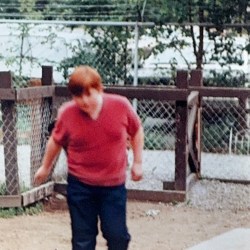
When we moved to Alaska at Elmendorf Air Force Base, the quiet was heavy. The stay at Temporary Living Quarters (TLQ) stretched on longer than it should have, with a tragic backstory for another post. I needed a friend in the way children do, urgently and without strategy. A kid named Jeremy answered that call once we finally moved into our “permanent” house.

Jeremy lived one street over. He was a military unicorn, the rare child who had never moved until Alaska. Born and raised on Randolph Air Force Base in Texas, his entire life had existed within a single zip code. I had never met anyone like that. He carried Texas with him like medieval primogeniture, a loud and unquestioned right I assumed was loyalty to home. Years later, living in Oklahoma, I learned it was simply Texas being Texas.

Jeremy and I did everything together. We were inseparable in the uncomplicated way only children can manage. We got into trouble. We kept secrets. He was the first person I ever told about the way I experienced spaces, how certain places released stored images and memories like film that did not belong to my own lived experiences. He did not flinch. He did not ask me to explain. He accepted it as information, not confession. That mattered more than he ever knew and I did not know myself what it meant for years.

Winters belonged to us. Every year the snowplows pushed massive walls of snow into the middle of our court, and every year we hollowed them out. Two stories high, easily. We built tunnels and rooms and entrances that collapsed if you breathed wrong. Looking back, it was reckless, but it felt like ownership. The world was dangerous, but it was ours.

Spring and the awakening of life brought a different kind of stupidity. One afternoon we strung fishing line between two light poles, hid in the bushes, and waited. A passing car caught the line, snapping the antenna clean off. We laughed until a large Black woman stepped out of the car and locked eyes with us. She chased us the full distance home. I still remember the panic and the way fear made me feel.

We did everything together until we did not.

Jeremy left for Texas. That was how it went. I wrote him every week for a long time. Letters folded carefully, addressed with hope. None ever came back. I eventually stopped writing, not because it hurt too much, but because that was the lesson. Letting go was part of the training.

About ten years ago, he found me on social media. He apologized immediately. He told me he had carried the guilt of not writing back all those years. Life had moved fast, and the pain had felt endless. He had been a kid and did not know what to do with it, especially when each letter reopened what he was trying to survive.

That is the part that stays with me now. Not the leaving, but the fact that the connection was real enough to be carried quietly for decades by both of us. Some friendships do not survive proximity or time. Some survive as memory, intact and unspoiled. My first best friend taught me that presence does not require permanence, and that sometimes love arrives later, softened, and finally named.

January 2026
M T W T F S S
 1234
567891011
12131415161718
19202122232425
262728293031  

Negative Space? – Day 29

Prompt – Refusing to Fit In

In an earlier post, I wrote about wanting to belong rather than fit in. That distinction took time to learn. In junior high, fitting in would have been enough. I would have accepted it without hesitation. I would have traded pieces of myself to fit in. At that age, fitting in felt like survival, and survival always felt like success.

By high school, something shifted. After years of practice and a near-perfected “fuck off all the way to the summit of fuck off mountain” routine, isolation no longer felt like punishment. It felt like control. What once registered as exclusion began to register as choice. The same distance that had hurt me earlier now protected me. The difference was not the space itself, but who claimed it.

After the absolute horror of my tenth-grade year in Lawton, Oklahoma, I arrived in Nashua, New Hampshire with no interest in entering the social hierarchy of high school. Lawton had taught me that visibility often came with a price tag I could not pay.

Coming from Oklahoma to New England carried its own gentle violences. More than once, I was asked if I lived in a teepee or wore a feathered headdress. Each question was delivered as entitled humor, which made refusing to answer them even more satisfying. I guess, I was supposed to absorb the insult and provide comic relief in return. Fuck off!

So I withdrew. I did not explain myself. I did not correct anyone. I did not soften the moment for their benefit. I simply refused to participate in the shenanigans at all…until Ms. Peregrine taught me to channel my rage.

Ms. Peregrine’s art class gave me a sanctioned place to not fit in. It was a room that did not require compliance. Rage had somewhere to go. Antisocial behavior was both subject and medium. Silence was not interpreted as failure but as process.

That room held others like me, though we would not have named it that way at the time. Tom, Carol, Zach, and Keith all refused the social hierarchy differently than me. None of us were trying to be alike in our rage. That was the point. Our work shared no aesthetic beyond defiance. The refusal showed up in charcoal, paint, warped proportions, and negative space. What we had in common was not style but stance.

Art allowed me to say things I never had in words. It did not demand neat conclusions or a unified thread that ran through the entire piece. It allowed contradiction. It allowed ugliness. It allowed intensity without apology. For the first time, not fitting in did not feel like absence. It felt like presence, contained and visible. This was the beginning of belonging.

Looking back, I can see the quiet irony. What I thought was withdrawal was actually alignment. Refusal was not the end of connection. It was the beginning of something more honest. Art did not make me belong, but it gave me a place to stand without erasing myself. Sometimes that is enough. Sometimes that is everything.