Piercing the Silence – Day 17

Prompt – A time that the role you played in your family cracked or stopped fitting.

I never found Salisbury Beach to be subtle. It did not whisper. It announced itself with salt hanging heavy in the air, fried dough grease clinging to clothes, and the low mechanical groan of rides that had already lived several lifetimes past their prime. The boardwalk felt stitched together from weathered planks, cigarette butts, suntan lotion, and memory, each step resting on layers of use and neglect that no one bothered to hide.

The boardwalk was loud in a way that felt earned, and I understood that kind of noise, as I lived close to Massachusetts, rough and entirely unapologetic. Arcade bells rang like slot machines, triggered by quarters warmed in palms that had already lost far too many and still kept feeding the machines anyway. Everything about Salisbury felt temporary and permanent at the same time. Rust showed through peeling paint. The ancient ocean breathed steadily just beyond the chaos, indifferent to the noise, the prizes, and the bravado. And still, the boardwalk pulsed with life, a narrow strip of wood holding together sound, sugar, salt, and the stubborn insistence that summer might last just a little longer.

I watched teenagers strut in loose packs, performing indifference while carefully cataloging everything around them. Eyes slid past one another on purpose, yet nothing escaped notice: tank tops, cutoffs, and hair stiff with salt and AquaNet. Every glance carried calculation, and every laugh landed a little too loud, revealing confused confidence. Everyone was playing a role and trying on identities that only summer allowed. Some aimed for tough, others for untouchable, desired, dangerous, or simply older than they were. The boardwalk served as the stage, the crowd became the mirror, and becoming someone new felt possible as long as the lights stayed on and the night refused to end.

I went to Salisbury Beach in Buckie’s 1982 brown Ford LTD that smelled like vinyl, heat, and his mother’s lipstick stained Virginia Slims butts still sitting in the ashtray. I wanted to get my ear pierced on the boardwalk. I wanted proof that I could change something about myself, even if it was small and permanent at the same time. I knew my father would flip out. I carried that knowledge with me the whole ride, heavy but no longer enough to stop me. I was sixteen and exhausted from being quiet and observant. I was tired of shrinking. Tired of watching life happen from the edges. That hole made by the needle was not about jewelry. It was about choosing to be heard, choosing to be seen, and deciding that silence was no longer the safest version of who I could be.

When I got home, my father did exactly what I expected. He unloaded every fear he carried about himself into me as certainty. I would never find a job. I was unworthy. I was a failure, just like my brother. The words came fast and sharp. But something had shifted. The role I had played my whole life no longer fit the moment. Observation failed me. Silence offered no protection. Keeping the story suddenly felt like complicity.

So I spoke. Not carefully. Not strategically. I told him to go fuck himself.

That was the crack. The moment the observer stopped being useful. The moment the storyteller stepped into the story and risked becoming the problem instead of the witness. I did not become safer that night. I became louder. And once I crossed that line, there was no returning to the quiet child who believed that watching was enough.

January 2026
M T W T F S S
 1234
567891011
12131415161718
19202122232425
262728293031  

Finders Keepers – Day 16

Prompt – What role did you play in your family?

I was the baby in my family. My brother and sister were older than me by several years, old enough that by the time I reached preteen age, they were already gone. My brother went into the military. My sister married into the military. Apparently, the military was the family business. The house grew quieter. The orbit shifted.

As the baby, I watched. Silence felt safe. Observation felt necessary. While others reacted, I absorbed. While the room moved, I stayed still long enough to understand what was actually happening. Being the youngest meant I was present without authority. Decisions were made above my pay grade and explanations were optional at best. I learned to read tone before words and posture before intention. I noticed how laughter sometimes arrived too quickly, how stories and jokes could function like smoke, how playfulness could smooth over things no one wanted to face directly. I understood the role of distraction even when I refused to perform it. Instead of entertaining, I studied the moment the room needed to be entertained.

I became the observer because no one asked me to be anything else. I was small enough to disappear and quiet enough to be underestimated. That invisibility became access. I watched tension build and release. I watched who needed to be soothed and who needed to stay unaware. I noticed who carried the emotional weight and who benefited from keeping it unnamed. I learned that some roles exist to protect the system rather than the people inside it. Those patterns mattered to me even when naming them made others uncomfortable.

Somewhere in all that watching, I became the storyteller. Not the loud one. Not the funny one. Just the keeper of the stories. I held the version of events that existed before they were softened. I remembered what came before the joke and what never made it into the retelling. I learned that stories shift depending on who is listening and that truth is often traded for comfort without anyone admitting the exchange.

The storyteller role was lonely. It meant holding meaning without a place to set it down. It meant knowing things too early or too clearly. It meant understanding that telling the truth outright could destabilize a balance everyone depended on, even if that balance was fragile and false. So I learned patience. I learned restraint. I learned to let stories mature until they could be told without blowing the room apart. I learned that timing matters as much as honesty.

I did not soothe my family through story. I soothed myself by understanding the stories. I organized chaos into narrative, or at least I tried to. I tracked cause and effect. I stitched moments together into something coherent so I could survive them. That instinct followed me into adulthood, into classrooms, into leadership, into writing. I still sit quietly at first. I still watch how people move when they think no one is paying attention. I still tell stories not to entertain, but to reveal.

January 2026
M T W T F S S
 1234
567891011
12131415161718
19202122232425
262728293031  

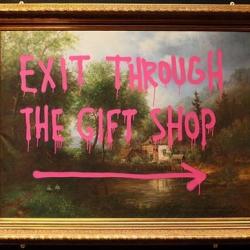
Exit Through the Gift Shop – Day 13

Prompt – What did conflict look like in your home?

In the museum that was my family, exhibits were arranged with great care, but no one ever explained how to walk through the space and appreciate it. There were rules, but they were invisible. There were expectations, but they were never spoken aloud. Reverence was required, though no one ever showed what reverence looked like. Conflict rose and settled, mostly silent, like high blood pressure. It was present and deadly.

I was expected to know how to move, how to speak, how to respond, without ever being taught. Love was supposed to be understood. Respect was supposed to be automatic. No questions. If something felt off, it was never the environment. It was me. If someone felt unseen, it became my responsibility to fix it, even when I did not know what was broken.

There was very little modeling and no learning together. There was quiet judgment when the performance did not match the script that existed inside someone else’s imagination. So I studied faces and read spaces the way visitors study paintings. I read silence the way curators study cracks in marble. I anticipated needs that were never spoken. Over time, I confused vigilance with care. I confused fear with respect. I confused self-erasure with love.

Having my own family, I know that healthy families teach. They model love for each other. They meet you where you are. They invite you into the room instead of scolding you for not knowing the path. They offer maps. They offer language. They practice connection in the open, not behind glass. They make mistakes out loud. They apologize out loud. They are noisy. They are alive.

I am still unlearning the rules of the gallery. I am still learning that I do not have to bow to every display or stop at every exhibit. I am allowed to ask questions. I am allowed to exist in the room without shrinking to fit someone else’s idea of beauty. I am allowed to walk past what harms me. Little by little, I choose different architecture for my own family. There are far fewer exhibits and a hell of a lot more living. I teach my children that conflict is not something to fear. It is something we move through together. I make space for mistakes. I say what I feel and let them say what they feel. We practice beginning again. We learn in the open.

Sometimes the old museum haunts me with its polished floors and quiet shame. Sometimes I still find myself whispering in rooms that no longer require my silence. But I notice it now. I pause and I breathe. I set down the old way.

As an adult, I am beginning to believe something I could not have imagined as a child: love is not earned through performance. Love is not proven through suffering. Love grows in rooms where people are allowed to exist as they are.

The museum will always be part of my story, but I am learning how to walk out of the gallery without carrying the blame as a souvenir.

January 2026
M T W T F S S
 1234
567891011
12131415161718
19202122232425
262728293031