Civilian Rules – Day 40

Prompt: A time a friend betrayed you

As a child, I was raised inside a system that offered basic training on how to exist with people that have an expiration date. Military bases were full of kids like me, changing addresses like refugees with pink slips. We learned how to attach quickly and detach cleanly. Friendships were intense, immediate, and understood to be temporary. When orders came, and they always came, we did not fight the ending. We practiced kindness in the present and disappearance in the future. It was not cruelty. It was survival. We handled each other gently because most of us already knew what heavy felt like at home.

I was hurt by friends during those years, but the hurt was diffused and governed by an agreed-upon set of rules. It belonged to circumstance more than intention. No one was really betraying anyone. We were all obeying the same unwritten code. Stay light, do not burden each other, and leave cleanly. This code failed me the first year my family became civilian.

Lawton, Oklahoma broke something open that I did not yet have language or experience for. My father could not find work. My mother worked in another state. Home still felt temporary, but without the structure that once explained why everything was temporary. At MacArthur High School, the rules I knew did not apply. Belonging was transactional and visibility was dangerous.

I was bullied for opting out of football, for choosing books and observation instead of collision. That alone would have been survivable. What I was not prepared for was betrayal disguised as friendship.

Tracy was my first real civilian friend. She listened. She asked questions. She made space for the softer parts of me that had never needed armor before. I trusted her because trust had always been safe inside temporary worlds. I told her my fears. I told her my uncertainties. I told her where I felt small.

She took those truths and passed them along to the very people I spoke about. She did not confront me. She did not warn me. She turned my vulnerability into currency. When the laughter came back to me secondhand, something inside me collapsed. This was not the clean ending I had been trained for. This was exposure. This was humiliation. This was betrayal with witnesses.

For a long time, I believed the lesson was that openness was a mistake. I learned how to seal myself. I learned how to withhold. Betrayal does not only break trust in another person. It fractures trust in the self who chose to believe. I was not only angry at Tracy. I was ashamed of my own hope.

It took years to understand that what happened in Lawton was not proof that I was naïve or weak. It was proof that I had crossed from a world governed by impermanence into one governed by performance. The hope arrived later, quietly. I did not lose my capacity to trust. I learned how to place it with care. I still believe in connection. I just no longer hand it over to civilians.

February 2026
M T W T F S S
 1
2345678
9101112131415
16171819202122
232425262728  

Decimal Down in Front – Day 39

Prompt – A time you betrayed or hurt a friend.

I went off to Oklahoma Christian University in the fall of 1992. At the time, I did not yet know how to name what I was running from, only that leaving felt necessary, even to a shitstorm like OC. My first year unraveled quickly. I drank too much, stayed numb on purpose, and called that suspension “figuring things out.” When the year ended, my GPA arrived like a small, undeniable truth…a decimal lead the way, as if even the numbers were hesitant to claim me other than the zero.

So, I went home for the summer and worked at Pepsi, driving a forklift.  They were long days that left my body tired and my thoughts loose. My house felt quieter than I remembered, as though something had already begun to close. I did not linger there. Most nights, I met old high school friends after work. We went to Applebee’s because no one questioned our age. We drank and talked and tried to decide who we were becoming by comparing ourselves to who we had already been.

Steve appeared in those quiet spaces at my house, a friend from before I had figured out how to be me. Back when I still rode the bus to school! Steve had learning disabilities and parents who seemed permanently absent in all the ways that count. He was kind, earnest, and always a little behind the moment, though never behind in heart. When he asked what I was doing, I told him about college in Oklahoma, about going back in the fall, and about my plans to figure things out.

Later that summer, he told me he had applied to Oklahoma Christian University and had been accepted. He said it with a kind of hopeful certainty, as though being near to my opportunity might offer him a door of his own. I remember feeling surprised, then unsettled, then quietly embarrassed by that reaction. I told myself a story about standards and readiness and merit, though what I was really protecting was distance.

When fall came, we were on the same campus. Steve arrived unprepared for the weight of it. The rules, the expectations, the rituals of belief that asked for performance more than understanding. Chapel, bible classes, the careful obedience that hung in the air all about. I recognized his confusion because it mirrored my own when I first arrived. I understood his shock because I had already absorbed it once. And still, I stepped back.

I told myself I was busy. I told myself he needed to figure things out on his own. I told myself I was trying to survive. All of those things were partly true. None of them were generous. I spoke to him when we crossed paths. I was kind enough to avoid guilt. But I did not offer help. I did not walk beside him. I did not lend him language when he had none.

The truth is simpler and hell of a lot more harsh. Steve reminded me of who I had been. Staying close to him felt like risking my fragile reinvention. So I chose distance. I chose silence. I chose myself. That is how I betrayed him. Not with cruelty, but with absence.

February 2026
M T W T F S S
 1
2345678
9101112131415
16171819202122
232425262728  

Borrowed Fire- Day 37

Prompt – A friend who pulled you toward trouble.

I have never had a true friend who pulled me toward trouble, but I did have a lot of trouble that pulled me toward people I called friends. In Plattsburgh, there was a kid who was more of a friend of a friend, or a friend of the group, a kid that drifted in and out of our orbit when he wanted. His name was Mike. He was short, quick to anger, and always looking for an edge to push. His dad was frequently gone on temporary assignments, and I never knew what his father’s job actually was. I only knew his absence hung in the air and created a lot of strain for Mike.

Mike’s height may have been part of his meanness, but the larger truth was that he lived inside a story that felt humiliating and painfully public. Even at thirteen, my group of friends knew what was happening at his house. Mike’s mother was finding her physical needs elsewhere when her husband was gone, and the worst part was not only that we knew, but that Mike knew we knew. That kind of knowledge does not sit quietly in a kid’s body. It turns into heat and rage. It turns into dare after dare. It turns into a need to control the narrative by burning it all down first.

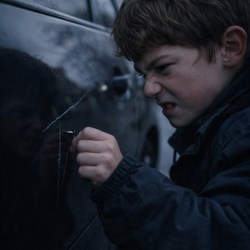
Mike taught us all how to smoke. He taught us how to drink. We objectified women in magazines together in the South Side Trails. We were mean together. We keyed cars, put sugar in gas tanks, made prank calls, snuck into movies on base, shoplifted, and treated other people’s property like it was a joke we deserved to tell. When Mike was around, the meanness had a sharpness to it, like we were proving something. When he was not around, some of the same dumb choices still happened, but the cruelty did not have the same appetite. Mike did not just bring trouble with him. He brought a mood. He made all of us meaner than we were on our own.

The father situation was Mike’s issue, but it was also part of the wider tone on base. Plenty of fathers carried their own damage, and plenty of homes ran on alcohol, abuse, pornography, and the kind of quiet debauchery that never stayed as quiet as adults thought it did. Mike’s particular version of it was personal and specific. He believed someone else’s father was sleeping with his mother, and he believed everyone knew, and he lived inside that humiliation like it was a locked room he could not escape. So he pulled us down with him, and we went because we were young and because we were bored. We did not understand the difference between loyalty and participation. We were far too young to know how to pull someone up, and we were not yet brave enough to refuse the gravity.

Years later, I can see the shape of it more clearly. Trouble was never the point. Trouble was the language. Mike was trying to say, I am hurting, and I cannot stand being the only one who has to carry it. That does not excuse what we did, and it does not clean it up into something noble, but it does make the story more human.

What I hold now is this. I cannot go back and un-key the cars or un-make the cruelty, but I can tell the truth about how it happened. I can name the moment trouble stopped being thrilling and started being a warning. I can also be grateful that something in me eventually reached for a different kind of friend. Hope, I have learned, is not the denial of what I did or did not do. Hope is the decision to grow past it, and to recognize that pulling someone up sometimes starts with stepping out of the dark first.

February 2026
M T W T F S S
 1
2345678
9101112131415
16171819202122
232425262728