
Terms and Conditions – Day 35

Prompt – A falling-out that still sting.

Friends come and go. That has always been the deal. It was the quiet contract of the military, the rotating cast of names and addresses that followed me from place to place. College became the same kind of temporary, only dressed up in credit hours, retention rates, and being “mature” about it all. People arrived, people disappeared, and then people became a story told in passing.

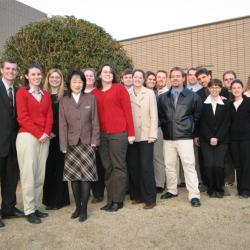
After graduation, shortly following a quick stint as an accountant, Kari and I moved to Japan for a teaching job that came with a built-in expiration date. The contracts were one year, which allowed for a tidy little ending. The Japanese school system also had a way of enforcing impermanence. Teachers were moved around periodically, as though the goal was to prevent deep bonds from forming. It felt almost religious, like attachment itself was a rule that was not supposed to be broken. I broke it anyway.

In Japan, I was an expat with a small group of young, inexperienced teachers. We were all hungry for belonging, and we were far enough from home that the hunger got louder. We did life together in full. We carried the hard parts and the easy parts, and we laughed at the absurd parts that only make sense when daily life is built in a language that still feels borrowed. We became tight, not in a casual way, but in the way people do when they become each other’s lifeline in a foreign country.

It was beautiful. It was real. It was the kind of closeness that made ordinary days feel like a story worth keeping.

When we returned home, we tried to bring the bond with us. We talked about forming a team of four couples to go back to work as missionaries – whatever the fuck that meant! We met a few times to dream and map out a future that felt like a second chance at that Japan closeness. I let myself believe it could happen. I let myself imagine a circle that would hold.

There was a lunch get-together. Kari and I were not invited. Later, someone lied about it with the kind of polite, church-friendly dishonesty that is supposed to keep the peace while it quietly kills the truth. Eventually, one person came clean, and in that moment I remembered why I used to prefer transient relationships.

I had broken the rules. I had allowed myself to get close. I had allowed myself to love people, not as passing characters, but as anchors. I had trusted the story. I had trusted the holy language people use when they want to make ordinary friendship feel sanctioned and permanent.

Love hurts when it ends. This one stung because it was real. It was tied to some of the most beautiful years of my life, and it was wrapped in religion like a ribbon that also functioned as a blindfold. The pain was not the lunch. The pain was the realization that the bond had terms and conditions, and I had not been told what they were until I failed them. Even now, the sting still registers because the years were real. Japan was real. The laughter was real. The belonging was real. A single lunch betrayal cannot erase that, even if it tried.

Some friendships are seasonal. Some are sacred. Some are both, right up until they are not. I can grieve what ended without pretending it never mattered. I can hold the good years in one hand and the betrayal in the other and finally stop forcing them to cancel each other out.

February 2026
M T W T F S S
 1
2345678
9101112131415
16171819202122
232425262728  

Detours and Dead Letters – Day 34

Prompt – How the Friendship Changed

This is part three of a three prompt series. The first post is here and the second post is here.

Jeremy and I did not explode. There was no betrayal, no raised voices, no dramatic final scene with the kind of closure often found in movies with an amazing music and video montage. The friendship changed the way military friendships usually change. One day, the routine is intact. The next day, a family is loading boxes, a moving truck is idling, and the neighborhood has a new vacancy. One day we were hanging out during recess. The next day, he was going back to Texas.

In my mind, it felt like leaving. For Jeremy, it was a homecoming. He acted like the universe was correcting a mistake. He was a Texan through and through. He loved the heat and was ready to say goodbye to the winters. Alaska was, at best, an interruption for him…a detour. Texas was a return. I understood that much, even at that age. Still, understanding did not make his leaving hurt less.

We both said the things kids say when adults are listening. We promised to keep in touch. We said we would write. We said we would call when we could. And of course, we said we would not forget. Those sentiments were offered like bandages, thin and polite, as if language could seal up the gaping wound not even fully realized yet.

I upheld my part of the promise, writing him every week. Jeremy did not. I remember the ritual of writing him more than what I wrote him. I used the same pad of paper every time. I tried to make our ordinary days sound interesting, worth staying connected to. I narrated the small things because small things were what connected us. I wrote about a new snow fort, “our” new teacher, and the new kid who moved into his old house. I folded the letter carefully, far too small, slid it into the envelope, wrote his address, and then I waited.

He never responded. Not one time. At first, I worked hard to excuse his silence. I invented reasons for the friendship to remain intact, even if only on my side of the map. Maybe the mail got lost. Maybe his mother forgot to buy stamps. Maybe he wrote back and it disappeared into some military black hole where all the missing things go. I was loyal, and I was young enough to believe that if I kept showing up, the world would meet me halfway.

Then, slowly, I realized a letter was not coming. I was writing to myself. I was crushed for a long time, and I never talked about it. It did not look like grief adults would recognize. It looked like me becoming even more careful and small.

I did not make another best friend until two moves later, at Plattsburgh Air Force Base. Between Jeremy and Plattsburgh, I learned a lesson that felt less like wisdom and more like a bruise that never healed.

People say they will write. People say they will call. People say whatever they need to say in the last hour before goodbye because the truth is too sharp to hold in your mouth. When people are not close to one another anymore, even if they once were, shit changes. Distance does not just stretch a friendship. It edits it. It removes the ordinary moments that keep love warm and alive. It replaces them with intention, and intention is harder to sustain than people admit because it requires work.

Looking back, I can see something tender under the damage. I kept writing because connection mattered to me. I believed in continuity, even when my life trained me in detours. That belief did not save the friendship, but it revealed something about me. I was the kind of kid who tried to build a bridge. I was the kind of kid who stayed, even when someone else did not.

And maybe that is the quiet hope inside the story. The friendship changed, and it hurt. It left a mark. But it also showed me, early, that I was capable of devotion, of showing up, of loving in a way that was not performative. The loss taught me caution, yes. But the writing taught me something else too. It taught me that my instinct, even then, was to reach out, to connect, to make meaning, so I could stay human in a life designed around leaving.

February 2026
M T W T F S S
 1
2345678
9101112131415
16171819202122
232425262728  

One Street Over – Day 33

Prompt – How did the friendship start?

For those who want the beginning context for today’s prompt, the first post about Jeremy can be found here.

My first real best friend was Jeremy. He was a Texan through and through, transplanted abruptly to Alaska. The shock showed on him, as this was his first military PCS ever. I arrived from California, where my family left March Air Force Base because of an incident I have only ever heard in fragments. The whole truth never mattered as we would have eventually left anyway. I had just finished second grade and knew almost nothing except that something had ended and something else had begun without my consent.

The drive up the ALCAN highway was relentless. When my family finally reached Elmendorf Air Force Base, there was no housing assignment waiting for us. We were placed in temporary living quarters for far too long. After weeks on the road with my family, traveling a half-paved road a thousand miles long in a U-Haul, the TLQ did not feel like home. The place felt heavy in ways I had never experienced before. And it got weird.

Colors in the TLQ would thin and deepen without warning, where color should have remained constant. Corners stayed cool while the center of rooms held warmth. The hallway carried a faint blue cast that no one else seemed to notice. Temperature changes brought memories with them. Grief lingered as anger did too. There were people there as well, not figures meant to frighten, but impressions. More like presences. I did not see them with my eyes alone. I felt them with my body. That kind of noticing is exhausting, especially for a child. I needed someone to help me carry it.

Jeremy showed up.

Beginnings and endings rarely announce themselves. They arrive disguised as coincidence or as a kid who happens to live one street over. At the time, it felt like luck. Looking back, it is clear that something essential was taking shape, something the universe wanted me to notice.

He had never moved before. Not once. His entire life had existed in one state until it did not. He was burdened with the newness of goodbyes and hellos. I was practiced in leaving. Somehow that made us fit, as we each had something to carry for the other.

That friendship did not begin because we were alike or because we chose one another with intention. It began because two children were standing inside unfamiliar spaces, each holding more than was reasonable for their age. Something in him recognized something in me, and the recognition was mutual.

I understand now that this is often how early friendships form. Not around joy, but around need. Around the quiet relief of not being alone with what is not yet understood. Long before we know how to tell our stories, we sense who might be able to hear them. That was the beginning. Not a single moment, but a shared breath, an inhale and exhale taken together, a small and steady proof that even in unfamiliar places, connection finds a way to form.

February 2026
M T W T F S S
 1
2345678
9101112131415
16171819202122
232425262728  

The Accounting of the Siblings – Day 30 & 31

Prompt (2) – Being chosen. Being ignored.

Home of the Highlanders, MacArthur High School was the clearest definition of an oxymoron I had encountered up to that point in my life. Highlanders in the Great Plains with a motto of “People First, Excellence Always” in a transient town better known for pawn shops and titty bars…Jesus Almighty! The contradiction was not subtle in the least.

When I arrived, I was immediately chosen. I was chosen not for anything I had done or earned, but for the size of my body. I am certain the coach believed he was offering affirmation, maybe even opportunity. He likely told himself a story about coaching me up and bringing discipline that would later open doors. What he actually did was place around my neck a weight that lasted the entire year, and much longer if I am honest. His choice was not about me. It was a projection of how I could be useful to him and his team. Utility masquerading as care has a particular heaviness to it. It presses down slowly on a proud chest and insists on gratitude while doing so.

I would have preferred to be ignored rather than bullied for an entire year for refusing his offer. That refusal marked me. It made me a problem instead of a resource in that space. Being ignored, however, also carries its own kind of damage. It teaches a collective disappearance as a survival strategy. It rewards silence and compliance and requires no accounting.

Being chosen and being ignored feel like opposites on paper, but they share the same origin story. They are siblings of a parental unit with an “idea of parental compassion is just, you know, wacko!” Both being ignored or chosen single a person out. Both carry judgment. Both demand something without ever asking who someone is.

In school, I was chosen in ways I never requested, and I was ignored in ways I did not deserve. From lessons I learned at home, I tried to stay small and as invisible as possible, yet chosen for a task I was not prepared to bear. Staying small felt safer than being evaluated. Invisibility felt preferable to becoming a symbol or a cautionary tale. I wanted neither attention nor erasure. That tension followed me for years. Over time, that same tension gave me eyes to see it later. It taught me how to notice patterns and to recognize when power was pretending to be neutral. It also pushed me to try to name what I was seeing, first quietly, then more openly, even when doing so came at a cost.

The cult classic movie The Breakfast Club offers one of the clearest examples of these siblings with a shared back story that I know. It is a film I used in class for years as an educator, not because it is perfect, but because it is honest about hierarchy and the siblings. John Bender, labeled the “criminal,” delivers a line to the “princess,” Claire, that sounds cheeky but is filled with lived experience. He says, “You could not ignore me if you tried, sweets.” It lands as swagger, but the truth inside it is heavy. John Bender knows exactly where he stands. The popular kids can pretend he does not matter, but they cannot erase him from the room. He takes up space in that place because disappearing has already been assigned to him elsewhere.

Bender is not chosen. He is tolerated by those who are there. He is watched. He is remembered only as a problem. The popular kids do not forget him because he is insignificant. Forgetting him allows them to keep their version of themselves intact. Remembering him would require reckoning. I recognized that math immediately! I learned early how to make myself unignorable without ever being chosen. There is a difference. Being seen is not the same as being held. Being loud is not the same as being safe. Like Bender, I understood that if I did not exert some control over my visibility, someone else would decide whether I vanished or became a spectacle.

Bender’s anger is never random. It is precise. It is armor. It is a refusal to disappear quietly for people who benefit from not having to see him. Later in the movie, he says what has been true all along. “What do you care what I think, anyway? I do not even count. I could disappear forever and it would not make any difference. I may as well not even exist at this school.” That is not defiance. It is once again accounting. He understands the math of the place better than anyone else in the room.

Claire believes she counts so much that her absence would register as a crisis. However, John’s absence would register as relief. He is visible enough to be punished and invisible enough to be disposable. That is the difference he names when he turns on her. It is not cruelty. It is clarity. He is not asking to be liked. He is asking to be recognized as existing and to be seen as worthy.

That scene stayed with me because I could relate to each of the siblings leaving the same residue.

What I learned much later is that choosing myself had to come before anyone else did. Not loudly. Not as performance. Not as rebuttal. Just steadily and quietly. Choosing myself meant staying present without auditioning. It meant letting some rooms misunderstand me, letting some people leave, and sometimes me leaving the room. It meant trusting that I was worthy. There is a particular peace that comes with no longer arguing with the ledger. I no longer need to prove that I count. I do not need to disappear to survive or accept a role that requires self-erasure to belong. That choice does not erase the past, but it does loosen the siblings grip on me. The brothers can continue their work elsewhere. I have already chosen a different inheritance.

February 2026
M T W T F S S
 1
2345678
9101112131415
16171819202122
232425262728  

Adventures in Moving: ALCAN Edition – Day 15

Prompt – A family story that shaped how you saw yourself.

Family stories are told around the table to remind us who we have been and how we survived becoming who we are. They keep history alive, not in textbooks or archives, but in voices that know where to pause and when to laugh. Sometimes these stories shape how we see ourselves. Other times, they simply allow us to recognize ourselves inside someone else’s memory, and how we are seen outside of ourselves. In that recognition, connection happens. Not because our lives matched, but because the feeling did, or at least should have?

These stories carry more than nostalgia. They show us how anger was handled, how grief was avoided or honored, how love showed up…or did not show up. Long before anything happens to us, we have already been taught, quietly, how we are supposed to respond by who speaks, who stays silent, who fixes things, and who leaves the table early.

Family stories teach us what is celebrated and what is buried. They reveal which parts of the truth are told with ease and which ones are edited for comfort. Over time, I realized that I did not just inherit eye color or mannerisms. I inherited scripts. Expectations. Reflexes. The way a future moment might unfold has often already been practiced in the retelling of the past. Listening closely gives me a choice. I can honor the story without repeating it exactly. I can keep the memory alive while deciding how the next chapter sounds when my voice enters the room.

This story was told repeatedly in my family and has offered me wise counsel for my future self. My family was moving from March Air Force Base in Los Angeles, California to Elmendorf Air Force Base in Alaska. Of course, we drove. Military families often drive because it is cheaper, longer, and character building in all the wrong ways – Adventures in Moving™. The highway that connects the lower forty-eight states to Alaska is the ALCAN Highway. It was still unfinished even in the early 1980’s. Smooth pavement would suddenly disappear into gravel, potholes, and dust. Civilization vanished for long stretches. It was a road that demanded endurance and offered very little grace in return.

Somewhere in Canada, we stopped at a small diner. The kind with thin walls, vinyl booths, and a quiet that made every sound matter. We sat down, ordered drinks, and tried not to look like exactly what we were: a tired military family passing through a place that was not ours. My father got up to use the bathroom.

What happened next became legend.

The bathroom walls betrayed him, loudly and repeatedly. The sounds were unmistakable and entirely public. They echoed through the thin walls and into the dining room. Every person in that restaurant knew exactly what was happening. There was no hiding it. No dignity left to salvage.

My mother did not laugh. She did not smile. She did not lean into the absurdity of it. She stood up, gathered us, and marched us out of the diner in silence. We waited outside by the car, humiliated and rigid, while my father finished what should have been a private moment. When he came out and realized we had left, there was no humor. No apology. No acknowledgment of how ridiculous or human the moment was. There was only anger and tension.

This is the part that has stayed with me over the years. No one softened the moment. No one repaired it. No one said I am sorry or this is funny or we will laugh about this later. It was a shared experience that somehow belonged to no one and taught nothing except how not to be together. That story shaped me because it taught me what I wanted instead of that.

I wanted someone to laugh with. I wanted someone who could sit in discomfort and still choose kindness. I wanted apologies to exist, even for small things. I wanted mistakes to be survivable. I wanted love that could handle embarrassment without turning it into punishment. I wanted partnership!

Life is not fully paved. It shifts without warning. Smooth moments give way to rough stretches. What matters is not the road itself, but who you ride with and how you treat each other when the pavement disappears. That diner taught me that silence can wound more deeply than noise. And it taught me, very early, the kind of person I hoped to become when the road got rough.

February 2026
M T W T F S S
 1
2345678
9101112131415
16171819202122
232425262728