
Transactional Reflections – Day 47

Prompt – The Mirror Years

Mirrors. Another world reflected back, distorted in ways that felt both familiar and foreign. I was never obsessed with the mirror during the mirror years because the distortion was too great to trust. The mirror did not lie exactly, but it never told the whole truth either. It caught my outline but fully missed my context. It held my image still while everything inside me kept shifting.

It is not that I did not care about what I looked like. I cared deeply. I already knew what I looked like because others made sure to tell me. Classmates narrated my appearance while adults tried to soften it with other words, and like the mirror, neither kids nor adults told the whole story.

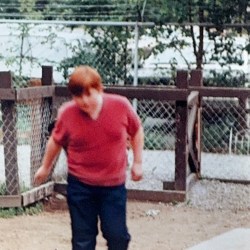
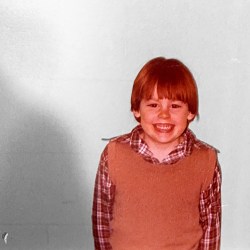
During those years, I learned to approach the mirror like my family approached houses; transactional in nature. A quick glance to adjust my shirt and then move on. Staying too long invited comparison, and comparison always felt rigged from the start. Red hair, pale skin, and a spare tire around my waist was a hard hand to win with. I stood there sometimes wondering if the person looking back was fixed or temporary, just like the house I lived in for that year.

I guess there was a strange relief in not being obsessed because obsession requires belief. I did not fully believe in the real me or the reflection. However, there were still moments when I lingered longer than planned. Not to admire or to criticize, but to study my real smile versus the one I performed to keep the peace. Those moments felt like secret conversations that no one else could interrupt. The mirror was less about appearance and more about listening.

Of course, the mirror did not give answers and as I mentioned, it was never really about how I looked. It became a quiet witness instead. I learned that my reflection was not asking to be corrected. It was asking to be seen without the noise of everyone else’s language layered on top of it. Through the distortion and my doubt, if I stood there long enough to feel the weight of my own presence, something steadier began to surface. Not confidence. Not certainty. Just recognition.

Eventually I stopped asking the mirror to tell me anything at all. I stood there less often, and when I did, I looked without searching for meaning. The reflection remained incomplete, and maybe it always will be. What changed was not the image, but my willingness to leave it unfinished. I learned that understanding does not always arrive with resolution. Sometimes it arrives as a quiet acceptance that the person in the glass is only one version of the story, and that the rest of me exists somewhere just beyond its frame, moving forward even when the reflection stays behind.

February 2026
M T W T F S S
 1
2345678
9101112131415
16171819202122
232425262728  

Texas Titty Twister- Day 46

Prompt – A comment someone made about your body that stuck.

Before I was a man, I had man boobs. Not a punchline, just a fact that lived under every t-shirt and never in silence. My pecs were far more than mere specks, and my older brother never let me forget it. He was eight years older than me, which meant he was bigger, stronger, and already living  inside a different version of life. I was still trying to play with friends in the yard while he was chasing girls and becoming the kind of guy everyone watched on the basketball court.

He had a way of turning my body into entertainment for himself. He would sit on top of me, grab my chest, and twist hard while laughing, calling it a Texas Titty Twister. Damn, it hurt! The pain was sharp, but what stayed longer was the laughter that followed, like my body existed for his amusement. I had no chance against him.

Being fat already felt like a burden I carried everywhere. My brother made sure the weight felt double, evenly distributed across both tits. At eight years old, I learned quickly that parts of a body could become public property if someone else decided they were funny enough. I remember wanting to disappear, wanting my body to shrink into something invisible so no one could grab it, name it, or twist it into a joke. Even then, I sensed that shame does not arrive loudly. It seeps in quietly and settles where a child does not yet have language to push it back.

We lived in two different realities. He wanted to fuck his girlfriend. I wanted to be left the fuck alone long enough to feel like a kid. The house did not hold those two worlds very well at the same time. Somehow my piece always felt smaller, dimmer, easier to overlook. I learned how to laugh through the tears because that is what kept the peace. And in my house, keeping the peace was paramount. If stress hit the adults, shit hit the fan for the kids. So, it was easier to call it a joke than to admit that it left a mark, both in the moment physically and emotionally for years to come.

Years have passed, and I have not seen my brother in some time. Still, when I do see him, the first image that arrives is not a flashback of a deep conversation or a shared memory of fishing together. It is his face scrunched with laughter, hands reaching down, ready to twist my man boobs right off my body. That is the strange thing about judgment made about a body. It does not fade the way people assume it will. It settles into muscle memory. It echoes through mirrors, locker rooms, and quiet moments when a shirt feels tighter than it should. Memory does not always return as a story. Sometimes it returns as a sensation. Shame.

But it was just a joke, right? Maybe that was true for him. For me, it was a lesson about power, about how easily someone else’s humor can shape how someone else sees their own body. The words and the hands both left impressions that took years to untangle. I have learned since then that bodies change, grow, harden, soften, and carry stories that no one else fully sees. What stuck was never just the twist or the laughter. What stuck was the feeling of being reduced to an amusement instead of being seen as a person.

And maybe that is where healing begins. Not by pretending it did not happen or by excusing it as harmless, but by naming it honestly and giving the younger version of me the dignity he did not get in that moment. My body was never the joke. It was simply a body learning how to exist in a house where strength and tenderness rarely spoke the same language. Now, when I think about that boy, I do not see weakness or shame. I see someone who survived long enough to tell the truth about what it felt like to be seen and unseen at the same time.

February 2026
M T W T F S S
 1
2345678
9101112131415
16171819202122
232425262728  

Ginger, Interrupted – Day 43

Prompt – Something about your appearance you struggled with.

I hated my red hair as a kid. My parents always framed it like it was a blessing, as though it was some strange cosmic DNA secret upgrade that unlocked every fourth generation. They said it was rare. They said it made me memorable. They said it like I was chosen; however, I felt as though I was exposed because kids never called it rare. Kids could see my flaming red hair and used it as target practice.

Carrot Top. Big Red. Fire starter. Every nickname made sure I knew I was different. Houses changed often in the military with new classrooms and new people, but the insults never were new because the hair stayed the same. Somehow those that slung the insults thought they were original poets that uttered the insult at me first. Not the brightest bulbs in the pack, but still difficult to ignore.

Like most gingers, my skin sure as hell did not help matters. I was pale in a way that felt almost unfinished, like I had been sketched and colored in by the white Crayola crayon. Twenty-four seconds in the sun turned me into a walking warning label for future skin cancer prevention. Freckles multiplied overnight and merged together like some ancient protection rune drawn across my face and shoulders. Adults called them cute angel kisses. I called them evidence that a host of angels took a shit all over me.

There were moments I tried to negotiate with my red hair and fair skin. They always won. So I found myself standing just out of reach of direct sunlight. I watched other kids tan into some version of confidence that felt foreign to me. I was either white or lobster, a permanent contrast against whatever landscape I happened to live in that season. I wanted invisibility more than anything. I wanted to look like everyone else long enough to walk through a hallway without hearing insults.

Time did what time does. It softened some edges, sharpened others, and still others faded. Somewhere between leaving childhood and stepping into adulthood, the hair I tried to outrun began to feel less like a spotlight and more like a marker as it faded into auburn. It carried the memory of “carrot top” with it, but it turned out to be a good color. The freckles stopped feeling like a flaw and started to feel like a map of where I had been.

I still catch my reflection sometimes and see the kid who wished for darker hair, darker skin, anything that might let him disappear into the background noise of a hallway. He thought blending in would make him safe. He thought invisibility meant peace. What he did not know was that standing out would one day become a quiet kind of permission. The thing that made me feel exposed also trained my eyes to notice the other kid carrying something visible they never asked for. Different hair. Different language. Different body. Same feeling.

The red faded into auburn over time, softer at the edges, less fire and more ember. The freckles stopped feeling like a flaw and started to feel like coordinates, small constellations mapping where I had been rather than where I failed to belong. I stopped negotiating with the mirror. I stopped trying to outrun a color that had already outrun me.

I hated my red hair for years. Now it feels less like an accident and more like handwriting. Not a super power. Not a curse. Just a mark that stayed when everything else kept moving. And maybe that is what growing up really is. Learning that the parts of me I tried hardest to erase were never asking to be loved loudly. They were only asking to be allowed to stay.

February 2026
M T W T F S S
 1
2345678
9101112131415
16171819202122
232425262728  

Borrowed Fire- Day 37

Prompt – A friend who pulled you toward trouble.

I have never had a true friend who pulled me toward trouble, but I did have a lot of trouble that pulled me toward people I called friends. In Plattsburgh, there was a kid who was more of a friend of a friend, or a friend of the group, a kid that drifted in and out of our orbit when he wanted. His name was Mike. He was short, quick to anger, and always looking for an edge to push. His dad was frequently gone on temporary assignments, and I never knew what his father’s job actually was. I only knew his absence hung in the air and created a lot of strain for Mike.

Mike’s height may have been part of his meanness, but the larger truth was that he lived inside a story that felt humiliating and painfully public. Even at thirteen, my group of friends knew what was happening at his house. Mike’s mother was finding her physical needs elsewhere when her husband was gone, and the worst part was not only that we knew, but that Mike knew we knew. That kind of knowledge does not sit quietly in a kid’s body. It turns into heat and rage. It turns into dare after dare. It turns into a need to control the narrative by burning it all down first.

Mike taught us all how to smoke. He taught us how to drink. We objectified women in magazines together in the South Side Trails. We were mean together. We keyed cars, put sugar in gas tanks, made prank calls, snuck into movies on base, shoplifted, and treated other people’s property like it was a joke we deserved to tell. When Mike was around, the meanness had a sharpness to it, like we were proving something. When he was not around, some of the same dumb choices still happened, but the cruelty did not have the same appetite. Mike did not just bring trouble with him. He brought a mood. He made all of us meaner than we were on our own.

The father situation was Mike’s issue, but it was also part of the wider tone on base. Plenty of fathers carried their own damage, and plenty of homes ran on alcohol, abuse, pornography, and the kind of quiet debauchery that never stayed as quiet as adults thought it did. Mike’s particular version of it was personal and specific. He believed someone else’s father was sleeping with his mother, and he believed everyone knew, and he lived inside that humiliation like it was a locked room he could not escape. So he pulled us down with him, and we went because we were young and because we were bored. We did not understand the difference between loyalty and participation. We were far too young to know how to pull someone up, and we were not yet brave enough to refuse the gravity.

Years later, I can see the shape of it more clearly. Trouble was never the point. Trouble was the language. Mike was trying to say, I am hurting, and I cannot stand being the only one who has to carry it. That does not excuse what we did, and it does not clean it up into something noble, but it does make the story more human.

What I hold now is this. I cannot go back and un-key the cars or un-make the cruelty, but I can tell the truth about how it happened. I can name the moment trouble stopped being thrilling and started being a warning. I can also be grateful that something in me eventually reached for a different kind of friend. Hope, I have learned, is not the denial of what I did or did not do. Hope is the decision to grow past it, and to recognize that pulling someone up sometimes starts with stepping out of the dark first.

February 2026
M T W T F S S
 1
2345678
9101112131415
16171819202122
232425262728  

Husky Jean Calculus- Day 28

Prompt – Trying to fit in.

Growing up, we never had enough money for the things everyone wanted. Back-to-school shopping was always tense because school supplies and clothes were expensive, and the margin was thin on a good month. My older siblings were teenagers, which meant shoes and clothes mattered in the unspoken social calculus of school. My mother, meanwhile, was running a different set of numbers, the kind tied to groceries, bills to be paid, and the quiet reality of coming up short and it all being her fault.

One afternoon in a store, my mother’s shoulders were tight as her attention was divided between price tags and possibility. She was doing the math in her head, calculations that did not resolve cleanly. I noticed, as I always noticed because I was old enough to see but I was far too young to understand what it actually was I was seeing.

So I erased myself. I said I would take whatever was cheapest. If it meant the not-cool clothes, that was fine or the cheaper Rose Art crayons, so be it. I said it lightly, as if it cost nothing, but I knew those words gave my mother a moment to breathe as I gasped for air. It was not that I wanted my siblings to have the best as I became a martyr, rather, I wanted peace in the house. Peace meant freedom from tension, freedom from eggshells. So I chose less and I told my eleven-year-old self that this is what being good looked like.

As I got older, I wanted to fit in everywhere. I wanted to fit in at home, at school, and inside my own skin. I wanted all of it without understanding that wanting everything at once comes with a cost. Somewhere along the way, I became exhausted, as my energy was limited. Survival required efficiency and a lot of energy.

I stopped caring about fitting in at school. Or at least I learned how to perform not caring about fitting in at school. This was not bravery. It was conservation. I redirected what little I had toward staying upright, toward “reading the room”, and toward becoming agreeable and invisible in equal measure. Endurance became my defining trait. I mistook it for identity and called it a personality.

The truth arrived later, quietly, the way truth tends to. I wanted to fit in, but what I really wanted was to belong. Belonging did not ask for performance. It did not require erasure to keep others comfortable. It allowed me to stay. I never had that in my first family.

Fitting in changes a person to earn acceptance. Belonging offers acceptance without negotiation. Fitting in hides real opinions. Belonging makes room for honesty with care. Fitting in depletes. Belonging restores. Fitting in is about how things appear. Belonging is about how things hold throughout the years.

I did not know any of this then. I only knew how to choose peace over cool, quiet over attention, and survival over style. The meaning of those choices took years to surface. Looking back now I see my erasure was not tenderness…it was twisted. But now, I finally belong and there is finally room for me to remain.

February 2026
M T W T F S S
 1
2345678
9101112131415
16171819202122
232425262728  

The Grammar of Noticing – Day 23

Prompt – A teacher who noticed something in you.

Non solum oculis.

I took Latin in high school after taking French in junior high with an evil little man who had a bad comb-over, worse teeth, and no patience for ignorant little children messing up his language. I was absolutely not going to continue with French. So I switched to Latin. Latin was a dead language, at least on paper, but it turned out to be the most alive class I had ever taken.

What I learned in that room had very little to do with memorizing declensions and everything to do with how ideas are made. Mr. Duffy taught me that thinking is not a silent, private act that happens first and then gets dressed in words. Thinking is social before it is individual. Ideas are formed through interaction, through dialogue, and only later do those shared ways of thinking move inward, where they begin to feel private and personal. Language was not an afterthought. It was the place where thinking happened.

Mr. Duffy taught that language is not a box that holds ideas. Language allows ideas to form, collide, revise, and grow. Words do not simply name thoughts. They shape them. The structure of language influences what can be noticed, compared, questioned, and remembered. He showed us that expanding language, even by adding a so-called dead one, expands cognition. I did not have an academic understanding of all this then, but I understood it intuitively. He was right.

Because of Mr. Duffy, I became interested in languages and in what becomes possible when more than one linguistic system lives in the same mind. I learned that knowing more languages does not simply add vocabulary. It adds ways of organizing experience. Each language carries its own metaphors, its own logic, its own relationships between time, action, and responsibility. The more languages a person has access to, the more tools they have for connecting ideas, negotiating meaning, and making sense of the world with depth instead of speed.

Mr. Duffy noticed this curiosity about language in me before I did. He shared his thinking about language and life without making it feel like something that needed to be swallowed whole. He taught us Horace, the Roman poet made known by a new generation because of Dead Poets Society, and he used that film to draw us in and teach. He understood that attention is earned, not demanded.

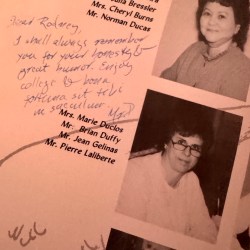
Recently, I found my old senior year book, and inside it he had written that he would always remember me for my honesty and my sense of humor. That line landed harder than it probably should have. He did not praise intelligence or achievement. He named qualities that suggested presence, risk, and a willingness to say what was true even when it was inconvenient.

Looking back now, I understand that what he really noticed was not an aptitude for Latin. He noticed a hunger for connection and a comfort with language as a living thing. He saw the possibility of a life built around words, meaning, and noticing, and he named it out loud. That naming mattered. There are moments when a teacher does not give you something new, but instead reflects something back to you that you had not yet trusted. Sometimes being seen is not about praise. Sometimes it is about recognition arriving early enough to change the shape of a life.

Thank you, Mr. Duffy.

February 2026
M T W T F S S
 1
2345678
9101112131415
16171819202122
232425262728  

Finders Keepers – Day 16

Prompt – What role did you play in your family?

I was the baby in my family. My brother and sister were older than me by several years, old enough that by the time I reached preteen age, they were already gone. My brother went into the military. My sister married into the military. Apparently, the military was the family business. The house grew quieter. The orbit shifted.

As the baby, I watched. Silence felt safe. Observation felt necessary. While others reacted, I absorbed. While the room moved, I stayed still long enough to understand what was actually happening. Being the youngest meant I was present without authority. Decisions were made above my pay grade and explanations were optional at best. I learned to read tone before words and posture before intention. I noticed how laughter sometimes arrived too quickly, how stories and jokes could function like smoke, how playfulness could smooth over things no one wanted to face directly. I understood the role of distraction even when I refused to perform it. Instead of entertaining, I studied the moment the room needed to be entertained.

I became the observer because no one asked me to be anything else. I was small enough to disappear and quiet enough to be underestimated. That invisibility became access. I watched tension build and release. I watched who needed to be soothed and who needed to stay unaware. I noticed who carried the emotional weight and who benefited from keeping it unnamed. I learned that some roles exist to protect the system rather than the people inside it. Those patterns mattered to me even when naming them made others uncomfortable.

Somewhere in all that watching, I became the storyteller. Not the loud one. Not the funny one. Just the keeper of the stories. I held the version of events that existed before they were softened. I remembered what came before the joke and what never made it into the retelling. I learned that stories shift depending on who is listening and that truth is often traded for comfort without anyone admitting the exchange.

The storyteller role was lonely. It meant holding meaning without a place to set it down. It meant knowing things too early or too clearly. It meant understanding that telling the truth outright could destabilize a balance everyone depended on, even if that balance was fragile and false. So I learned patience. I learned restraint. I learned to let stories mature until they could be told without blowing the room apart. I learned that timing matters as much as honesty.

I did not soothe my family through story. I soothed myself by understanding the stories. I organized chaos into narrative, or at least I tried to. I tracked cause and effect. I stitched moments together into something coherent so I could survive them. That instinct followed me into adulthood, into classrooms, into leadership, into writing. I still sit quietly at first. I still watch how people move when they think no one is paying attention. I still tell stories not to entertain, but to reveal.

February 2026
M T W T F S S
 1
2345678
9101112131415
16171819202122
232425262728  

Adventures in Moving: ALCAN Edition – Day 15

Prompt – A family story that shaped how you saw yourself.

Family stories are told around the table to remind us who we have been and how we survived becoming who we are. They keep history alive, not in textbooks or archives, but in voices that know where to pause and when to laugh. Sometimes these stories shape how we see ourselves. Other times, they simply allow us to recognize ourselves inside someone else’s memory, and how we are seen outside of ourselves. In that recognition, connection happens. Not because our lives matched, but because the feeling did, or at least should have?

These stories carry more than nostalgia. They show us how anger was handled, how grief was avoided or honored, how love showed up…or did not show up. Long before anything happens to us, we have already been taught, quietly, how we are supposed to respond by who speaks, who stays silent, who fixes things, and who leaves the table early.

Family stories teach us what is celebrated and what is buried. They reveal which parts of the truth are told with ease and which ones are edited for comfort. Over time, I realized that I did not just inherit eye color or mannerisms. I inherited scripts. Expectations. Reflexes. The way a future moment might unfold has often already been practiced in the retelling of the past. Listening closely gives me a choice. I can honor the story without repeating it exactly. I can keep the memory alive while deciding how the next chapter sounds when my voice enters the room.

This story was told repeatedly in my family and has offered me wise counsel for my future self. My family was moving from March Air Force Base in Los Angeles, California to Elmendorf Air Force Base in Alaska. Of course, we drove. Military families often drive because it is cheaper, longer, and character building in all the wrong ways – Adventures in Moving™. The highway that connects the lower forty-eight states to Alaska is the ALCAN Highway. It was still unfinished even in the early 1980’s. Smooth pavement would suddenly disappear into gravel, potholes, and dust. Civilization vanished for long stretches. It was a road that demanded endurance and offered very little grace in return.

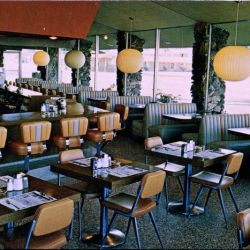
Somewhere in Canada, we stopped at a small diner. The kind with thin walls, vinyl booths, and a quiet that made every sound matter. We sat down, ordered drinks, and tried not to look like exactly what we were: a tired military family passing through a place that was not ours. My father got up to use the bathroom.

What happened next became legend.

The bathroom walls betrayed him, loudly and repeatedly. The sounds were unmistakable and entirely public. They echoed through the thin walls and into the dining room. Every person in that restaurant knew exactly what was happening. There was no hiding it. No dignity left to salvage.

My mother did not laugh. She did not smile. She did not lean into the absurdity of it. She stood up, gathered us, and marched us out of the diner in silence. We waited outside by the car, humiliated and rigid, while my father finished what should have been a private moment. When he came out and realized we had left, there was no humor. No apology. No acknowledgment of how ridiculous or human the moment was. There was only anger and tension.

This is the part that has stayed with me over the years. No one softened the moment. No one repaired it. No one said I am sorry or this is funny or we will laugh about this later. It was a shared experience that somehow belonged to no one and taught nothing except how not to be together. That story shaped me because it taught me what I wanted instead of that.

I wanted someone to laugh with. I wanted someone who could sit in discomfort and still choose kindness. I wanted apologies to exist, even for small things. I wanted mistakes to be survivable. I wanted love that could handle embarrassment without turning it into punishment. I wanted partnership!

Life is not fully paved. It shifts without warning. Smooth moments give way to rough stretches. What matters is not the road itself, but who you ride with and how you treat each other when the pavement disappears. That diner taught me that silence can wound more deeply than noise. And it taught me, very early, the kind of person I hoped to become when the road got rough.

February 2026
M T W T F S S
 1
2345678
9101112131415
16171819202122
232425262728