
Prompt – Inside jokes that felt like belonging.
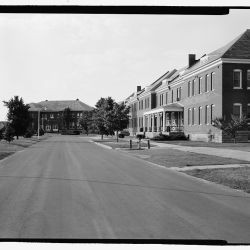
Chris and I played baseball on the base league at Plattsburgh Air Force Base. He went to a private Catholic school in town, and sports leagues on base were one of the only organized ways we were able to spend time together outside of our South Side Trails adventures. When one of our baseball seasons ended, we decided to extend that sense of belonging and proximity into a new sport. Soccer. Oh Jesus. Soccer meant crossing over the tracks to the old base, where most of the officers’ kids lived because they made up the majority of the soccer teams.
Chris and I crossed over to the old side of base and brought our inside jokes with us as a talisman. They were not especially clever, and they were certainly not kind. They were observational. They were earned. We joked about the officers’ kids we suddenly found ourselves surrounded by. We joked about how they wore Umbro soccer shorts and we called them “UmmmBros”. We told jokes about how they listened to U2 as we listened to glam rock cheese metal, and how they carried themselves like they were already officers themselves. We called them snobs, but the joke was less about them and more about us. It was about noticing patterns and naming them together.
We were enlisted kids. That mattered. Officers’ kids lived on a different side of the base, quite literally and indeed metaphorically. They had better lawns, better clothes, better toys, better posture, and what appeared to be better confidence. At least that was how it looked from where we stood.
The jokes worked because we both saw what we were joking about. We were not inventing the distinction. We were recognizing it. Every time one of us made a crack about the “UmmmBros” or U2’s latest album, it was not really about taste in music, sports, or clothes. It was a shorthand. A nod. A way of saying, I see what you see. I live where you live.
That is what inside jokes do. They compress shared experience into something small enough to carry in a sentence. They let two people signal belonging without having to explain themselves with no footnotes or justification. It is just recognition. We needed that on our side of the base.
Those jokes were not inclusive. That was the point. They carved out a small, protected space where we did not have to translate ourselves. In a life built on impermanence and rank, that mattered more than I understood at the time. We were not laughing to exclude others. We were laughing to anchor ourselves.
I think now about how much of my childhood was spent learning which version of myself would be safest in which room. Inside jokes short-circuited that work. With Chris, I did not have to perform. I did not have to prove anything. The joke itself was the proof. If it landed, I belonged.
Years later, I understand that belonging does not require permanence. It requires recognition. It requires someone else noticing the same absurdities and letting you laugh about them without explanation. That kind of belonging is fragile, but it is real. It lives in memory. It survives distance.
I do not remember every joke. I remember the feeling of them…the ease, and relief. The sense that, for a moment, I was not alone in my noticing.
And maybe that is the quiet truth. Belonging does not always announce itself. Sometimes it shows up as laughter that would not make sense to anyone else. Sometimes it sounds like a joke about “UmmmBros” and “U2, but not you”. Sometimes it is simply the moment you realize someone else is standing beside you, seeing the same thing, and choosing to laugh instead of explain.
| M | T | W | T | F | S | S |
|---|---|---|---|---|---|---|
| 1 | 2 | 3 | 4 | 5 | ||
| 6 | 7 | 8 | 9 | 10 | 11 | 12 |
| 13 | 14 | 15 | 16 | 17 | 18 | 19 |
| 20 | 21 | 22 | 23 | 24 | 25 | 26 |
| 27 | 28 | 29 | 30 | |||
 Muddled Soma