Civilian Rules – Day 40

Prompt: A time a friend betrayed you

As a child, I was raised inside a system that offered basic training on how to exist with people that have an expiration date. Military bases were full of kids like me, changing addresses like refugees with pink slips. We learned how to attach quickly and detach cleanly. Friendships were intense, immediate, and understood to be temporary. When orders came, and they always came, we did not fight the ending. We practiced kindness in the present and disappearance in the future. It was not cruelty. It was survival. We handled each other gently because most of us already knew what heavy felt like at home.

I was hurt by friends during those years, but the hurt was diffused and governed by an agreed-upon set of rules. It belonged to circumstance more than intention. No one was really betraying anyone. We were all obeying the same unwritten code. Stay light, do not burden each other, and leave cleanly. This code failed me the first year my family became civilian.

Lawton, Oklahoma broke something open that I did not yet have language or experience for. My father could not find work. My mother worked in another state. Home still felt temporary, but without the structure that once explained why everything was temporary. At MacArthur High School, the rules I knew did not apply. Belonging was transactional and visibility was dangerous.

I was bullied for opting out of football, for choosing books and observation instead of collision. That alone would have been survivable. What I was not prepared for was betrayal disguised as friendship.

Tracy was my first real civilian friend. She listened. She asked questions. She made space for the softer parts of me that had never needed armor before. I trusted her because trust had always been safe inside temporary worlds. I told her my fears. I told her my uncertainties. I told her where I felt small.

She took those truths and passed them along to the very people I spoke about. She did not confront me. She did not warn me. She turned my vulnerability into currency. When the laughter came back to me secondhand, something inside me collapsed. This was not the clean ending I had been trained for. This was exposure. This was humiliation. This was betrayal with witnesses.

For a long time, I believed the lesson was that openness was a mistake. I learned how to seal myself. I learned how to withhold. Betrayal does not only break trust in another person. It fractures trust in the self who chose to believe. I was not only angry at Tracy. I was ashamed of my own hope.

It took years to understand that what happened in Lawton was not proof that I was naïve or weak. It was proof that I had crossed from a world governed by impermanence into one governed by performance. The hope arrived later, quietly. I did not lose my capacity to trust. I learned how to place it with care. I still believe in connection. I just no longer hand it over to civilians.

February 2026
M T W T F S S
 1
2345678
9101112131415
16171819202122
232425262728  

Cheese Metal Belonging – Day 38

Prompt – Inside jokes that felt like belonging.

Chris and I played baseball on the base league at Plattsburgh Air Force Base. He went to a private Catholic school in town, and sports leagues on base were one of the only organized ways we were able to spend time together outside of our South Side Trails adventures. When one of our baseball seasons ended, we decided to extend that sense of belonging and proximity into a new sport. Soccer. Oh Jesus. Soccer meant crossing over the tracks to the old base, where most of the officers’ kids lived because they made up the majority of the soccer teams.

Chris and I crossed over to the old side of base and brought our inside jokes with us as a talisman. They were not especially clever, and they were certainly not kind. They were observational. They were earned. We joked about the officers’ kids we suddenly found ourselves surrounded by. We joked about how they wore Umbro soccer shorts and we called them “UmmmBros”. We told jokes about how they listened to U2 as we listened to glam rock cheese metal, and how they carried themselves like they were already officers themselves. We called them snobs, but the joke was less about them and more about us. It was about noticing patterns and naming them together.

We were enlisted kids. That mattered. Officers’ kids lived on a different side of the base, quite literally and indeed metaphorically. They had better lawns, better clothes, better toys, better posture, and what appeared to be better confidence. At least that was how it looked from where we stood.

The jokes worked because we both saw what we were joking about. We were not inventing the distinction. We were recognizing it. Every time one of us made a crack about the “UmmmBros” or U2’s latest album, it was not really about taste in music, sports, or clothes. It was a shorthand. A nod. A way of saying, I see what you see. I live where you live.

That is what inside jokes do. They compress shared experience into something small enough to carry in a sentence. They let two people signal belonging without having to explain themselves with no footnotes or justification. It is just recognition. We needed that on our side of the base.

Those jokes were not inclusive. That was the point. They carved out a small, protected space where we did not have to translate ourselves. In a life built on impermanence and rank, that mattered more than I understood at the time. We were not laughing to exclude others. We were laughing to anchor ourselves.

I think now about how much of my childhood was spent learning which version of myself would be safest in which room. Inside jokes short-circuited that work. With Chris, I did not have to perform. I did not have to prove anything. The joke itself was the proof. If it landed, I belonged.

Years later, I understand that belonging does not require permanence. It requires recognition. It requires someone else noticing the same absurdities and letting you laugh about them without explanation. That kind of belonging is fragile, but it is real. It lives in memory. It survives distance.

I do not remember every joke. I remember the feeling of them…the ease, and relief. The sense that, for a moment, I was not alone in my noticing.

And maybe that is the quiet truth. Belonging does not always announce itself. Sometimes it shows up as laughter that would not make sense to anyone else. Sometimes it sounds like a joke about “UmmmBros” and “U2, but not you”. Sometimes it is simply the moment you realize someone else is standing beside you, seeing the same thing, and choosing to laugh instead of explain.

February 2026
M T W T F S S
 1
2345678
9101112131415
16171819202122
232425262728  

Borrowed Fire- Day 37

Prompt – A friend who pulled you toward trouble.

I have never had a true friend who pulled me toward trouble, but I did have a lot of trouble that pulled me toward people I called friends. In Plattsburgh, there was a kid who was more of a friend of a friend, or a friend of the group, a kid that drifted in and out of our orbit when he wanted. His name was Mike. He was short, quick to anger, and always looking for an edge to push. His dad was frequently gone on temporary assignments, and I never knew what his father’s job actually was. I only knew his absence hung in the air and created a lot of strain for Mike.

Mike’s height may have been part of his meanness, but the larger truth was that he lived inside a story that felt humiliating and painfully public. Even at thirteen, my group of friends knew what was happening at his house. Mike’s mother was finding her physical needs elsewhere when her husband was gone, and the worst part was not only that we knew, but that Mike knew we knew. That kind of knowledge does not sit quietly in a kid’s body. It turns into heat and rage. It turns into dare after dare. It turns into a need to control the narrative by burning it all down first.

Mike taught us all how to smoke. He taught us how to drink. We objectified women in magazines together in the South Side Trails. We were mean together. We keyed cars, put sugar in gas tanks, made prank calls, snuck into movies on base, shoplifted, and treated other people’s property like it was a joke we deserved to tell. When Mike was around, the meanness had a sharpness to it, like we were proving something. When he was not around, some of the same dumb choices still happened, but the cruelty did not have the same appetite. Mike did not just bring trouble with him. He brought a mood. He made all of us meaner than we were on our own.

The father situation was Mike’s issue, but it was also part of the wider tone on base. Plenty of fathers carried their own damage, and plenty of homes ran on alcohol, abuse, pornography, and the kind of quiet debauchery that never stayed as quiet as adults thought it did. Mike’s particular version of it was personal and specific. He believed someone else’s father was sleeping with his mother, and he believed everyone knew, and he lived inside that humiliation like it was a locked room he could not escape. So he pulled us down with him, and we went because we were young and because we were bored. We did not understand the difference between loyalty and participation. We were far too young to know how to pull someone up, and we were not yet brave enough to refuse the gravity.

Years later, I can see the shape of it more clearly. Trouble was never the point. Trouble was the language. Mike was trying to say, I am hurting, and I cannot stand being the only one who has to carry it. That does not excuse what we did, and it does not clean it up into something noble, but it does make the story more human.

What I hold now is this. I cannot go back and un-key the cars or un-make the cruelty, but I can tell the truth about how it happened. I can name the moment trouble stopped being thrilling and started being a warning. I can also be grateful that something in me eventually reached for a different kind of friend. Hope, I have learned, is not the denial of what I did or did not do. Hope is the decision to grow past it, and to recognize that pulling someone up sometimes starts with stepping out of the dark first.

February 2026
M T W T F S S
 1
2345678
9101112131415
16171819202122
232425262728  

Terms and Conditions – Day 35

Prompt – A falling-out that still sting.

Friends come and go. That has always been the deal. It was the quiet contract of the military, the rotating cast of names and addresses that followed me from place to place. College became the same kind of temporary, only dressed up in credit hours, retention rates, and being “mature” about it all. People arrived, people disappeared, and then people became a story told in passing.

After graduation, shortly following a quick stint as an accountant, Kari and I moved to Japan for a teaching job that came with a built-in expiration date. The contracts were one year, which allowed for a tidy little ending. The Japanese school system also had a way of enforcing impermanence. Teachers were moved around periodically, as though the goal was to prevent deep bonds from forming. It felt almost religious, like attachment itself was a rule that was not supposed to be broken. I broke it anyway.

In Japan, I was an expat with a small group of young, inexperienced teachers. We were all hungry for belonging, and we were far enough from home that the hunger got louder. We did life together in full. We carried the hard parts and the easy parts, and we laughed at the absurd parts that only make sense when daily life is built in a language that still feels borrowed. We became tight, not in a casual way, but in the way people do when they become each other’s lifeline in a foreign country.

It was beautiful. It was real. It was the kind of closeness that made ordinary days feel like a story worth keeping.

When we returned home, we tried to bring the bond with us. We talked about forming a team of four couples to go back to work as missionaries – whatever the fuck that meant! We met a few times to dream and map out a future that felt like a second chance at that Japan closeness. I let myself believe it could happen. I let myself imagine a circle that would hold.

There was a lunch get-together. Kari and I were not invited. Later, someone lied about it with the kind of polite, church-friendly dishonesty that is supposed to keep the peace while it quietly kills the truth. Eventually, one person came clean, and in that moment I remembered why I used to prefer transient relationships.

I had broken the rules. I had allowed myself to get close. I had allowed myself to love people, not as passing characters, but as anchors. I had trusted the story. I had trusted the holy language people use when they want to make ordinary friendship feel sanctioned and permanent.

Love hurts when it ends. This one stung because it was real. It was tied to some of the most beautiful years of my life, and it was wrapped in religion like a ribbon that also functioned as a blindfold. The pain was not the lunch. The pain was the realization that the bond had terms and conditions, and I had not been told what they were until I failed them. Even now, the sting still registers because the years were real. Japan was real. The laughter was real. The belonging was real. A single lunch betrayal cannot erase that, even if it tried.

Some friendships are seasonal. Some are sacred. Some are both, right up until they are not. I can grieve what ended without pretending it never mattered. I can hold the good years in one hand and the betrayal in the other and finally stop forcing them to cancel each other out.

February 2026
M T W T F S S
 1
2345678
9101112131415
16171819202122
232425262728  

Detours and Dead Letters – Day 34

Prompt – How the Friendship Changed

This is part three of a three prompt series. The first post is here and the second post is here.

Jeremy and I did not explode. There was no betrayal, no raised voices, no dramatic final scene with the kind of closure often found in movies with an amazing music and video montage. The friendship changed the way military friendships usually change. One day, the routine is intact. The next day, a family is loading boxes, a moving truck is idling, and the neighborhood has a new vacancy. One day we were hanging out during recess. The next day, he was going back to Texas.

In my mind, it felt like leaving. For Jeremy, it was a homecoming. He acted like the universe was correcting a mistake. He was a Texan through and through. He loved the heat and was ready to say goodbye to the winters. Alaska was, at best, an interruption for him…a detour. Texas was a return. I understood that much, even at that age. Still, understanding did not make his leaving hurt less.

We both said the things kids say when adults are listening. We promised to keep in touch. We said we would write. We said we would call when we could. And of course, we said we would not forget. Those sentiments were offered like bandages, thin and polite, as if language could seal up the gaping wound not even fully realized yet.

I upheld my part of the promise, writing him every week. Jeremy did not. I remember the ritual of writing him more than what I wrote him. I used the same pad of paper every time. I tried to make our ordinary days sound interesting, worth staying connected to. I narrated the small things because small things were what connected us. I wrote about a new snow fort, “our” new teacher, and the new kid who moved into his old house. I folded the letter carefully, far too small, slid it into the envelope, wrote his address, and then I waited.

He never responded. Not one time. At first, I worked hard to excuse his silence. I invented reasons for the friendship to remain intact, even if only on my side of the map. Maybe the mail got lost. Maybe his mother forgot to buy stamps. Maybe he wrote back and it disappeared into some military black hole where all the missing things go. I was loyal, and I was young enough to believe that if I kept showing up, the world would meet me halfway.

Then, slowly, I realized a letter was not coming. I was writing to myself. I was crushed for a long time, and I never talked about it. It did not look like grief adults would recognize. It looked like me becoming even more careful and small.

I did not make another best friend until two moves later, at Plattsburgh Air Force Base. Between Jeremy and Plattsburgh, I learned a lesson that felt less like wisdom and more like a bruise that never healed.

People say they will write. People say they will call. People say whatever they need to say in the last hour before goodbye because the truth is too sharp to hold in your mouth. When people are not close to one another anymore, even if they once were, shit changes. Distance does not just stretch a friendship. It edits it. It removes the ordinary moments that keep love warm and alive. It replaces them with intention, and intention is harder to sustain than people admit because it requires work.

Looking back, I can see something tender under the damage. I kept writing because connection mattered to me. I believed in continuity, even when my life trained me in detours. That belief did not save the friendship, but it revealed something about me. I was the kind of kid who tried to build a bridge. I was the kind of kid who stayed, even when someone else did not.

And maybe that is the quiet hope inside the story. The friendship changed, and it hurt. It left a mark. But it also showed me, early, that I was capable of devotion, of showing up, of loving in a way that was not performative. The loss taught me caution, yes. But the writing taught me something else too. It taught me that my instinct, even then, was to reach out, to connect, to make meaning, so I could stay human in a life designed around leaving.

February 2026
M T W T F S S
 1
2345678
9101112131415
16171819202122
232425262728  

One Street Over – Day 33

Prompt – How did the friendship start?

For those who want the beginning context for today’s prompt, the first post about Jeremy can be found here.

My first real best friend was Jeremy. He was a Texan through and through, transplanted abruptly to Alaska. The shock showed on him, as this was his first military PCS ever. I arrived from California, where my family left March Air Force Base because of an incident I have only ever heard in fragments. The whole truth never mattered as we would have eventually left anyway. I had just finished second grade and knew almost nothing except that something had ended and something else had begun without my consent.

The drive up the ALCAN highway was relentless. When my family finally reached Elmendorf Air Force Base, there was no housing assignment waiting for us. We were placed in temporary living quarters for far too long. After weeks on the road with my family, traveling a half-paved road a thousand miles long in a U-Haul, the TLQ did not feel like home. The place felt heavy in ways I had never experienced before. And it got weird.

Colors in the TLQ would thin and deepen without warning, where color should have remained constant. Corners stayed cool while the center of rooms held warmth. The hallway carried a faint blue cast that no one else seemed to notice. Temperature changes brought memories with them. Grief lingered as anger did too. There were people there as well, not figures meant to frighten, but impressions. More like presences. I did not see them with my eyes alone. I felt them with my body. That kind of noticing is exhausting, especially for a child. I needed someone to help me carry it.

Jeremy showed up.

Beginnings and endings rarely announce themselves. They arrive disguised as coincidence or as a kid who happens to live one street over. At the time, it felt like luck. Looking back, it is clear that something essential was taking shape, something the universe wanted me to notice.

He had never moved before. Not once. His entire life had existed in one state until it did not. He was burdened with the newness of goodbyes and hellos. I was practiced in leaving. Somehow that made us fit, as we each had something to carry for the other.

That friendship did not begin because we were alike or because we chose one another with intention. It began because two children were standing inside unfamiliar spaces, each holding more than was reasonable for their age. Something in him recognized something in me, and the recognition was mutual.

I understand now that this is often how early friendships form. Not around joy, but around need. Around the quiet relief of not being alone with what is not yet understood. Long before we know how to tell our stories, we sense who might be able to hear them. That was the beginning. Not a single moment, but a shared breath, an inhale and exhale taken together, a small and steady proof that even in unfamiliar places, connection finds a way to form.

February 2026
M T W T F S S
 1
2345678
9101112131415
16171819202122
232425262728  

Square Pizza & Neutral Ground – Day 27

Prompt – Lunchroom politics

Through the fifth grade, the lunchroom was neutral ground. It required only a basic understanding of a single-file line, eighty-five cents, and the know-how to choose wisely from the menu. The homemade square pizza made by Carol the Lunch Lady reigned supreme, folding in half but never breaking thanks to a level of grease that functioned as both flavor and structural support. The sloppy joe, held together by far more ketchup than beef, tested gravity and came in a respectable second, especially when paired with tater tots that counted as a vegetable because everyone agreed to pretend they were potatoes. Then there was the taco, which had never heard Spanish and knew no spice at all. Finished off with a carton of chocolate milk and the meal was complete. That was it. No strategy was required, nor was any understanding of complex human hierarchical structures necessary. The menu told everything that needed to be known.

Sixth grade changed the terms. The lunchroom acquired borders much like invisible fences that everyone pretended not to see while obeying their “Posted” notices perfectly. Rules appeared, not published ones, but learned ones. Seats were no longer neutral. Placement mattered, and choice was often an illusion, as belonging did the choosing long before anyone sat down. Jocks clustered loud and confident, already rehearsing for futures that assumed space. Band kids gathered with instrument cases leaned against their legs like shields. Nerds formed tight constellations around shared intelligence and inside jokes. Religious kids bowed their heads before eating, not so much for God as for each other. Floaters drifted from table to table, fluent in small talk and practiced exits. Loners learned how to sit with a book and make it look intentional.

The food did not change. The square pizza never left. What changed was the audience and, with it, the purpose. Lunch became a daily referendum on who was permitted to be seen together and who was better off unseen. Seats mattered. Laughter mattered more, because laughter signaled togetherness and safety. Silence could be read as arrogance or fear, depending on who was watching and what they needed it to mean that day. Some seats had to be earned, while others came with unspoken warnings to stay away. The politics were efficient and selectively cruel, enforced mostly through looks, although words were occasionally deployed when looks failed.

The lunchroom became my first real lesson in social cartography, a place that taught where power sat and where safety might be found if one looked closely enough. What I did not understand then was that everyone else was learning the same lesson at the same time, each of us convinced of being the only one studying the map so desperately. The tables felt permanent, the labels felt fixed, and the consequences felt endless.

Looking back now, the comedy of it all lands harder than the fear ever did. Grease-soaked pizza and ketchup-heavy sloppy joes were never really the point. The lunchroom was a training ground, rehearsing adult versions of conference rooms, waiting rooms, and dinner tables where the same invisible fences still exist. The difference is that, with time, the map becomes easier to read, and the borders begin to look less international and more domestic. That realization does not erase the lesson, but it does soften it, allowing the memory to sit where it belongs, alongside the chocolate milk and the understanding that belonging was always more fragile, and more negotiable, than it first appeared.

February 2026
M T W T F S S
 1
2345678
9101112131415
16171819202122
232425262728  

Names Without Addresses – Day 25

Prompt – A friendship that changed during school years.

Travis, Chris, Jeremy, Brian, Mike, Michael, Christopher, Anthony, Kyle, Ryan, Matthew, Steven, Daniel, Eric, Timothy, Joshua, Nathan, Aaron, Adam, Greg, Zachary, Thomas.

I can still name them with little effort. The order shifts sometimes, but the names remain. They belong to different places and different years, but they sit together now, flattened by time and repetition. They are not ghosts. They are proof I was taught to leave and there was never just one friendship to lose.

Growing up in the military meant learning early that friendships were temporary by design. Orders for a PCS – a Permanent Change of Station – arrived whether readiness existed or not. Houses emptied, seating charts changed, and class rosters reset. The language adults used was efficient and calm to describe all of this, which suggested they understood exactly how volatile it all was and handled it accordingly. They insisted it was temporary, while everything about it felt permanent. It was right there in the fucking name, and it never felt clean!

Goodbyes rarely hurt out loud. The grief was quieter and had to be swallowed. Tears would have been easier, but instead there were promises to write and addresses exchanged even when no one actually knew where the next place would be. The ritual carried the seriousness of a contract everyone understood would be broken, like a gym membership signed in January with full confidence and no follow-through in February. The gestures were always the same and never lasted. Over time, something quieter replaced them. I learned to pull back before the leaving began. I learned how to be present without anchoring. I learned how to be liked without being known.

School became the laboratory where this skill was sharpened. I could enter a classroom midyear and read the social map quickly. I knew where to sit, who to mirror, and how to fold myself into whatever rhythm already existed. I learned how to make friends fast because speed mattered. I also learned how not to need them and how to release them just as quickly. That felt like maturity at the time, something adults rewarded and praised. It was really anticipation, loss managed in advance.

There was always one friend who carried the weight of the others. Pick any name from the list and the story holds. Jokes were traded, lunches shared, and backstory learned. There was nothing wrong with the friendship, which turned out to be the problem. When the countdown began, I felt myself lighten. I did not resist it. I became efficient. The friendship did not end in conflict. It ended the way it had been designed to end, quietly and on schedule.

Adults praised my adaptability. Teachers admired my resilience. I absorbed those words and wore them like credentials. No one asked what the cost was, and I did not offer the answer. From the outside, social withdrawal looked like independence. Inside, it functioned as an emotional clusterfuck reset with a bleaching, a clearing of the slate so the next arrival would not hurt more than the last one had.

Years later, the pattern still surfaces in adult relationships. I must work at not keeping connections portable. I notice the impulse to prepare for departure even when no one has said goodbye. Readiness still gets confused with distance. Self-sufficiency still masquerades as safety. Awareness does not erase the habit, but it does give it a name.

Those names remain because they taught something durable. Not how to stay, but how to leave. Not how to hold, but how to let go before being asked. The system did its job well. It made me fluent in beginnings and endings with no required translation, but meaning was clearly optional.

February 2026
M T W T F S S
 1
2345678
9101112131415
16171819202122
232425262728  

Head, Shoulders, Arms, & Toes – Day 19

Prompt – What is something you inherited that is invisible.

Meeting new people is routine for me as an educator. Conferences, professional development sessions, even the pedagogy aisle of a bookstore invite brief conversations with strangers. If the talk lasts long enough, the question of where I am from eventually appears. My answer lands in an awkward nowhere. There is no single city or state to name. I follow it with military brat, and more often than not, the response is me too.

That is usually all it takes. From that short exchange, I can place them – NCO kid or officer kid. The distinction is not always visible, but it is all too familiar. For those that do not speak military, NCO stands for noncommissioned officer, while officers hold formal commissions granting authority to lead and command. In plain terms, NCOs resemble blue collar middle managers, while officers mirror executive leadership. The stereotypes of each military group carry over from the groups in civilian life all too well. I recognize the difference not because I am trying to sort people, but because I learned to read hierarchy long before I understood its cost.

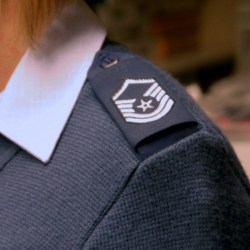
As the conversation continues, my eyes drift where they always do. Look at the shoulders. Look at the arms. Look at the posture. I look for rank even when it is no longer stitched into fabric. Power announces itself quietly, through who stands at ease and who remains alert, through who speaks freely and who measures every word. Authority does not require a uniform. It lives in tone, in social standing, and in permission.

I carried that awareness out of childhood and into adulthood, from military structure to religious hierarchy to professional systems. Each one promised order. Each one insisted it was different. The symbols changed, but the sorting remained. Stripes became titles. Doctrine became policy. Obedience learned new language. What made each system dangerous was its invisibility. Power no longer lived on sleeves. It lived in access, approval, and exclusion.

I thought I was adapting. I thought I was growing. I did not realize I was just learning new ways to disappear to survive. By the time I saw it clearly, it had already shaped me. The reflex stayed. Even now, I scan for hierarchy, not because I want to participate in it, but because I know how quickly it hardens and who it leaves behind.

Throwing it off was not dramatic. It was an internal unlearning. A refusal to confuse structure with safety or authority with worth. I no longer measure myself by proximity to power. I measure myself by who I stand next to when belonging is being decided.

What I carry is invisible and indeed inherited from growing up in a military family, but it continues to show up whenever authority appears and decides who belongs and who does not. It keeps me honest. It keeps me watchful. It reminds me that seeing exclusion is already a kind of resistance. And now, I always make sure to stand with the other, if for no reason to make sure they do not feel alone – me as well!

February 2026
M T W T F S S
 1
2345678
9101112131415
16171819202122
232425262728