Borrowed Fire- Day 37

Prompt – A friend who pulled you toward trouble.

I have never had a true friend who pulled me toward trouble, but I did have a lot of trouble that pulled me toward people I called friends. In Plattsburgh, there was a kid who was more of a friend of a friend, or a friend of the group, a kid that drifted in and out of our orbit when he wanted. His name was Mike. He was short, quick to anger, and always looking for an edge to push. His dad was frequently gone on temporary assignments, and I never knew what his father’s job actually was. I only knew his absence hung in the air and created a lot of strain for Mike.

Mike’s height may have been part of his meanness, but the larger truth was that he lived inside a story that felt humiliating and painfully public. Even at thirteen, my group of friends knew what was happening at his house. Mike’s mother was finding her physical needs elsewhere when her husband was gone, and the worst part was not only that we knew, but that Mike knew we knew. That kind of knowledge does not sit quietly in a kid’s body. It turns into heat and rage. It turns into dare after dare. It turns into a need to control the narrative by burning it all down first.

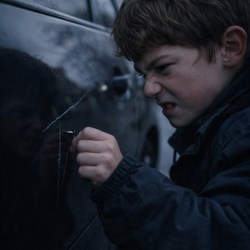
Mike taught us all how to smoke. He taught us how to drink. We objectified women in magazines together in the South Side Trails. We were mean together. We keyed cars, put sugar in gas tanks, made prank calls, snuck into movies on base, shoplifted, and treated other people’s property like it was a joke we deserved to tell. When Mike was around, the meanness had a sharpness to it, like we were proving something. When he was not around, some of the same dumb choices still happened, but the cruelty did not have the same appetite. Mike did not just bring trouble with him. He brought a mood. He made all of us meaner than we were on our own.

The father situation was Mike’s issue, but it was also part of the wider tone on base. Plenty of fathers carried their own damage, and plenty of homes ran on alcohol, abuse, pornography, and the kind of quiet debauchery that never stayed as quiet as adults thought it did. Mike’s particular version of it was personal and specific. He believed someone else’s father was sleeping with his mother, and he believed everyone knew, and he lived inside that humiliation like it was a locked room he could not escape. So he pulled us down with him, and we went because we were young and because we were bored. We did not understand the difference between loyalty and participation. We were far too young to know how to pull someone up, and we were not yet brave enough to refuse the gravity.

Years later, I can see the shape of it more clearly. Trouble was never the point. Trouble was the language. Mike was trying to say, I am hurting, and I cannot stand being the only one who has to carry it. That does not excuse what we did, and it does not clean it up into something noble, but it does make the story more human.

What I hold now is this. I cannot go back and un-key the cars or un-make the cruelty, but I can tell the truth about how it happened. I can name the moment trouble stopped being thrilling and started being a warning. I can also be grateful that something in me eventually reached for a different kind of friend. Hope, I have learned, is not the denial of what I did or did not do. Hope is the decision to grow past it, and to recognize that pulling someone up sometimes starts with stepping out of the dark first.

February 2026
M T W T F S S
 1
2345678
9101112131415
16171819202122
232425262728  

Typecast – Day 24

Prompt – A teacher who misunderstood you.

Some misunderstandings arrive loudly. Others settle in quietly and take up residence for a year.

I have always hated sports, especially the kinds tethered to institutions that claim to build character while quietly reinforcing outdated power systems. Organized athletics, particularly in schools, often function as rehearsals for outdated hierarchal power structures where bodies are ranked, obedience is rewarded, and aggression is sanctified. It is an impressive trick, really, dressing control up as virtue and calling it tradition.

The move from Plattsburgh, New York to Lawton, Oklahoma happened without ceremony. My father retired and received his ceremony, but the rest of us got Lawton. Plattsburgh had been a place of friendships, small freedoms, and the early shaping of who I thought I might become. Lawton felt like the opposite of aspiration. It sat flat and exposed, surrounded by land that did not soften itself for anyone. The Wichita Mountains loomed nearby, ancient and tired, as if they were retires and had already delivered their lessons and were content to watch the rest unfold without comment.

Everything about Lawton felt temporary. Fort Sill, an Army installation, fed it and drained it in the same breath. People arrived. People left. The town understood itself as a stopover, and that knowledge seeped into its schools, its rhythms, its expectations.

I arrived at MacArthur High School for tenth grade already out of place. I came from upstate New York into a culture where teenagers watched CMT, drove lifted trucks, wore boots like uniforms, and treated football as a civic religion. The worship of the pigskin was not casual. It was culture and religion.

At orientation, I went to pick up my schedule and tour the school. A coach saw me before anyone else did. He did not ask my name. He did not ask what I liked, what I read, or what I had already learned to survive. He saw my size and filled in the rest of the story himself. In his mind, I was already useful.

He wanted me on the field, blocking for a quarterback whose future everyone already knew would peak early and flatten out into something like selling roofs. The coach spoke with certainty, the way people do when they believe their imagination outranks your agency. He framed it as opportunity. He framed it as belonging. What he meant was ownership.

Why would I not want this, he assumed. Why would a body like mine not belong to him.

For weeks, he pursued me in the hallways with passing comments and encouragement that felt far more like pressure. Compliments came preloaded with expectations. Interest came with conditions. When it finally became clear that I cared far more about books than drills, words than whistles, his attention shifted. Not away. Sideways.

He did not apologize for misreading me. He did not correct himself. He simply adjusted the narrative so that my refusal became a flaw instead of a choice.

He spoke to his team.

For the next year, I was punished for refusing a role I had never auditioned for. The same boys who sat in church pews on Sunday spent the week reminding me that difference was not tolerated and would be corrected through cruelty. They bullied with the confidence of the absolved. It was cruelty wrapped in ritual, consequence-free and self-righteous. Repentance on Sunday. Retribution on Monday. A very efficient system.

What hurt most was not the bullying itself. It was the loss of sanctuary. School had always been the place where I could breathe, where the chaos of my family receded into the background. That year, even school became unsafe. The teacher who misunderstood me did not see that he had taken more than a season from me. He took the one place where I had believed misunderstanding might be corrected through learning.

Years later, I understand that his failure was not personal. It was structural. He was trained to see bodies as tools, not stories. He mistook size for allegiance, silence for agreement, and refusal for betrayal. He never learned to ask who a student was before deciding what they were for.

I learned something else entirely. Refusing a script can cost comfort. Teachers, when they misunderstand, can leave marks as lasting as those left by the ones who see you clearly. And some confuse authority with insight and never notice the difference.

Some misunderstandings pass. Others teach you exactly how carefully you will guard your interior life from that day forward. Hut Hut Hike!

February 2026
M T W T F S S
 1
2345678
9101112131415
16171819202122
232425262728  

Asshole or Not – Day 18

Prompt – The first time you realized your parents were human.

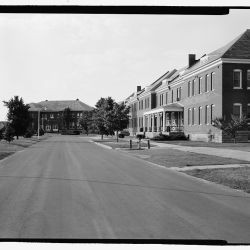
When I was twelve years old, I went with my father to his office in the evening, housed in the old hospital on the far side of Plattsburgh Air Force Base. The building had been retrofitted for administrative use, but it had not been emptied of its past. During World War II, wounded soldiers had been flown in from Europe and treated there, and whatever could not be healed had stayed behind. The hallways still held that weight, and the air carried its residue in ways that were difficult to ignore. I already knew some places remembered.

My father asked me to go along with him, so I grabbed my radio controlled car and ran it down the long corridor while he gathered paperwork. The fluorescent lights hummed overhead, steady and indifferent, and the sound of my car rolling along the floor occasionally drowned them out before fading again. By then, I had lived with my way of feeling space for four years. I had learned not to talk about it after Alaska taught me that honesty could make adults uncomfortable and cruel. I stayed quiet, observant, and turned inward, practicing a kind of silence about my gift that felt safer than any explanation of it.

I did not see ghosts. What I felt was closer to a shift in temperature and color, like the cool rush that slips through an open door on a hot day and changes the room without asking. It was the aftermath of pain rather than the pain itself. I could feel sorrow pressed into the walls and sense fear lingering where it had once been experienced. Adults liked to say I had an imagination or that I was overly sensitive, but none of those explanations accounted for how a place could hold what happened there long after the people were gone. At twelve, I already understood that some spaces spoke and that not everyone was taught how to listen.

That night, the building responded. Lights turned on after being switched off, sounds traveled from empty rooms, and doors settled without hands. My father stopped moving, and I watched him listen as his shoulders tightened, as if his body understood before his mind caught up. It was the first time I had ever seen fear arrive without permission.

Until then, he had existed as certainty, military strong and commanding, the final word in every room he entered. Standing in that hallway, surrounded by something neither of us could control, he was no longer shielded by rank or routine. His fear did not make him weak. It made him ordinary and placed him back among other people, subject to the same unease that finds everyone eventually.

I did not feel triumphant or vindicated as I witnessed my father’s fear. I grew quiet as something inside me recalibrated, subtle but permanent. That night, I understood that my father was not immune or protected by authority or belief, and that military strength did not mean exemption from being afraid or human. Watching him stand there, facing something he could not explain and something I had already learned to live with, showed me who he was. In that recognition, I understood myself, and something I had trusted and known about him loosened. Asshole or not, he was human.

February 2026
M T W T F S S
 1
2345678
9101112131415
16171819202122
232425262728