Left at the Base Gate – Day 41

Prompt – What friendship meant then versus now.

Friendship for a Gen X military brat was never abstract. It was immediate, physical, and temporary. It lived on a base for a season. It was whoever arrived where I landed and stayed until the orders changed things. Closeness did not require history because the history was already baked into the coming and going. It required only shared space and a shared understanding that the now mattered.

Moves arrived without negotiation. One day there were no boxes, and the next day there were boxes. No one framed it as loss. It was logistics. Adults talked about duty and opportunity while kids learned how to say goodbye without ceremony. Grief did not get named or recognized, so it learned how to hide. It was hella efficient.

That efficiency shaped all parts of life including friendship. I learned how to read people and rooms quickly. I learned which parts of myself to lead with and which parts to keep packed. I learned how to belong without attaching too deeply because attachment always came with a cost that would be collected later. Leaving did not mean the friendship was not real. It only meant it had run its course.

There was a raw honesty in those friendships. There was no time for slow reveals or performative closeness. We went deep because the clock was already ticking. Loyalty was not measured in years. It was measured in moments by who stood next to me right then, and who kept my secrets when it mattered.

Years later, Japan reinforced that lesson in a quieter way. Friendship there came with an expiration date written directly into the contract. One year, sometimes two. The system itself discouraged permanence, as if rotation could prevent attachment from taking root. It felt almost sacred, like impermanence was a value worth protecting. I understood the rule. I broke it anyway.

In Japan, friendship was full and immediate. We did life together knowing it would end. There was no pretending otherwise. That honesty made the closeness sharper. We shared meals, mistakes, and small triumphs without the illusion of forever. When the goodbyes came, they were clean, even when they hurt like hell. The ending did not erase what had been real. Then time moved on, and the rules of friendship shifted again.

Adult friendship now is persistent and networked. It lives in texts, threads, and long digital echoes. Distance no longer explains disappearance. Silence gets interpreted. Absence becomes personal. Continuity is expected, even when life makes that continuity hard.

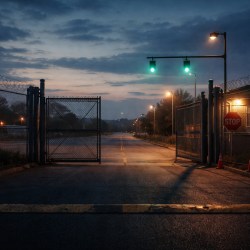
For someone raised where friendship ended cleanly at the base gate, this can feel disorienting. The instinct to give space can read as withdrawal. The habit of packing light can look like detachment. What once kept me steady can now feel out of step. And yet, something endures.

That upbringing left behind a particular strength. The ability to go deep without guarantees. The capacity to choose people deliberately rather than by convenience. A sensitivity to character, to kindness, to how someone treats power and vulnerability. There are fewer friendships now, perhaps, but the ones that remain carry real weight.

There is also a fluency in difference. I learned how to translate myself across places, cultures, and expectations. I learned that belonging is not automatic, but it is possible. That skill does not disappear. It matures. What can look like guardedness is often discernment. What can look like distance is often respect for the truth that closeness should be intentional. Friendship was never something I assumed would last forever. It was something I honored while it was true.

And maybe that is the quiet gift. Knowing that connection does not require permanence to be real. Knowing that love can be fierce and temporary and still shape a life. Knowing that when I choose to stay now, it is not because I have to. It is because I mean it.

February 2026
M T W T F S S
 1
2345678
9101112131415
16171819202122
232425262728  

There Is a Light That Never Goes Out – Day 36

Prompt – ​​A friend who helped you see yourself more clearly.

Lots of firsts happen in high school. Some turn into great stories, while others stay quiet and make a person better without fanfare at all. Carol was one of those quiet firsts for me. She was a minor character in my storyline, but she helped me see myself more clearly and understand that I was a process inside a process.

We found each other in Ms. Peregrine’s art class, and then we kept finding each other outside of it. We went to coffee shops and talked the way early 90s kids talked when we thought the world might be ending and might also be remade in the same week. Our conversations had that grunge, almost avant garde seriousness that made everything feel both ridiculous and sacred. Music was always part of it because music was how we translated ourselves back then. The Smiths, The Psychedelic Furs, Nirvana, it all gave us language when we did not have enough of our own.

Carol drove an old Saab, and we would head out to Derry, New Hampshire, to a small coffee shop where time slowed down. For a while, life really did seem simple: coffee, cigarettes in the cold air outside, art talk, future talk, and the illusion that we could choose our next chapter without the past reaching up to claim us.

Right before graduation, we went for coffee the way we usually did, and I told her about the next move, the one that was supposed to mean freedom. College. It was another fresh start with another address, but this one would be mine. It was still another version of me being packed up and carried forward, but it was going to be away from them. Carol listened, then reached down and handed me a gift. It was a vase she had made.

It still sits in my house. Like me, it is not smooth. It is textured, marked by the touch of others, and it does not pretend to be untouched. Its surface is made of rings, each one visible, each one earned. I can see where the clay was pressed thinner, where it was pulled upward, where it almost failed and did not. The shape narrows, widens, and narrows again, and nothing about it feels accidental. It looks like a thing that has been worked. It looks like a thing that has been tested. It looks honest.

When Carol handed it to me, she did not talk about the beauty of the object. She talked about the process. She told me that each move, each experience, each hurt, each whatever, reduces us. The wheel pulls the clay down even as it spins it forward. Loss compresses and change thins because living costs something. But then, she said, another hand builds us back up. Another layer with another pass, and another choice. She spoke like she was offering a map, and I remember realizing she was not just talking about clay. She was talking about me, and she was doing it in a way that did not feel like pity. It felt like recognition.

What stays with me is the part that sounded almost too simple to be true. The height is not predetermined. The clay does not decide that. The wheel does not decide that. The hands do. I do.

That sentence landed in a place in me that had always assumed the opposite. I had lived as if the moves and endings and misunderstandings were the authors, as if the next chapter was always something that happened to me rather than something I shaped. I had learned how to adapt, how to read rooms, how to disappear when necessary, and how to be grateful for whatever remained. I had not learned how to claim the idea that I could still choose. Not in the shiny motivational way, but in the real way, the slow way, the hands on the wheel way.

Experience is experience. It is not good or bad in the clean moral categories people love to use to make life feel organized. It is formative. It shapes. The vase does not judge the pressure that made it narrower. It holds it. It carries it forward. The narrow places make the wider ones possible. The evidence of strain becomes part of the strength, not an argument against it.

Carol helped me see myself more clearly. She gave me an image that could hold complexity without turning it into judgment. She handed me a physical reminder that being shaped is not the same thing as being broken.

The vase sits there, quiet and unimpressed, holding its own history without apology. It reminds me that I can honor what shaped me without letting it name my limits. The clay remembers everything. And still, it holds.

February 2026
M T W T F S S
 1
2345678
9101112131415
16171819202122
232425262728  

Terms and Conditions – Day 35

Prompt – A falling-out that still sting.

Friends come and go. That has always been the deal. It was the quiet contract of the military, the rotating cast of names and addresses that followed me from place to place. College became the same kind of temporary, only dressed up in credit hours, retention rates, and being “mature” about it all. People arrived, people disappeared, and then people became a story told in passing.

After graduation, shortly following a quick stint as an accountant, Kari and I moved to Japan for a teaching job that came with a built-in expiration date. The contracts were one year, which allowed for a tidy little ending. The Japanese school system also had a way of enforcing impermanence. Teachers were moved around periodically, as though the goal was to prevent deep bonds from forming. It felt almost religious, like attachment itself was a rule that was not supposed to be broken. I broke it anyway.

In Japan, I was an expat with a small group of young, inexperienced teachers. We were all hungry for belonging, and we were far enough from home that the hunger got louder. We did life together in full. We carried the hard parts and the easy parts, and we laughed at the absurd parts that only make sense when daily life is built in a language that still feels borrowed. We became tight, not in a casual way, but in the way people do when they become each other’s lifeline in a foreign country.

It was beautiful. It was real. It was the kind of closeness that made ordinary days feel like a story worth keeping.

When we returned home, we tried to bring the bond with us. We talked about forming a team of four couples to go back to work as missionaries – whatever the fuck that meant! We met a few times to dream and map out a future that felt like a second chance at that Japan closeness. I let myself believe it could happen. I let myself imagine a circle that would hold.

There was a lunch get-together. Kari and I were not invited. Later, someone lied about it with the kind of polite, church-friendly dishonesty that is supposed to keep the peace while it quietly kills the truth. Eventually, one person came clean, and in that moment I remembered why I used to prefer transient relationships.

I had broken the rules. I had allowed myself to get close. I had allowed myself to love people, not as passing characters, but as anchors. I had trusted the story. I had trusted the holy language people use when they want to make ordinary friendship feel sanctioned and permanent.

Love hurts when it ends. This one stung because it was real. It was tied to some of the most beautiful years of my life, and it was wrapped in religion like a ribbon that also functioned as a blindfold. The pain was not the lunch. The pain was the realization that the bond had terms and conditions, and I had not been told what they were until I failed them. Even now, the sting still registers because the years were real. Japan was real. The laughter was real. The belonging was real. A single lunch betrayal cannot erase that, even if it tried.

Some friendships are seasonal. Some are sacred. Some are both, right up until they are not. I can grieve what ended without pretending it never mattered. I can hold the good years in one hand and the betrayal in the other and finally stop forcing them to cancel each other out.

February 2026
M T W T F S S
 1
2345678
9101112131415
16171819202122
232425262728  

Letters from the Snow Fort – Day 32

Prompt – Your First Best Friend

Growing up in the military taught me an early lesson about attachment. Relationships are a double-edged sword. They matter, and they will not last. Best friends form naturally as proximity and instability accelerate intimacy, and then those relationships are quietly released when proximity receives orders. I learned to care deeply and prepare to walk away, or watch someone else do it first…bond quickly and leave cleanly. It is a strange education, equal parts tenderness and self-protection.

When we moved to Alaska at Elmendorf Air Force Base, the quiet was heavy. The stay at Temporary Living Quarters (TLQ) stretched on longer than it should have, with a tragic backstory for another post. I needed a friend in the way children do, urgently and without strategy. A kid named Jeremy answered that call once we finally moved into our “permanent” house.

Jeremy lived one street over. He was a military unicorn, the rare child who had never moved until Alaska. Born and raised on Randolph Air Force Base in Texas, his entire life had existed within a single zip code. I had never met anyone like that. He carried Texas with him like medieval primogeniture, a loud and unquestioned right I assumed was loyalty to home. Years later, living in Oklahoma, I learned it was simply Texas being Texas.

Jeremy and I did everything together. We were inseparable in the uncomplicated way only children can manage. We got into trouble. We kept secrets. He was the first person I ever told about the way I experienced spaces, how certain places released stored images and memories like film that did not belong to my own lived experiences. He did not flinch. He did not ask me to explain. He accepted it as information, not confession. That mattered more than he ever knew and I did not know myself what it meant for years.

Winters belonged to us. Every year the snowplows pushed massive walls of snow into the middle of our court, and every year we hollowed them out. Two stories high, easily. We built tunnels and rooms and entrances that collapsed if you breathed wrong. Looking back, it was reckless, but it felt like ownership. The world was dangerous, but it was ours.

Spring and the awakening of life brought a different kind of stupidity. One afternoon we strung fishing line between two light poles, hid in the bushes, and waited. A passing car caught the line, snapping the antenna clean off. We laughed until a large Black woman stepped out of the car and locked eyes with us. She chased us the full distance home. I still remember the panic and the way fear made me feel.

We did everything together until we did not.

Jeremy left for Texas. That was how it went. I wrote him every week for a long time. Letters folded carefully, addressed with hope. None ever came back. I eventually stopped writing, not because it hurt too much, but because that was the lesson. Letting go was part of the training.

About ten years ago, he found me on social media. He apologized immediately. He told me he had carried the guilt of not writing back all those years. Life had moved fast, and the pain had felt endless. He had been a kid and did not know what to do with it, especially when each letter reopened what he was trying to survive.

That is the part that stays with me now. Not the leaving, but the fact that the connection was real enough to be carried quietly for decades by both of us. Some friendships do not survive proximity or time. Some survive as memory, intact and unspoiled. My first best friend taught me that presence does not require permanence, and that sometimes love arrives later, softened, and finally named.

February 2026
M T W T F S S
 1
2345678
9101112131415
16171819202122
232425262728