The Accounting of the Siblings – Day 30 & 31

Prompt (2) – Being chosen. Being ignored.

Home of the Highlanders, MacArthur High School was the clearest definition of an oxymoron I had encountered up to that point in my life. Highlanders in the Great Plains with a motto of “People First, Excellence Always” in a transient town better known for pawn shops and titty bars…Jesus Almighty! The contradiction was not subtle in the least.

When I arrived, I was immediately chosen. I was chosen not for anything I had done or earned, but for the size of my body. I am certain the coach believed he was offering affirmation, maybe even opportunity. He likely told himself a story about coaching me up and bringing discipline that would later open doors. What he actually did was place around my neck a weight that lasted the entire year, and much longer if I am honest. His choice was not about me. It was a projection of how I could be useful to him and his team. Utility masquerading as care has a particular heaviness to it. It presses down slowly on a proud chest and insists on gratitude while doing so.

I would have preferred to be ignored rather than bullied for an entire year for refusing his offer. That refusal marked me. It made me a problem instead of a resource in that space. Being ignored, however, also carries its own kind of damage. It teaches a collective disappearance as a survival strategy. It rewards silence and compliance and requires no accounting.

Being chosen and being ignored feel like opposites on paper, but they share the same origin story. They are siblings of a parental unit with an “idea of parental compassion is just, you know, wacko!” Both being ignored or chosen single a person out. Both carry judgment. Both demand something without ever asking who someone is.

In school, I was chosen in ways I never requested, and I was ignored in ways I did not deserve. From lessons I learned at home, I tried to stay small and as invisible as possible, yet chosen for a task I was not prepared to bear. Staying small felt safer than being evaluated. Invisibility felt preferable to becoming a symbol or a cautionary tale. I wanted neither attention nor erasure. That tension followed me for years. Over time, that same tension gave me eyes to see it later. It taught me how to notice patterns and to recognize when power was pretending to be neutral. It also pushed me to try to name what I was seeing, first quietly, then more openly, even when doing so came at a cost.

The cult classic movie The Breakfast Club offers one of the clearest examples of these siblings with a shared back story that I know. It is a film I used in class for years as an educator, not because it is perfect, but because it is honest about hierarchy and the siblings. John Bender, labeled the “criminal,” delivers a line to the “princess,” Claire, that sounds cheeky but is filled with lived experience. He says, “You could not ignore me if you tried, sweets.” It lands as swagger, but the truth inside it is heavy. John Bender knows exactly where he stands. The popular kids can pretend he does not matter, but they cannot erase him from the room. He takes up space in that place because disappearing has already been assigned to him elsewhere.

Bender is not chosen. He is tolerated by those who are there. He is watched. He is remembered only as a problem. The popular kids do not forget him because he is insignificant. Forgetting him allows them to keep their version of themselves intact. Remembering him would require reckoning. I recognized that math immediately! I learned early how to make myself unignorable without ever being chosen. There is a difference. Being seen is not the same as being held. Being loud is not the same as being safe. Like Bender, I understood that if I did not exert some control over my visibility, someone else would decide whether I vanished or became a spectacle.

Bender’s anger is never random. It is precise. It is armor. It is a refusal to disappear quietly for people who benefit from not having to see him. Later in the movie, he says what has been true all along. “What do you care what I think, anyway? I do not even count. I could disappear forever and it would not make any difference. I may as well not even exist at this school.” That is not defiance. It is once again accounting. He understands the math of the place better than anyone else in the room.

Claire believes she counts so much that her absence would register as a crisis. However, John’s absence would register as relief. He is visible enough to be punished and invisible enough to be disposable. That is the difference he names when he turns on her. It is not cruelty. It is clarity. He is not asking to be liked. He is asking to be recognized as existing and to be seen as worthy.

That scene stayed with me because I could relate to each of the siblings leaving the same residue.

What I learned much later is that choosing myself had to come before anyone else did. Not loudly. Not as performance. Not as rebuttal. Just steadily and quietly. Choosing myself meant staying present without auditioning. It meant letting some rooms misunderstand me, letting some people leave, and sometimes me leaving the room. It meant trusting that I was worthy. There is a particular peace that comes with no longer arguing with the ledger. I no longer need to prove that I count. I do not need to disappear to survive or accept a role that requires self-erasure to belong. That choice does not erase the past, but it does loosen the siblings grip on me. The brothers can continue their work elsewhere. I have already chosen a different inheritance.

February 2026
M T W T F S S
 1
2345678
9101112131415
16171819202122
232425262728  

Head, Shoulders, Arms, & Toes – Day 19

Prompt – What is something you inherited that is invisible.

Meeting new people is routine for me as an educator. Conferences, professional development sessions, even the pedagogy aisle of a bookstore invite brief conversations with strangers. If the talk lasts long enough, the question of where I am from eventually appears. My answer lands in an awkward nowhere. There is no single city or state to name. I follow it with military brat, and more often than not, the response is me too.

That is usually all it takes. From that short exchange, I can place them – NCO kid or officer kid. The distinction is not always visible, but it is all too familiar. For those that do not speak military, NCO stands for noncommissioned officer, while officers hold formal commissions granting authority to lead and command. In plain terms, NCOs resemble blue collar middle managers, while officers mirror executive leadership. The stereotypes of each military group carry over from the groups in civilian life all too well. I recognize the difference not because I am trying to sort people, but because I learned to read hierarchy long before I understood its cost.

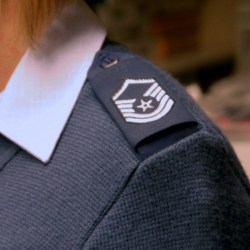
As the conversation continues, my eyes drift where they always do. Look at the shoulders. Look at the arms. Look at the posture. I look for rank even when it is no longer stitched into fabric. Power announces itself quietly, through who stands at ease and who remains alert, through who speaks freely and who measures every word. Authority does not require a uniform. It lives in tone, in social standing, and in permission.

I carried that awareness out of childhood and into adulthood, from military structure to religious hierarchy to professional systems. Each one promised order. Each one insisted it was different. The symbols changed, but the sorting remained. Stripes became titles. Doctrine became policy. Obedience learned new language. What made each system dangerous was its invisibility. Power no longer lived on sleeves. It lived in access, approval, and exclusion.

I thought I was adapting. I thought I was growing. I did not realize I was just learning new ways to disappear to survive. By the time I saw it clearly, it had already shaped me. The reflex stayed. Even now, I scan for hierarchy, not because I want to participate in it, but because I know how quickly it hardens and who it leaves behind.

Throwing it off was not dramatic. It was an internal unlearning. A refusal to confuse structure with safety or authority with worth. I no longer measure myself by proximity to power. I measure myself by who I stand next to when belonging is being decided.

What I carry is invisible and indeed inherited from growing up in a military family, but it continues to show up whenever authority appears and decides who belongs and who does not. It keeps me honest. It keeps me watchful. It reminds me that seeing exclusion is already a kind of resistance. And now, I always make sure to stand with the other, if for no reason to make sure they do not feel alone – me as well!

February 2026
M T W T F S S
 1
2345678
9101112131415
16171819202122
232425262728  

Asshole or Not – Day 18

Prompt – The first time you realized your parents were human.

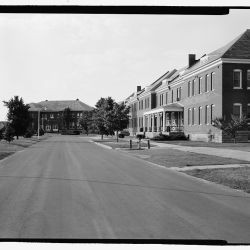
When I was twelve years old, I went with my father to his office in the evening, housed in the old hospital on the far side of Plattsburgh Air Force Base. The building had been retrofitted for administrative use, but it had not been emptied of its past. During World War II, wounded soldiers had been flown in from Europe and treated there, and whatever could not be healed had stayed behind. The hallways still held that weight, and the air carried its residue in ways that were difficult to ignore. I already knew some places remembered.

My father asked me to go along with him, so I grabbed my radio controlled car and ran it down the long corridor while he gathered paperwork. The fluorescent lights hummed overhead, steady and indifferent, and the sound of my car rolling along the floor occasionally drowned them out before fading again. By then, I had lived with my way of feeling space for four years. I had learned not to talk about it after Alaska taught me that honesty could make adults uncomfortable and cruel. I stayed quiet, observant, and turned inward, practicing a kind of silence about my gift that felt safer than any explanation of it.

I did not see ghosts. What I felt was closer to a shift in temperature and color, like the cool rush that slips through an open door on a hot day and changes the room without asking. It was the aftermath of pain rather than the pain itself. I could feel sorrow pressed into the walls and sense fear lingering where it had once been experienced. Adults liked to say I had an imagination or that I was overly sensitive, but none of those explanations accounted for how a place could hold what happened there long after the people were gone. At twelve, I already understood that some spaces spoke and that not everyone was taught how to listen.

That night, the building responded. Lights turned on after being switched off, sounds traveled from empty rooms, and doors settled without hands. My father stopped moving, and I watched him listen as his shoulders tightened, as if his body understood before his mind caught up. It was the first time I had ever seen fear arrive without permission.

Until then, he had existed as certainty, military strong and commanding, the final word in every room he entered. Standing in that hallway, surrounded by something neither of us could control, he was no longer shielded by rank or routine. His fear did not make him weak. It made him ordinary and placed him back among other people, subject to the same unease that finds everyone eventually.

I did not feel triumphant or vindicated as I witnessed my father’s fear. I grew quiet as something inside me recalibrated, subtle but permanent. That night, I understood that my father was not immune or protected by authority or belief, and that military strength did not mean exemption from being afraid or human. Watching him stand there, facing something he could not explain and something I had already learned to live with, showed me who he was. In that recognition, I understood myself, and something I had trusted and known about him loosened. Asshole or not, he was human.

February 2026
M T W T F S S
 1
2345678
9101112131415
16171819202122
232425262728