Negative Space? – Day 29

Prompt – Refusing to Fit In

In an earlier post, I wrote about wanting to belong rather than fit in. That distinction took time to learn. In junior high, fitting in would have been enough. I would have accepted it without hesitation. I would have traded pieces of myself to fit in. At that age, fitting in felt like survival, and survival always felt like success.

By high school, something shifted. After years of practice and a near-perfected “fuck off all the way to the summit of fuck off mountain” routine, isolation no longer felt like punishment. It felt like control. What once registered as exclusion began to register as choice. The same distance that had hurt me earlier now protected me. The difference was not the space itself, but who claimed it.

After the absolute horror of my tenth-grade year in Lawton, Oklahoma, I arrived in Nashua, New Hampshire with no interest in entering the social hierarchy of high school. Lawton had taught me that visibility often came with a price tag I could not pay.

Coming from Oklahoma to New England carried its own gentle violences. More than once, I was asked if I lived in a teepee or wore a feathered headdress. Each question was delivered as entitled humor, which made refusing to answer them even more satisfying. I guess, I was supposed to absorb the insult and provide comic relief in return. Fuck off!

So I withdrew. I did not explain myself. I did not correct anyone. I did not soften the moment for their benefit. I simply refused to participate in the shenanigans at all…until Ms. Peregrine taught me to channel my rage.

Ms. Peregrine’s art class gave me a sanctioned place to not fit in. It was a room that did not require compliance. Rage had somewhere to go. Antisocial behavior was both subject and medium. Silence was not interpreted as failure but as process.

That room held others like me, though we would not have named it that way at the time. Tom, Carol, Zach, and Keith all refused the social hierarchy differently than me. None of us were trying to be alike in our rage. That was the point. Our work shared no aesthetic beyond defiance. The refusal showed up in charcoal, paint, warped proportions, and negative space. What we had in common was not style but stance.

Art allowed me to say things I never had in words. It did not demand neat conclusions or a unified thread that ran through the entire piece. It allowed contradiction. It allowed ugliness. It allowed intensity without apology. For the first time, not fitting in did not feel like absence. It felt like presence, contained and visible. This was the beginning of belonging.

Looking back, I can see the quiet irony. What I thought was withdrawal was actually alignment. Refusal was not the end of connection. It was the beginning of something more honest. Art did not make me belong, but it gave me a place to stand without erasing myself. Sometimes that is enough. Sometimes that is everything.

Husky Jean Calculus- Day 28

Prompt – Trying to fit in.

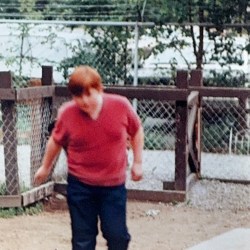
Growing up, we never had enough money for the things everyone wanted. Back-to-school shopping was always tense because school supplies and clothes were expensive, and the margin was thin on a good month. My older siblings were teenagers, which meant shoes and clothes mattered in the unspoken social calculus of school. My mother, meanwhile, was running a different set of numbers, the kind tied to groceries, bills to be paid, and the quiet reality of coming up short and it all being her fault.

One afternoon in a store, my mother’s shoulders were tight as her attention was divided between price tags and possibility. She was doing the math in her head, calculations that did not resolve cleanly. I noticed, as I always noticed because I was old enough to see but I was far too young to understand what it actually was I was seeing.

So I erased myself. I said I would take whatever was cheapest. If it meant the not-cool clothes, that was fine or the cheaper Rose Art crayons, so be it. I said it lightly, as if it cost nothing, but I knew those words gave my mother a moment to breathe as I gasped for air. It was not that I wanted my siblings to have the best as I became a martyr, rather, I wanted peace in the house. Peace meant freedom from tension, freedom from eggshells. So I chose less and I told my eleven-year-old self that this is what being good looked like.

As I got older, I wanted to fit in everywhere. I wanted to fit in at home, at school, and inside my own skin. I wanted all of it without understanding that wanting everything at once comes with a cost. Somewhere along the way, I became exhausted, as my energy was limited. Survival required efficiency and a lot of energy.

I stopped caring about fitting in at school. Or at least I learned how to perform not caring about fitting in at school. This was not bravery. It was conservation. I redirected what little I had toward staying upright, toward “reading the room”, and toward becoming agreeable and invisible in equal measure. Endurance became my defining trait. I mistook it for identity and called it a personality.

The truth arrived later, quietly, the way truth tends to. I wanted to fit in, but what I really wanted was to belong. Belonging did not ask for performance. It did not require erasure to keep others comfortable. It allowed me to stay. I never had that in my first family.

Fitting in changes a person to earn acceptance. Belonging offers acceptance without negotiation. Fitting in hides real opinions. Belonging makes room for honesty with care. Fitting in depletes. Belonging restores. Fitting in is about how things appear. Belonging is about how things hold throughout the years.

I did not know any of this then. I only knew how to choose peace over cool, quiet over attention, and survival over style. The meaning of those choices took years to surface. Looking back now I see my erasure was not tenderness…it was twisted. But now, I finally belong and there is finally room for me to remain.

January 2026
M T W T F S S
 1234
567891011
12131415161718
19202122232425
262728293031  

Exit Through the Gift Shop – Day 13

Prompt – What did conflict look like in your home?

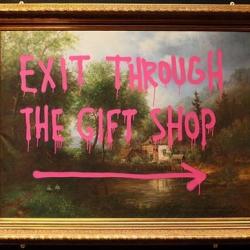
In the museum that was my family, exhibits were arranged with great care, but no one ever explained how to walk through the space and appreciate it. There were rules, but they were invisible. There were expectations, but they were never spoken aloud. Reverence was required, though no one ever showed what reverence looked like. Conflict rose and settled, mostly silent, like high blood pressure. It was present and deadly.

I was expected to know how to move, how to speak, how to respond, without ever being taught. Love was supposed to be understood. Respect was supposed to be automatic. No questions. If something felt off, it was never the environment. It was me. If someone felt unseen, it became my responsibility to fix it, even when I did not know what was broken.

There was very little modeling and no learning together. There was quiet judgment when the performance did not match the script that existed inside someone else’s imagination. So I studied faces and read spaces the way visitors study paintings. I read silence the way curators study cracks in marble. I anticipated needs that were never spoken. Over time, I confused vigilance with care. I confused fear with respect. I confused self-erasure with love.

Having my own family, I know that healthy families teach. They model love for each other. They meet you where you are. They invite you into the room instead of scolding you for not knowing the path. They offer maps. They offer language. They practice connection in the open, not behind glass. They make mistakes out loud. They apologize out loud. They are noisy. They are alive.

I am still unlearning the rules of the gallery. I am still learning that I do not have to bow to every display or stop at every exhibit. I am allowed to ask questions. I am allowed to exist in the room without shrinking to fit someone else’s idea of beauty. I am allowed to walk past what harms me. Little by little, I choose different architecture for my own family. There are far fewer exhibits and a hell of a lot more living. I teach my children that conflict is not something to fear. It is something we move through together. I make space for mistakes. I say what I feel and let them say what they feel. We practice beginning again. We learn in the open.

Sometimes the old museum haunts me with its polished floors and quiet shame. Sometimes I still find myself whispering in rooms that no longer require my silence. But I notice it now. I pause and I breathe. I set down the old way.

As an adult, I am beginning to believe something I could not have imagined as a child: love is not earned through performance. Love is not proven through suffering. Love grows in rooms where people are allowed to exist as they are.

The museum will always be part of my story, but I am learning how to walk out of the gallery without carrying the blame as a souvenir.

January 2026
M T W T F S S
 1234
567891011
12131415161718
19202122232425
262728293031