Finders Keepers – Day 16

Prompt – What role did you play in your family?

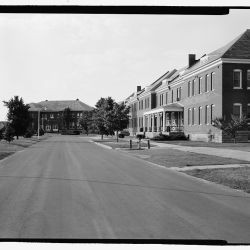
I was the baby in my family. My brother and sister were older than me by several years, old enough that by the time I reached preteen age, they were already gone. My brother went into the military. My sister married into the military. Apparently, the military was the family business. The house grew quieter. The orbit shifted.

As the baby, I watched. Silence felt safe. Observation felt necessary. While others reacted, I absorbed. While the room moved, I stayed still long enough to understand what was actually happening. Being the youngest meant I was present without authority. Decisions were made above my pay grade and explanations were optional at best. I learned to read tone before words and posture before intention. I noticed how laughter sometimes arrived too quickly, how stories and jokes could function like smoke, how playfulness could smooth over things no one wanted to face directly. I understood the role of distraction even when I refused to perform it. Instead of entertaining, I studied the moment the room needed to be entertained.

I became the observer because no one asked me to be anything else. I was small enough to disappear and quiet enough to be underestimated. That invisibility became access. I watched tension build and release. I watched who needed to be soothed and who needed to stay unaware. I noticed who carried the emotional weight and who benefited from keeping it unnamed. I learned that some roles exist to protect the system rather than the people inside it. Those patterns mattered to me even when naming them made others uncomfortable.

Somewhere in all that watching, I became the storyteller. Not the loud one. Not the funny one. Just the keeper of the stories. I held the version of events that existed before they were softened. I remembered what came before the joke and what never made it into the retelling. I learned that stories shift depending on who is listening and that truth is often traded for comfort without anyone admitting the exchange.

The storyteller role was lonely. It meant holding meaning without a place to set it down. It meant knowing things too early or too clearly. It meant understanding that telling the truth outright could destabilize a balance everyone depended on, even if that balance was fragile and false. So I learned patience. I learned restraint. I learned to let stories mature until they could be told without blowing the room apart. I learned that timing matters as much as honesty.

I did not soothe my family through story. I soothed myself by understanding the stories. I organized chaos into narrative, or at least I tried to. I tracked cause and effect. I stitched moments together into something coherent so I could survive them. That instinct followed me into adulthood, into classrooms, into leadership, into writing. I still sit quietly at first. I still watch how people move when they think no one is paying attention. I still tell stories not to entertain, but to reveal.

February 2026
M T W T F S S
 1
2345678
9101112131415
16171819202122
232425262728  

Adventures in Moving: ALCAN Edition – Day 15

Prompt – A family story that shaped how you saw yourself.

Family stories are told around the table to remind us who we have been and how we survived becoming who we are. They keep history alive, not in textbooks or archives, but in voices that know where to pause and when to laugh. Sometimes these stories shape how we see ourselves. Other times, they simply allow us to recognize ourselves inside someone else’s memory, and how we are seen outside of ourselves. In that recognition, connection happens. Not because our lives matched, but because the feeling did, or at least should have?

These stories carry more than nostalgia. They show us how anger was handled, how grief was avoided or honored, how love showed up…or did not show up. Long before anything happens to us, we have already been taught, quietly, how we are supposed to respond by who speaks, who stays silent, who fixes things, and who leaves the table early.

Family stories teach us what is celebrated and what is buried. They reveal which parts of the truth are told with ease and which ones are edited for comfort. Over time, I realized that I did not just inherit eye color or mannerisms. I inherited scripts. Expectations. Reflexes. The way a future moment might unfold has often already been practiced in the retelling of the past. Listening closely gives me a choice. I can honor the story without repeating it exactly. I can keep the memory alive while deciding how the next chapter sounds when my voice enters the room.

This story was told repeatedly in my family and has offered me wise counsel for my future self. My family was moving from March Air Force Base in Los Angeles, California to Elmendorf Air Force Base in Alaska. Of course, we drove. Military families often drive because it is cheaper, longer, and character building in all the wrong ways – Adventures in Moving™. The highway that connects the lower forty-eight states to Alaska is the ALCAN Highway. It was still unfinished even in the early 1980’s. Smooth pavement would suddenly disappear into gravel, potholes, and dust. Civilization vanished for long stretches. It was a road that demanded endurance and offered very little grace in return.

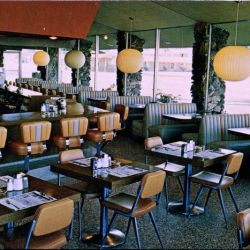
Somewhere in Canada, we stopped at a small diner. The kind with thin walls, vinyl booths, and a quiet that made every sound matter. We sat down, ordered drinks, and tried not to look like exactly what we were: a tired military family passing through a place that was not ours. My father got up to use the bathroom.

What happened next became legend.

The bathroom walls betrayed him, loudly and repeatedly. The sounds were unmistakable and entirely public. They echoed through the thin walls and into the dining room. Every person in that restaurant knew exactly what was happening. There was no hiding it. No dignity left to salvage.

My mother did not laugh. She did not smile. She did not lean into the absurdity of it. She stood up, gathered us, and marched us out of the diner in silence. We waited outside by the car, humiliated and rigid, while my father finished what should have been a private moment. When he came out and realized we had left, there was no humor. No apology. No acknowledgment of how ridiculous or human the moment was. There was only anger and tension.

This is the part that has stayed with me over the years. No one softened the moment. No one repaired it. No one said I am sorry or this is funny or we will laugh about this later. It was a shared experience that somehow belonged to no one and taught nothing except how not to be together. That story shaped me because it taught me what I wanted instead of that.

I wanted someone to laugh with. I wanted someone who could sit in discomfort and still choose kindness. I wanted apologies to exist, even for small things. I wanted mistakes to be survivable. I wanted love that could handle embarrassment without turning it into punishment. I wanted partnership!

Life is not fully paved. It shifts without warning. Smooth moments give way to rough stretches. What matters is not the road itself, but who you ride with and how you treat each other when the pavement disappears. That diner taught me that silence can wound more deeply than noise. And it taught me, very early, the kind of person I hoped to become when the road got rough.

February 2026
M T W T F S S
 1
2345678
9101112131415
16171819202122
232425262728  

Fine, and Other Lies We Learned – Day 14

Prompt – What was a secret your family carried?

Pink Floyd, Van Halen, Skid Row, Meat Loaf, U2, Ozzy Osbourne, and even Barry Manilow gave me heart and gave me a language I could own. Their songs taught me how to feel without apology and how to sit with emotion long before I had the words, the permission, or the safety to do so. Music became my private tutor. However, that education came at a cost.

At fifty-one, my ears feel at least twenty years older than the rest of me because concerts were never simply live shows. They were full-body immersion experiences built from stacked speakers, vibrating floors, and sound loud enough to register as belonging, even for the most awkward of us packed into the crowd. Like most people my age, I never protected my hearing because it never occurred to me that I was borrowing against something future me would need to navigate ordinary life.

Now conversations require intention and precision. If someone does not speak clearly, with attention to tone, volume, and rhythm, the words scatter before they reach me, and I find myself asking for repetition or filling the silence with a reflexive huh. I miss parts of sentences and occasionally whole meanings, and whispers are simply not accessible to me anymore. Still, I carry no regret because losing the ability to hear whispers forced me to notice something I had been living with all along.

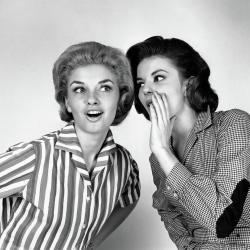
Whispers had always been part of my life, long before the music ever stole them from me. Whispers and mumbled speech were the true secret my family carried, not one dramatic confession or a single locked drawer hiding a headline-worthy truth, but something far quieter and far more durable. The secret was cumulative, made of a thousand small omissions, a thousand almosts, and a thousand things that were never named but were felt every single day.

The secret lived in the spaces between words. It lived in dinners where everyone ate but no one spoke about what hurt. It lived in rules enforced without explanation and affection that arrived sideways through duty. It lived in silence that passed for peace and order that pretended to be safety. Nothing was hidden exactly. Everything was simply unattended.

Each person in my family carried their own version of the unspoken. Grief without language. Anger without permission. Fear disguised as discipline. We learned to move around one another carefully, like furniture in a dark room, memorizing where not to step. Over time, caution became habit, and habit hardened into our culture.

Those secrets were never malicious, at least not at first. They were inherited. They were learned through the belief that survival mattered more than honesty, that stability mattered more than intimacy, and that asking for help meant failure. The secrets survived because they felt normal, because they never announced themselves, and because they whispered. That was the most dangerous part. No one ever learned how to hear them.

No one named the absence. No one said that something essential was missing. We were fed, housed, dressed, and moved efficiently from place to place. On paper, we were fine. The secret hid inside that word until fine became the highest achievement and the finish line. I grew up believing that families simply endured one another, that love was proven by staying rather than speaking, that conflict was something to avoid rather than move through, and that feelings were personal inconveniences best handled alone. I did not know these were beliefs. I thought they were facts.

When the secret finally revealed itself, it did not arrive as scandal, but as grief. Grief for what none of us were taught. Grief for the conversations that never happened. Grief for the care that wanted to exist but never learned how to speak. Our secret was grief.

February 2026
M T W T F S S
 1
2345678
9101112131415
16171819202122
232425262728  

Exit Through the Gift Shop – Day 13

Prompt – What did conflict look like in your home?

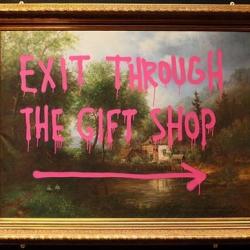
In the museum that was my family, exhibits were arranged with great care, but no one ever explained how to walk through the space and appreciate it. There were rules, but they were invisible. There were expectations, but they were never spoken aloud. Reverence was required, though no one ever showed what reverence looked like. Conflict rose and settled, mostly silent, like high blood pressure. It was present and deadly.

I was expected to know how to move, how to speak, how to respond, without ever being taught. Love was supposed to be understood. Respect was supposed to be automatic. No questions. If something felt off, it was never the environment. It was me. If someone felt unseen, it became my responsibility to fix it, even when I did not know what was broken.

There was very little modeling and no learning together. There was quiet judgment when the performance did not match the script that existed inside someone else’s imagination. So I studied faces and read spaces the way visitors study paintings. I read silence the way curators study cracks in marble. I anticipated needs that were never spoken. Over time, I confused vigilance with care. I confused fear with respect. I confused self-erasure with love.

Having my own family, I know that healthy families teach. They model love for each other. They meet you where you are. They invite you into the room instead of scolding you for not knowing the path. They offer maps. They offer language. They practice connection in the open, not behind glass. They make mistakes out loud. They apologize out loud. They are noisy. They are alive.

I am still unlearning the rules of the gallery. I am still learning that I do not have to bow to every display or stop at every exhibit. I am allowed to ask questions. I am allowed to exist in the room without shrinking to fit someone else’s idea of beauty. I am allowed to walk past what harms me. Little by little, I choose different architecture for my own family. There are far fewer exhibits and a hell of a lot more living. I teach my children that conflict is not something to fear. It is something we move through together. I make space for mistakes. I say what I feel and let them say what they feel. We practice beginning again. We learn in the open.

Sometimes the old museum haunts me with its polished floors and quiet shame. Sometimes I still find myself whispering in rooms that no longer require my silence. But I notice it now. I pause and I breathe. I set down the old way.

As an adult, I am beginning to believe something I could not have imagined as a child: love is not earned through performance. Love is not proven through suffering. Love grows in rooms where people are allowed to exist as they are.

The museum will always be part of my story, but I am learning how to walk out of the gallery without carrying the blame as a souvenir.

February 2026
M T W T F S S
 1
2345678
9101112131415
16171819202122
232425262728  

The Fourth Chair Slide – Day 10

Prompt – A time you wanted to be older than you were.

T. G. Smith Elementary School could no longer contain my academic prowess, so I began the new school year at Central Junior High School in Springdale, Arkansas, saying goodbye to Ms. Hayes and Ms. Parker’s sixth grade class. I signed up for band because it felt right, like something that might make me more adult and more complete. I imagined music, rhythm, and belonging. I imagined the part of me that always felt outside finally finding a door in with music.

Instead, I marched. That was it. Marching drills in the heat, day after day, carrying an instrument I could not play while pretending any of this made sense. No music. No sound. Just lines and formations, like the military, across a field that never seemed to end. I waited for the wonder to arrive with the community. There was no pulse. The moment never came.

Just as I began finding my way around Central, the boxes came out again at my house. We packed our life, taped our stories shut, and pointed the car toward upstate New York. Big surprise… another move. I traded the armpit of Arkansas for what felt like deliverance country. What could possibly go wrong?

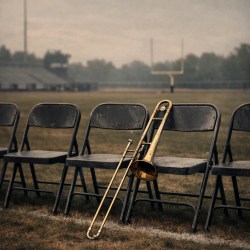
I had chosen the trombone back in Arkansas. I liked the idea of it, as it seemed bold and confident with a little swagger. When I arrived at Peru Central School — the word Central stayed with me like a tired friend — the kids in band had already learned to read sheet music. This allowed them to squeak and squawk with their instruments. They were ahead of me in ways I did not want to confess. When the band director asked if I could read music, I said yes with the false confidence of a seventh grader who would rather choke than be seen as weak. I mistook silence and lying for strength. Large mistake.

He placed me in fourth chair. A compliment, apparently, as I could not play a single note. My greatest skill was making quiet tromboner jokes in my head to keep myself from panicking while I watched the kid beside me glide through his part as I mirrored every movement. I slid when he slid. I was always a second behind, always wrong. The sound was chaos. My body knew it. My face pretended it did not.

When the fall concert arrived, I wanted to disappear into the metal of the chair. I wanted adulthood. I wanted choice. Why did I have to play a damn instrument at all. I wanted the privilege of walking away and saying no. I wanted to choose absence like so many adults did when things became inconvenient. But I sat there, present, exposed, and stuck.

I stayed silent. I copied the player beside me and never blew air into my horn. I pretended participation. I survived by vanishing. I do not remember how the semester ended, only that I held on with stubbornness and made a quiet promise to myself. Never again.

Behind the awkwardness, the shame, the noise that never became music, something else formed. Not a lesson. Not a tidy moment. More like a bruise that refused to fade. I began to see that life kept handing me roles that did not fit, and I kept trying to wear them anyway. Good kid. Good student. Good soldier. Smile. Perform. Pretend it is all fine. Pretend you know the notes. Pretend this is who you are. But pretending had a weight.

It pressed into my chest. It made my shoulders ache. It turned every room into a test that I could not study for and had no way of passing. I started to suspect that every lie I told to survive was costing me some part of myself I might one day need. Somewhere inside that seventh grade kid, sweating through another rehearsal and praying the song would end, a quieter truth began to move. Maybe the problem was not that I failed. Maybe the problem was that I kept disappearing in order to pass.

A voice whispered. Tell the truth. Tell it even if your face burns. Tell it even if someone rolls their eyes. Tell it because silence eats at you from the inside out.

I wanted to be an adult in that moment so I could make a choice to vanish. Now, I know what I need to do as a “real” adult is to slowly and painfully come back.

February 2026
M T W T F S S
 1
2345678
9101112131415
16171819202122
232425262728  

What The Middle Teaches: Notes From The Fringe – Day 9

Prompt –  A childhood game that taught you something about power.

P.E. sucked. Full on sucked. It was rarely fun. Inflatable projectiles flying across the gym, ropes that reached for the rafters, laps to check off a box for the that year’s President Physical Fitness Award, and knowing that teams had to be made with no assistance from the teacher. None of it was my cup of tea. But as a card carrying member of Generation X, I was metal-slide strong and did what needed to be done, even when it sucked.

On rainy days, the parachute came out in the gym. It always arrived like a promise. The teacher delivered a speech about cooperation and character while the smell of dust and sweat hung in the air. Sneakers squeaked on the gym floor, and the colors of the parachute glowed, promising community, but the sense of community never really followed. Still, we circled the parachute, fingers hooked around the edge, waiting.

Lift. Lower. Again.

The middle was different. The middle was the prize. One kid received the honor, always with quiet ceremony. The lucky kid would slip beneath and disappear into that cool, secret bubble of air while the rest of us kept the parachute alive.

Lift. Lower. Again.

Life on the fringe had a simple assignment. Pretend the work on the edge and the fun in the middle were the same thing. From the outside, it looked magical. From the edge, it felt like labor. Wrists burning. Shoulders tight. No glory. No cool air where it mattered. Still, hope lingered. Maybe next time the middle would belong to one of us. Maybe someone else would carry the weight.

I remember wanting the middle and fearing the middle at the very same time. Long before I understood language like power or systems, something quiet inside that circle told the truth. The kid in the center lived differently. The fabric rose for them without effort. Joy arrived without cost. Power gathered beneath the tent of color while the rest of us stayed at the fringe and pretended it was equal.

Life kept offering new parachutes after I left the gym…at home, in the classroom, and at work. The language was still teamwork. The reality was often a bright center that glowed while everyone else kept the rhythm steady. If I am honest, I have lived in both places. I have held the edge until my hands felt raw. I have also stood in the middle and felt how easily the circle can disappear from view.

The parachute taught a lesson I wish had waited until I was older. Joy is uneven. Work is invisible to those not doing it. And if you are not paying attention, you can live your whole life on the fringe, convincing yourself that the view is the same for all.

Now I pay attention. Who is chosen? Who is always lifting? When I find myself in the center, with air and space and room to move, I work to remember the circle. I notice the hands along the edge. I try to live as the kind of center that makes more room for everyone to breathe, and the kind of edge where collaboration is real.

February 2026
M T W T F S S
 1
2345678
9101112131415
16171819202122
232425262728  

The Pain Behind the Pane – Day 8

Prompt – Something you believed about adults that turned out to be wrong.

I used to believe that adults arrived somewhere when they grew up. I carried this picture in my head of a final landing place where life would settle and the air would clear and everyone would communicate. With all this communication I would finally stand steady and know what to do. I imagined grown-ups as completed people. Whole. Wise. Calm. I held on to that belief like a promise that would arrive someday. I was wrong.

Adults are not finished. Adults are not completed works of art. Rather, adults are children who kept moving forward with broken pieces stitched loosely together carrying what shattered them, what rescued them, and everything they never learned how to name or were too damn afraid to name. Adults may have larger bodies with larger responsibilities, but inside, the storms still swirl. Inside, fear still resides and speaks. Inside, the past still taps on the glass and demands to be heard.

Adults call certain habits maturity. I see now that much of it is simply survival dressed in nice clothes. The same protective moves. The same rehearsed smiles. The same patterns repeating themselves quietly in the background like an old song that never stops playing.

For a long time I believed adulthood meant having life all figured out. I wanted that future version of myself to finally make sense of the chaos, to sort the pain of a dysfunctional military family childhood into neat boxes that would not spill over. Laughable, really. Instead, I began to realize that many adults remain stuck at the exact age when everything veered off course. The unprocessed parts of the story get dragged forward like heavy luggage. There is pretending. There is numbing. There are smiles that hide more than they reveal. And then there are a few, the rare few, who finally turn around, face what hurts, and begin again with shaky, honest steps leaving the past at that window.

Growing up, it turns out, is not about age. Growing up is about truth. It is about finally saying out loud where the freezing happened. It is about noticing where the running began. It is about admitting where fear still lives quietly inside the bones. Adults are not fully grown. Adults are still learning in real time. Adults are trying to parent younger versions of themselves while raising children, paying bills, showing up at work, and doing the best they can with the tools they have.

The sobering part is simple. No one fully arrives. There is no final plateau. There is becoming, and then becoming again. But buried inside that realization is something surprisingly tender. If no one is finished, then there is still room. There is room to soften. There is room to learn new language for old wounds. There is room to live with humility instead of perfection. There is room to forgive the child and the adult at the same time.

I did not get the certainty I once imagined. What I received instead feels truer. I am still growing. I am still learning. And that means the story is still open despite the adults in the room!

February 2026
M T W T F S S
 1
2345678
9101112131415
16171819202122
232425262728  

In the Margins, Where I Breathe – Day 7

Prompt – A rule you refused to follow.

The cover of my Trapper Keeper glowed like the inside of an arcade, all neon and loud. “Stay Rad” splashed across the front like graffiti that wanted to be dangerous but felt more like a fat kid trying to be cool. Behind it, a glowing triangle pulsed like the screen right before a new video game loads. That brief pause held its breath and made a promise just like my planner. The Trapper Keeper whispered that anything was possible, if only life was structured in just the right way.

The lie it tried to sell me, and an entire generation, was simple. Stay organized and life will fall into place. Keep my schedules straight. Keep my notes tight. Keep my dreams in tidy sections, labeled, hole-punched, and snapped into place, class after class. If I could trap it, I could keep it.

There was a rule hidden inside that message, and I have bucked that rule since the moment I knew it existed. Use the planner and live by the calendar, treating the schedule like scripture, is what the academy says to be true. As a student and later as a teacher, I saw it everywhere, as common as desks and whiteboards. Another system. Another promise. Another planner with color-coded order pretending to tame the chaos. Such bullshit.

So I refused.

I refused the Franklin Planner. I refused the Full Focus planner. I refused the Roterrunner. I refused the PalmPilot because that thing never flew! I opened them. I turned the pages. I studied the boxes and printed times that tried to tell me where my life belonged, and something in me said no. I even carried some of them, like talismans I was expected to believe in. But schedules felt like cages. Those preprinted lines felt like a stranger beside me in the cafeteria, offering advice that did not know my story. I did not want every minute accounted for, nor did I want my thoughts sealed into plastic sleeves like tiny body bags for the dead.

Instead, I wanted space for the unexpected. I wanted room to scribble, cross out, wander, and return. I wanted the wide, blank page where anything might appear. Teachers said that being organized meant being mature. Colleagues said that being planned meant being professional. The rule insisted that if I could not live inside the planner, I would fall behind, lose track, and fail.

Maybe. Maybe not. Or absolutely not and immediately no.

What I knew, even then, was simple. My mind did not grow inside boxes. My imagination did not breathe inside time slots. The most important learning arrived in margins, in scribbles, in the slow wandering back to myself. I carried the Trapper Keeper and with it I carried the illusion of control. But the rule that said the planner must run my life. I refused that one.

And in refusing, I learned something I could not learn any other way. Life does not live on lined paper. Meaning does not arrive neatly labeled. The heart does not follow gridlines, and neither does grief, or wonder, or love, or anything that keeps me waking up and trying again. The planner promised certainty. What I needed was presence.

So I chose the blank space. The risk. The messy page that told the truth. Not tidy. Not perfect. Just alive. That became the real rule for me. Stay curious and be willing to get lost. What matters most cannot be trapped, and it sure as hell cannot be kept.

It can only be lived.

February 2026
M T W T F S S
 1
2345678
9101112131415
16171819202122
232425262728  

Family Rules Silence – Day 6

Prompt – A rule you did not understand but followed anyway.

As a child, because I said so had a different flavor in my house. It showed up inside the command, Do what you are told, when you are told, and how you are told. I always wondered where the who and the why disappeared to in that little piece of military mantra nonsense. Every time I asked, the answer never arrived in words. It arrived through clenched teeth and lips pulled tight, the way a body looks when the mortician fucks up, followed by insults sharp enough to make my questions feel like crimes. The message was simple. Obey. And at the time, that is what I did.

Growing up under that rule taught lessons no curious child is meant to learn. I learned that questions were dangerous and not appropriate. I learned that curiosity was rude. I learned that authority did not need to make sense because authority owned the room. I began to shrink my voice. I memorized the script. I moved with a fixed response instead of a living person, at least inside the walls of my house.

Later, when I stepped into other systems as an adult, I recognized that same mantra living under different names. I saw it forcing its way into classrooms. I saw it showing up in workplaces built on top-down structures that pretended to be leadership. I saw it sitting quietly inside families that claimed love while everyone hid the truth. Do what you are told. When you are told. How you are told. It sounded efficient. It sounded orderly. It sounded like discipline. But beneath all of that shine, it trained me to doubt me and silence my own gut.

As a kid, I obeyed, even when nothing made sense. Obedience created quiet. It created peace, or at least the illusion of peace. But, like all things, there was a cost. What I believed to be obedience was actually just braided fear and respect until both looked the same. Obedience convinced me that the loudest voice in the room must also be the smartest. Obedience placed me inside someone else’s version of right and wrong.

I followed that rule because I believed it made me good. A good child. A good son. Much later, I began to notice the cracks. The whole thing felt like a performance. It was less about obedience and more about fear. Fear that if even one of us asked too many questions, the fragile idea of family might shatter and reveal what was already broken.

Real families ask questions. Real families sit in the discomfort of truth. Real families refuse to treat because I said so as a final answer. It took years for that realization to settle into my bones. My life’s work has become the practice of asking why, again and again, and creating spaces where others feel safe asking as well. And I am grateful to report that the world does not collapse when why is asked. The opposite happens. Everything begins to breathe.

February 2026
M T W T F S S
 1
2345678
9101112131415
16171819202122
232425262728  

Secrets the Air Remembers – Day 5

Prompt – The first time you felt left out.

The third grade was my year, but not the banner kind of year. I began to understand that the world is not only what sits in front of my eyes. There are other layers beneath the seen, humming quietly, sending signals that not everyone can receive or understand or even wants to comprehend.

Another move pressed my family into boxes as we traveled from California to Alaska. The world grew colder and wider. The sky stretched in a way that felt endless. Mountains rose like silent witnesses to something that could not be named. This move felt different. It carried secrets. Each of us held our own private weight, and each of us carried it alone.

At eight years old, I could barely understand the ordinary world that everyone else seemed to agree on. Then something was added. Colors slipped out of their lanes. New surroundings arrived with weight and feeling attached. I began to hear with my whole body. I remembered air. I understood that walls could breathe, floors could whisper, and space held echoes of grief and laughter at the same time. I had no language for any of it, and I would not for years. What I had instead was loneliness, and the quiet fear that something in me was wrong.

The other eight-year-olds in my class spoke of Saturday morning cartoons, which kid cheated on the playground, and who ran the fastest at recess. Their worlds felt simple. Contained. Safe. When I shared my experiences, I noticed the slow and careful distance that formed around me. There was no vote. No raised hands. No secret ballot. Only the quiet math children learn too early…subtraction. A new seating chart formed without the teacher. Conversations paused when I walked by. The circle tightened, and I found myself outside of it before I even knew it was happening.

That was the first time I remember being excluded because I was myself. Not because I misbehaved. Not because I broke a rule. In that moment, I learned to step backward, to become smaller, to study the room before the room had the chance to study me.

However, every story finds its own way to balance loss. When some people leave, others arrive, carrying lessons that are needed. Ms. Mullins, my third grade teacher, was one of those people. She carried lessons, and she carried me, for the entire year. She noticed. She always noticed. During recess she invited me to sit beside her and asked me what the day felt like. Not what happened. Not what I saw. But what it felt like. I told her the room felt loud even when no one spoke. I told her the air remembered things. And she listened. She did not laugh. She did not try to make it smaller. She spoke in words an eight-year-old could hold. “Your brain is paying deep attention,” she said. “That is not broken. That is a gift. You will learn how to walk with it. I did.”

February 2026
M T W T F S S
 1
2345678
9101112131415
16171819202122
232425262728