Asshole or Not – Day 18

Prompt – The first time you realized your parents were human.

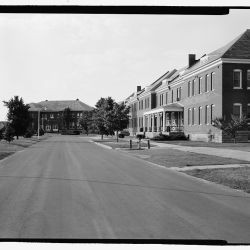
When I was twelve years old, I went with my father to his office in the evening, housed in the old hospital on the far side of Plattsburgh Air Force Base. The building had been retrofitted for administrative use, but it had not been emptied of its past. During World War II, wounded soldiers had been flown in from Europe and treated there, and whatever could not be healed had stayed behind. The hallways still held that weight, and the air carried its residue in ways that were difficult to ignore. I already knew some places remembered.

My father asked me to go along with him, so I grabbed my radio controlled car and ran it down the long corridor while he gathered paperwork. The fluorescent lights hummed overhead, steady and indifferent, and the sound of my car rolling along the floor occasionally drowned them out before fading again. By then, I had lived with my way of feeling space for four years. I had learned not to talk about it after Alaska taught me that honesty could make adults uncomfortable and cruel. I stayed quiet, observant, and turned inward, practicing a kind of silence about my gift that felt safer than any explanation of it.

I did not see ghosts. What I felt was closer to a shift in temperature and color, like the cool rush that slips through an open door on a hot day and changes the room without asking. It was the aftermath of pain rather than the pain itself. I could feel sorrow pressed into the walls and sense fear lingering where it had once been experienced. Adults liked to say I had an imagination or that I was overly sensitive, but none of those explanations accounted for how a place could hold what happened there long after the people were gone. At twelve, I already understood that some spaces spoke and that not everyone was taught how to listen.

That night, the building responded. Lights turned on after being switched off, sounds traveled from empty rooms, and doors settled without hands. My father stopped moving, and I watched him listen as his shoulders tightened, as if his body understood before his mind caught up. It was the first time I had ever seen fear arrive without permission.

Until then, he had existed as certainty, military strong and commanding, the final word in every room he entered. Standing in that hallway, surrounded by something neither of us could control, he was no longer shielded by rank or routine. His fear did not make him weak. It made him ordinary and placed him back among other people, subject to the same unease that finds everyone eventually.

I did not feel triumphant or vindicated as I witnessed my father’s fear. I grew quiet as something inside me recalibrated, subtle but permanent. That night, I understood that my father was not immune or protected by authority or belief, and that military strength did not mean exemption from being afraid or human. Watching him stand there, facing something he could not explain and something I had already learned to live with, showed me who he was. In that recognition, I understood myself, and something I had trusted and known about him loosened. Asshole or not, he was human.

February 2026
M T W T F S S
 1
2345678
9101112131415
16171819202122
232425262728  

Piercing the Silence – Day 17

Prompt – A time that the role you played in your family cracked or stopped fitting.

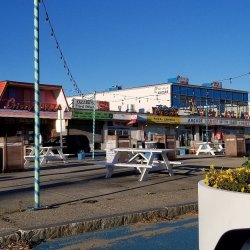
I never found Salisbury Beach to be subtle. It did not whisper. It announced itself with salt hanging heavy in the air, fried dough grease clinging to clothes, and the low mechanical groan of rides that had already lived several lifetimes past their prime. The boardwalk felt stitched together from weathered planks, cigarette butts, suntan lotion, and memory, each step resting on layers of use and neglect that no one bothered to hide.

The boardwalk was loud in a way that felt earned, and I understood that kind of noise, as I lived close to Massachusetts, rough and entirely unapologetic. Arcade bells rang like slot machines, triggered by quarters warmed in palms that had already lost far too many and still kept feeding the machines anyway. Everything about Salisbury felt temporary and permanent at the same time. Rust showed through peeling paint. The ancient ocean breathed steadily just beyond the chaos, indifferent to the noise, the prizes, and the bravado. And still, the boardwalk pulsed with life, a narrow strip of wood holding together sound, sugar, salt, and the stubborn insistence that summer might last just a little longer.

I watched teenagers strut in loose packs, performing indifference while carefully cataloging everything around them. Eyes slid past one another on purpose, yet nothing escaped notice: tank tops, cutoffs, and hair stiff with salt and AquaNet. Every glance carried calculation, and every laugh landed a little too loud, revealing confused confidence. Everyone was playing a role and trying on identities that only summer allowed. Some aimed for tough, others for untouchable, desired, dangerous, or simply older than they were. The boardwalk served as the stage, the crowd became the mirror, and becoming someone new felt possible as long as the lights stayed on and the night refused to end.

I went to Salisbury Beach in Buckie’s 1982 brown Ford LTD that smelled like vinyl, heat, and his mother’s lipstick stained Virginia Slims butts still sitting in the ashtray. I wanted to get my ear pierced on the boardwalk. I wanted proof that I could change something about myself, even if it was small and permanent at the same time. I knew my father would flip out. I carried that knowledge with me the whole ride, heavy but no longer enough to stop me. I was sixteen and exhausted from being quiet and observant. I was tired of shrinking. Tired of watching life happen from the edges. That hole made by the needle was not about jewelry. It was about choosing to be heard, choosing to be seen, and deciding that silence was no longer the safest version of who I could be.

When I got home, my father did exactly what I expected. He unloaded every fear he carried about himself into me as certainty. I would never find a job. I was unworthy. I was a failure, just like my brother. The words came fast and sharp. But something had shifted. The role I had played my whole life no longer fit the moment. Observation failed me. Silence offered no protection. Keeping the story suddenly felt like complicity.

So I spoke. Not carefully. Not strategically. I told him to go fuck himself.

That was the crack. The moment the observer stopped being useful. The moment the storyteller stepped into the story and risked becoming the problem instead of the witness. I did not become safer that night. I became louder. And once I crossed that line, there was no returning to the quiet child who believed that watching was enough.

February 2026
M T W T F S S
 1
2345678
9101112131415
16171819202122
232425262728  

Adventures in Moving: ALCAN Edition – Day 15

Prompt – A family story that shaped how you saw yourself.

Family stories are told around the table to remind us who we have been and how we survived becoming who we are. They keep history alive, not in textbooks or archives, but in voices that know where to pause and when to laugh. Sometimes these stories shape how we see ourselves. Other times, they simply allow us to recognize ourselves inside someone else’s memory, and how we are seen outside of ourselves. In that recognition, connection happens. Not because our lives matched, but because the feeling did, or at least should have?

These stories carry more than nostalgia. They show us how anger was handled, how grief was avoided or honored, how love showed up…or did not show up. Long before anything happens to us, we have already been taught, quietly, how we are supposed to respond by who speaks, who stays silent, who fixes things, and who leaves the table early.

Family stories teach us what is celebrated and what is buried. They reveal which parts of the truth are told with ease and which ones are edited for comfort. Over time, I realized that I did not just inherit eye color or mannerisms. I inherited scripts. Expectations. Reflexes. The way a future moment might unfold has often already been practiced in the retelling of the past. Listening closely gives me a choice. I can honor the story without repeating it exactly. I can keep the memory alive while deciding how the next chapter sounds when my voice enters the room.

This story was told repeatedly in my family and has offered me wise counsel for my future self. My family was moving from March Air Force Base in Los Angeles, California to Elmendorf Air Force Base in Alaska. Of course, we drove. Military families often drive because it is cheaper, longer, and character building in all the wrong ways – Adventures in Moving™. The highway that connects the lower forty-eight states to Alaska is the ALCAN Highway. It was still unfinished even in the early 1980’s. Smooth pavement would suddenly disappear into gravel, potholes, and dust. Civilization vanished for long stretches. It was a road that demanded endurance and offered very little grace in return.

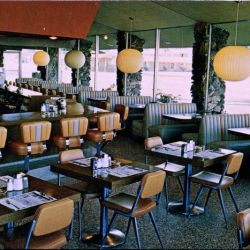
Somewhere in Canada, we stopped at a small diner. The kind with thin walls, vinyl booths, and a quiet that made every sound matter. We sat down, ordered drinks, and tried not to look like exactly what we were: a tired military family passing through a place that was not ours. My father got up to use the bathroom.

What happened next became legend.

The bathroom walls betrayed him, loudly and repeatedly. The sounds were unmistakable and entirely public. They echoed through the thin walls and into the dining room. Every person in that restaurant knew exactly what was happening. There was no hiding it. No dignity left to salvage.

My mother did not laugh. She did not smile. She did not lean into the absurdity of it. She stood up, gathered us, and marched us out of the diner in silence. We waited outside by the car, humiliated and rigid, while my father finished what should have been a private moment. When he came out and realized we had left, there was no humor. No apology. No acknowledgment of how ridiculous or human the moment was. There was only anger and tension.

This is the part that has stayed with me over the years. No one softened the moment. No one repaired it. No one said I am sorry or this is funny or we will laugh about this later. It was a shared experience that somehow belonged to no one and taught nothing except how not to be together. That story shaped me because it taught me what I wanted instead of that.

I wanted someone to laugh with. I wanted someone who could sit in discomfort and still choose kindness. I wanted apologies to exist, even for small things. I wanted mistakes to be survivable. I wanted love that could handle embarrassment without turning it into punishment. I wanted partnership!

Life is not fully paved. It shifts without warning. Smooth moments give way to rough stretches. What matters is not the road itself, but who you ride with and how you treat each other when the pavement disappears. That diner taught me that silence can wound more deeply than noise. And it taught me, very early, the kind of person I hoped to become when the road got rough.

February 2026
M T W T F S S
 1
2345678
9101112131415
16171819202122
232425262728  

Fine, and Other Lies We Learned – Day 14

Prompt – What was a secret your family carried?

Pink Floyd, Van Halen, Skid Row, Meat Loaf, U2, Ozzy Osbourne, and even Barry Manilow gave me heart and gave me a language I could own. Their songs taught me how to feel without apology and how to sit with emotion long before I had the words, the permission, or the safety to do so. Music became my private tutor. However, that education came at a cost.

At fifty-one, my ears feel at least twenty years older than the rest of me because concerts were never simply live shows. They were full-body immersion experiences built from stacked speakers, vibrating floors, and sound loud enough to register as belonging, even for the most awkward of us packed into the crowd. Like most people my age, I never protected my hearing because it never occurred to me that I was borrowing against something future me would need to navigate ordinary life.

Now conversations require intention and precision. If someone does not speak clearly, with attention to tone, volume, and rhythm, the words scatter before they reach me, and I find myself asking for repetition or filling the silence with a reflexive huh. I miss parts of sentences and occasionally whole meanings, and whispers are simply not accessible to me anymore. Still, I carry no regret because losing the ability to hear whispers forced me to notice something I had been living with all along.

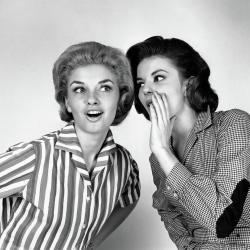
Whispers had always been part of my life, long before the music ever stole them from me. Whispers and mumbled speech were the true secret my family carried, not one dramatic confession or a single locked drawer hiding a headline-worthy truth, but something far quieter and far more durable. The secret was cumulative, made of a thousand small omissions, a thousand almosts, and a thousand things that were never named but were felt every single day.

The secret lived in the spaces between words. It lived in dinners where everyone ate but no one spoke about what hurt. It lived in rules enforced without explanation and affection that arrived sideways through duty. It lived in silence that passed for peace and order that pretended to be safety. Nothing was hidden exactly. Everything was simply unattended.

Each person in my family carried their own version of the unspoken. Grief without language. Anger without permission. Fear disguised as discipline. We learned to move around one another carefully, like furniture in a dark room, memorizing where not to step. Over time, caution became habit, and habit hardened into our culture.

Those secrets were never malicious, at least not at first. They were inherited. They were learned through the belief that survival mattered more than honesty, that stability mattered more than intimacy, and that asking for help meant failure. The secrets survived because they felt normal, because they never announced themselves, and because they whispered. That was the most dangerous part. No one ever learned how to hear them.

No one named the absence. No one said that something essential was missing. We were fed, housed, dressed, and moved efficiently from place to place. On paper, we were fine. The secret hid inside that word until fine became the highest achievement and the finish line. I grew up believing that families simply endured one another, that love was proven by staying rather than speaking, that conflict was something to avoid rather than move through, and that feelings were personal inconveniences best handled alone. I did not know these were beliefs. I thought they were facts.

When the secret finally revealed itself, it did not arrive as scandal, but as grief. Grief for what none of us were taught. Grief for the conversations that never happened. Grief for the care that wanted to exist but never learned how to speak. Our secret was grief.

February 2026
M T W T F S S
 1
2345678
9101112131415
16171819202122
232425262728