What Should Have Happened

I have not written my 500 words in a while. A few people have reached out to ask why. So, why not write 500 words about that! The lie I tell myself is that life got busy. The authentic answer I have not been interested in facing is that it started to hurt beyond what I could bear.

For months, I sat down every day and gave myself over to the keyboard. Some days the words came easily. Most days they did not. I thought I was spending a year writing about coming of age, but that was fucking naïve. I was trying to become the little boy who finally mattered. That is the lie old wounds tell. If I can remember hard enough, explain it well enough, or tell the story one more time, maybe I can negotiate a better childhood. Of course, that deal does not exist. The past has never renegotiated a better contract.

I believe adulthood begins when I finally let go of the childhood I did not get. I have not been able to shake that thought.

When I look back through my writing and my memories, I realize I have carried two sets of recollections for most of my life. There are the memories of what happened, and then there are the memories of what should have happened. Oddly enough, it is the second set that has always been heavier. They have followed me into relationships, parenting, work, travel, and eventually into my writing. Without realizing it, I was asking 500 words a day to build a bridge backward instead of forward. Every sentence became another attempt to earn something that should have been freely given to a little boy decades ago. No wonder I was so fucking exhausted!

I finally realized the pain was not coming from remembering. It was coming from hope. Hope that one more page, one more memory, one more honest paragraph might somehow change yesterday. I kept trying to convince the past to tell a different story. It never did as some stories are not waiting to be rewritten. They are waiting to be grieved.

Nobody talks much about grieving the childhood that never happened. I am not talking about pretending everything was terrible. I am talking about grieving the hugs that never came, the words that were never spoken, and the moments that quietly shaped my understanding of my own worth. I think there are versions of me that never had the chance to exist because I spent so much energy trying to become enough for someone else.

No one is coming to hand that little boy the childhood he deserved. There is no hidden chapter where everything suddenly makes sense and everyone finally says what I needed to hear. There is only me… now. And I am a fifty-two-year-old man who refuses to spend the rest of my life dragging that kid into the future, hoping tomorrow will somehow fix yesterday. Instead, I choose to sit beside him, thank him for surviving, and tell him he does not have to keep fighting anymore.

I still believe writing saves lives. It certainly has helped save mine. I just finally realized I was asking it to do something it could never do. I was asking words to resurrect the past instead of helping me live more honestly in the present.

Maybe growing up is not becoming someone new. Maybe it is accepting that childhood has no do-overs, nor can it be completed at a later date. It cannot be repaired by achievement, success, travel, love, or another five hundred words. Adulthood begins the moment I stop asking today to pay yesterday’s debts.

I think I finally understand why those 500 words became so painful. I was not writing to remember. I was writing to recover something that was never coming back. There is a difference.

The real work was never bringing that little boy back, but rather thanking him for surviving… and finally letting him rest.

July 2026
M T W T F S S
 12345
6789101112
13141516171819
20212223242526
2728293031  

Cheese Metal Belonging – Day 38

Prompt – Inside jokes that felt like belonging.

Chris and I played baseball on the base league at Plattsburgh Air Force Base. He went to a private Catholic school in town, and sports leagues on base were one of the only organized ways we were able to spend time together outside of our South Side Trails adventures. When one of our baseball seasons ended, we decided to extend that sense of belonging and proximity into a new sport. Soccer. Oh Jesus. Soccer meant crossing over the tracks to the old base, where most of the officers’ kids lived because they made up the majority of the soccer teams.

Chris and I crossed over to the old side of base and brought our inside jokes with us as a talisman. They were not especially clever, and they were certainly not kind. They were observational. They were earned. We joked about the officers’ kids we suddenly found ourselves surrounded by. We joked about how they wore Umbro soccer shorts and we called them “UmmmBros”. We told jokes about how they listened to U2 as we listened to glam rock cheese metal, and how they carried themselves like they were already officers themselves. We called them snobs, but the joke was less about them and more about us. It was about noticing patterns and naming them together.

We were enlisted kids. That mattered. Officers’ kids lived on a different side of the base, quite literally and indeed metaphorically. They had better lawns, better clothes, better toys, better posture, and what appeared to be better confidence. At least that was how it looked from where we stood.

The jokes worked because we both saw what we were joking about. We were not inventing the distinction. We were recognizing it. Every time one of us made a crack about the “UmmmBros” or U2’s latest album, it was not really about taste in music, sports, or clothes. It was a shorthand. A nod. A way of saying, I see what you see. I live where you live.

That is what inside jokes do. They compress shared experience into something small enough to carry in a sentence. They let two people signal belonging without having to explain themselves with no footnotes or justification. It is just recognition. We needed that on our side of the base.

Those jokes were not inclusive. That was the point. They carved out a small, protected space where we did not have to translate ourselves. In a life built on impermanence and rank, that mattered more than I understood at the time. We were not laughing to exclude others. We were laughing to anchor ourselves.

I think now about how much of my childhood was spent learning which version of myself would be safest in which room. Inside jokes short-circuited that work. With Chris, I did not have to perform. I did not have to prove anything. The joke itself was the proof. If it landed, I belonged.

Years later, I understand that belonging does not require permanence. It requires recognition. It requires someone else noticing the same absurdities and letting you laugh about them without explanation. That kind of belonging is fragile, but it is real. It lives in memory. It survives distance.

I do not remember every joke. I remember the feeling of them…the ease, and relief. The sense that, for a moment, I was not alone in my noticing.

And maybe that is the quiet truth. Belonging does not always announce itself. Sometimes it shows up as laughter that would not make sense to anyone else. Sometimes it sounds like a joke about “UmmmBros” and “U2, but not you”. Sometimes it is simply the moment you realize someone else is standing beside you, seeing the same thing, and choosing to laugh instead of explain.

July 2026
M T W T F S S
 12345
6789101112
13141516171819
20212223242526
2728293031  

Letters from the Snow Fort – Day 32

Prompt – Your First Best Friend

Growing up in the military taught me an early lesson about attachment. Relationships are a double-edged sword. They matter, and they will not last. Best friends form naturally as proximity and instability accelerate intimacy, and then those relationships are quietly released when proximity receives orders. I learned to care deeply and prepare to walk away, or watch someone else do it first…bond quickly and leave cleanly. It is a strange education, equal parts tenderness and self-protection.

When we moved to Alaska at Elmendorf Air Force Base, the quiet was heavy. The stay at Temporary Living Quarters (TLQ) stretched on longer than it should have, with a tragic backstory for another post. I needed a friend in the way children do, urgently and without strategy. A kid named Jeremy answered that call once we finally moved into our “permanent” house.

Jeremy lived one street over. He was a military unicorn, the rare child who had never moved until Alaska. Born and raised on Randolph Air Force Base in Texas, his entire life had existed within a single zip code. I had never met anyone like that. He carried Texas with him like medieval primogeniture, a loud and unquestioned right I assumed was loyalty to home. Years later, living in Oklahoma, I learned it was simply Texas being Texas.

Jeremy and I did everything together. We were inseparable in the uncomplicated way only children can manage. We got into trouble. We kept secrets. He was the first person I ever told about the way I experienced spaces, how certain places released stored images and memories like film that did not belong to my own lived experiences. He did not flinch. He did not ask me to explain. He accepted it as information, not confession. That mattered more than he ever knew and I did not know myself what it meant for years.

Winters belonged to us. Every year the snowplows pushed massive walls of snow into the middle of our court, and every year we hollowed them out. Two stories high, easily. We built tunnels and rooms and entrances that collapsed if you breathed wrong. Looking back, it was reckless, but it felt like ownership. The world was dangerous, but it was ours.

Spring and the awakening of life brought a different kind of stupidity. One afternoon we strung fishing line between two light poles, hid in the bushes, and waited. A passing car caught the line, snapping the antenna clean off. We laughed until a large Black woman stepped out of the car and locked eyes with us. She chased us the full distance home. I still remember the panic and the way fear made me feel.

We did everything together until we did not.

Jeremy left for Texas. That was how it went. I wrote him every week for a long time. Letters folded carefully, addressed with hope. None ever came back. I eventually stopped writing, not because it hurt too much, but because that was the lesson. Letting go was part of the training.

About ten years ago, he found me on social media. He apologized immediately. He told me he had carried the guilt of not writing back all those years. Life had moved fast, and the pain had felt endless. He had been a kid and did not know what to do with it, especially when each letter reopened what he was trying to survive.

That is the part that stays with me now. Not the leaving, but the fact that the connection was real enough to be carried quietly for decades by both of us. Some friendships do not survive proximity or time. Some survive as memory, intact and unspoiled. My first best friend taught me that presence does not require permanence, and that sometimes love arrives later, softened, and finally named.

July 2026
M T W T F S S
 12345
6789101112
13141516171819
20212223242526
2728293031  

Husky Jean Calculus- Day 28

Prompt – Trying to fit in.

Growing up, we never had enough money for the things everyone wanted. Back-to-school shopping was always tense because school supplies and clothes were expensive, and the margin was thin on a good month. My older siblings were teenagers, which meant shoes and clothes mattered in the unspoken social calculus of school. My mother, meanwhile, was running a different set of numbers, the kind tied to groceries, bills to be paid, and the quiet reality of coming up short and it all being her fault.

One afternoon in a store, my mother’s shoulders were tight as her attention was divided between price tags and possibility. She was doing the math in her head, calculations that did not resolve cleanly. I noticed, as I always noticed because I was old enough to see but I was far too young to understand what it actually was I was seeing.

So I erased myself. I said I would take whatever was cheapest. If it meant the not-cool clothes, that was fine or the cheaper Rose Art crayons, so be it. I said it lightly, as if it cost nothing, but I knew those words gave my mother a moment to breathe as I gasped for air. It was not that I wanted my siblings to have the best as I became a martyr, rather, I wanted peace in the house. Peace meant freedom from tension, freedom from eggshells. So I chose less and I told my eleven-year-old self that this is what being good looked like.

As I got older, I wanted to fit in everywhere. I wanted to fit in at home, at school, and inside my own skin. I wanted all of it without understanding that wanting everything at once comes with a cost. Somewhere along the way, I became exhausted, as my energy was limited. Survival required efficiency and a lot of energy.

I stopped caring about fitting in at school. Or at least I learned how to perform not caring about fitting in at school. This was not bravery. It was conservation. I redirected what little I had toward staying upright, toward “reading the room”, and toward becoming agreeable and invisible in equal measure. Endurance became my defining trait. I mistook it for identity and called it a personality.

The truth arrived later, quietly, the way truth tends to. I wanted to fit in, but what I really wanted was to belong. Belonging did not ask for performance. It did not require erasure to keep others comfortable. It allowed me to stay. I never had that in my first family.

Fitting in changes a person to earn acceptance. Belonging offers acceptance without negotiation. Fitting in hides real opinions. Belonging makes room for honesty with care. Fitting in depletes. Belonging restores. Fitting in is about how things appear. Belonging is about how things hold throughout the years.

I did not know any of this then. I only knew how to choose peace over cool, quiet over attention, and survival over style. The meaning of those choices took years to surface. Looking back now I see my erasure was not tenderness…it was twisted. But now, I finally belong and there is finally room for me to remain.

July 2026
M T W T F S S
 12345
6789101112
13141516171819
20212223242526
2728293031  

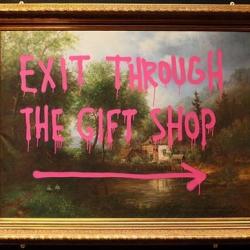
Exit Through the Gift Shop – Day 13

Prompt – What did conflict look like in your home?

In the museum that was my family, exhibits were arranged with great care, but no one ever explained how to walk through the space and appreciate it. There were rules, but they were invisible. There were expectations, but they were never spoken aloud. Reverence was required, though no one ever showed what reverence looked like. Conflict rose and settled, mostly silent, like high blood pressure. It was present and deadly.

I was expected to know how to move, how to speak, how to respond, without ever being taught. Love was supposed to be understood. Respect was supposed to be automatic. No questions. If something felt off, it was never the environment. It was me. If someone felt unseen, it became my responsibility to fix it, even when I did not know what was broken.

There was very little modeling and no learning together. There was quiet judgment when the performance did not match the script that existed inside someone else’s imagination. So I studied faces and read spaces the way visitors study paintings. I read silence the way curators study cracks in marble. I anticipated needs that were never spoken. Over time, I confused vigilance with care. I confused fear with respect. I confused self-erasure with love.

Having my own family, I know that healthy families teach. They model love for each other. They meet you where you are. They invite you into the room instead of scolding you for not knowing the path. They offer maps. They offer language. They practice connection in the open, not behind glass. They make mistakes out loud. They apologize out loud. They are noisy. They are alive.

I am still unlearning the rules of the gallery. I am still learning that I do not have to bow to every display or stop at every exhibit. I am allowed to ask questions. I am allowed to exist in the room without shrinking to fit someone else’s idea of beauty. I am allowed to walk past what harms me. Little by little, I choose different architecture for my own family. There are far fewer exhibits and a hell of a lot more living. I teach my children that conflict is not something to fear. It is something we move through together. I make space for mistakes. I say what I feel and let them say what they feel. We practice beginning again. We learn in the open.

Sometimes the old museum haunts me with its polished floors and quiet shame. Sometimes I still find myself whispering in rooms that no longer require my silence. But I notice it now. I pause and I breathe. I set down the old way.

As an adult, I am beginning to believe something I could not have imagined as a child: love is not earned through performance. Love is not proven through suffering. Love grows in rooms where people are allowed to exist as they are.

The museum will always be part of my story, but I am learning how to walk out of the gallery without carrying the blame as a souvenir.

July 2026
M T W T F S S
 12345
6789101112
13141516171819
20212223242526
2728293031