
Transactional Reflections – Day 47

Prompt – The Mirror Years

Mirrors. Another world reflected back, distorted in ways that felt both familiar and foreign. I was never obsessed with the mirror during the mirror years because the distortion was too great to trust. The mirror did not lie exactly, but it never told the whole truth either. It caught my outline but fully missed my context. It held my image still while everything inside me kept shifting.

It is not that I did not care about what I looked like. I cared deeply. I already knew what I looked like because others made sure to tell me. Classmates narrated my appearance while adults tried to soften it with other words, and like the mirror, neither kids nor adults told the whole story.

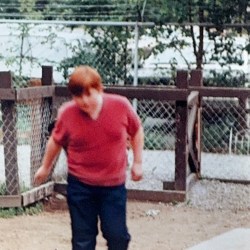
During those years, I learned to approach the mirror like my family approached houses; transactional in nature. A quick glance to adjust my shirt and then move on. Staying too long invited comparison, and comparison always felt rigged from the start. Red hair, pale skin, and a spare tire around my waist was a hard hand to win with. I stood there sometimes wondering if the person looking back was fixed or temporary, just like the house I lived in for that year.

I guess there was a strange relief in not being obsessed because obsession requires belief. I did not fully believe in the real me or the reflection. However, there were still moments when I lingered longer than planned. Not to admire or to criticize, but to study my real smile versus the one I performed to keep the peace. Those moments felt like secret conversations that no one else could interrupt. The mirror was less about appearance and more about listening.

Of course, the mirror did not give answers and as I mentioned, it was never really about how I looked. It became a quiet witness instead. I learned that my reflection was not asking to be corrected. It was asking to be seen without the noise of everyone else’s language layered on top of it. Through the distortion and my doubt, if I stood there long enough to feel the weight of my own presence, something steadier began to surface. Not confidence. Not certainty. Just recognition.

Eventually I stopped asking the mirror to tell me anything at all. I stood there less often, and when I did, I looked without searching for meaning. The reflection remained incomplete, and maybe it always will be. What changed was not the image, but my willingness to leave it unfinished. I learned that understanding does not always arrive with resolution. Sometimes it arrives as a quiet acceptance that the person in the glass is only one version of the story, and that the rest of me exists somewhere just beyond its frame, moving forward even when the reflection stays behind.

February 2026
M T W T F S S
 1
2345678
9101112131415
16171819202122
232425262728  

Texas Titty Twister- Day 46

Prompt – A comment someone made about your body that stuck.

Before I was a man, I had man boobs. Not a punchline, just a fact that lived under every t-shirt and never in silence. My pecs were far more than mere specks, and my older brother never let me forget it. He was eight years older than me, which meant he was bigger, stronger, and already living  inside a different version of life. I was still trying to play with friends in the yard while he was chasing girls and becoming the kind of guy everyone watched on the basketball court.

He had a way of turning my body into entertainment for himself. He would sit on top of me, grab my chest, and twist hard while laughing, calling it a Texas Titty Twister. Damn, it hurt! The pain was sharp, but what stayed longer was the laughter that followed, like my body existed for his amusement. I had no chance against him.

Being fat already felt like a burden I carried everywhere. My brother made sure the weight felt double, evenly distributed across both tits. At eight years old, I learned quickly that parts of a body could become public property if someone else decided they were funny enough. I remember wanting to disappear, wanting my body to shrink into something invisible so no one could grab it, name it, or twist it into a joke. Even then, I sensed that shame does not arrive loudly. It seeps in quietly and settles where a child does not yet have language to push it back.

We lived in two different realities. He wanted to fuck his girlfriend. I wanted to be left the fuck alone long enough to feel like a kid. The house did not hold those two worlds very well at the same time. Somehow my piece always felt smaller, dimmer, easier to overlook. I learned how to laugh through the tears because that is what kept the peace. And in my house, keeping the peace was paramount. If stress hit the adults, shit hit the fan for the kids. So, it was easier to call it a joke than to admit that it left a mark, both in the moment physically and emotionally for years to come.

Years have passed, and I have not seen my brother in some time. Still, when I do see him, the first image that arrives is not a flashback of a deep conversation or a shared memory of fishing together. It is his face scrunched with laughter, hands reaching down, ready to twist my man boobs right off my body. That is the strange thing about judgment made about a body. It does not fade the way people assume it will. It settles into muscle memory. It echoes through mirrors, locker rooms, and quiet moments when a shirt feels tighter than it should. Memory does not always return as a story. Sometimes it returns as a sensation. Shame.

But it was just a joke, right? Maybe that was true for him. For me, it was a lesson about power, about how easily someone else’s humor can shape how someone else sees their own body. The words and the hands both left impressions that took years to untangle. I have learned since then that bodies change, grow, harden, soften, and carry stories that no one else fully sees. What stuck was never just the twist or the laughter. What stuck was the feeling of being reduced to an amusement instead of being seen as a person.

And maybe that is where healing begins. Not by pretending it did not happen or by excusing it as harmless, but by naming it honestly and giving the younger version of me the dignity he did not get in that moment. My body was never the joke. It was simply a body learning how to exist in a house where strength and tenderness rarely spoke the same language. Now, when I think about that boy, I do not see weakness or shame. I see someone who survived long enough to tell the truth about what it felt like to be seen and unseen at the same time.

February 2026
M T W T F S S
 1
2345678
9101112131415
16171819202122
232425262728  

Ginger, Interrupted – Day 43

Prompt – Something about your appearance you struggled with.

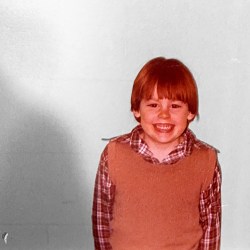
I hated my red hair as a kid. My parents always framed it like it was a blessing, as though it was some strange cosmic DNA secret upgrade that unlocked every fourth generation. They said it was rare. They said it made me memorable. They said it like I was chosen; however, I felt as though I was exposed because kids never called it rare. Kids could see my flaming red hair and used it as target practice.

Carrot Top. Big Red. Fire starter. Every nickname made sure I knew I was different. Houses changed often in the military with new classrooms and new people, but the insults never were new because the hair stayed the same. Somehow those that slung the insults thought they were original poets that uttered the insult at me first. Not the brightest bulbs in the pack, but still difficult to ignore.

Like most gingers, my skin sure as hell did not help matters. I was pale in a way that felt almost unfinished, like I had been sketched and colored in by the white Crayola crayon. Twenty-four seconds in the sun turned me into a walking warning label for future skin cancer prevention. Freckles multiplied overnight and merged together like some ancient protection rune drawn across my face and shoulders. Adults called them cute angel kisses. I called them evidence that a host of angels took a shit all over me.

There were moments I tried to negotiate with my red hair and fair skin. They always won. So I found myself standing just out of reach of direct sunlight. I watched other kids tan into some version of confidence that felt foreign to me. I was either white or lobster, a permanent contrast against whatever landscape I happened to live in that season. I wanted invisibility more than anything. I wanted to look like everyone else long enough to walk through a hallway without hearing insults.

Time did what time does. It softened some edges, sharpened others, and still others faded. Somewhere between leaving childhood and stepping into adulthood, the hair I tried to outrun began to feel less like a spotlight and more like a marker as it faded into auburn. It carried the memory of “carrot top” with it, but it turned out to be a good color. The freckles stopped feeling like a flaw and started to feel like a map of where I had been.

I still catch my reflection sometimes and see the kid who wished for darker hair, darker skin, anything that might let him disappear into the background noise of a hallway. He thought blending in would make him safe. He thought invisibility meant peace. What he did not know was that standing out would one day become a quiet kind of permission. The thing that made me feel exposed also trained my eyes to notice the other kid carrying something visible they never asked for. Different hair. Different language. Different body. Same feeling.

The red faded into auburn over time, softer at the edges, less fire and more ember. The freckles stopped feeling like a flaw and started to feel like coordinates, small constellations mapping where I had been rather than where I failed to belong. I stopped negotiating with the mirror. I stopped trying to outrun a color that had already outrun me.

I hated my red hair for years. Now it feels less like an accident and more like handwriting. Not a super power. Not a curse. Just a mark that stayed when everything else kept moving. And maybe that is what growing up really is. Learning that the parts of me I tried hardest to erase were never asking to be loved loudly. They were only asking to be allowed to stay.

February 2026
M T W T F S S
 1
2345678
9101112131415
16171819202122
232425262728  

Maps of Exposure – Day 26

Prompt – Where you sat, and what that said about you.

School desks were small. I was never small after the third grade. So, I sat wherever I thought I would be seen the least, both because my body had to be crammed into a tiny desk and because I wanted, metaphorically, to be small. It was not always the back. Sometimes teachers watched the those seats more closely than other seats, and the front row was never safe. The middle was impossible. The rule was simple. Find the fringe. That choice said everything about me in school.

Classrooms were maps of exposure. Desks were not neutral furniture. They were declarations. The front row signaled confidence or compliance. The back row suggested resistance or disappearance. Corners belonged to those who understood angles and sightlines, who learned early that bodies are measured long before words are heard.

I was fat. I do not mean that as confession or insult. I mean it as fact, the kind that preceded me into rooms and sat down before I did. Fatness was not something I carried. It was something assigned meaning by others. The room knew this before it knew my name.

So I chose seats strategically. I sat behind taller kids, near the wall, and close to exits. I learned how to fold myself inward, shoulders forward and spine curved just enough to suggest apology. I sat where teachers would scan past me while taking roll. I did not want to be called on, not because I did not know the answer, but because answers came with eyes, and eyes came with judgment.

The seating chart never asked why I sat where I did, but it enforced the order with precision. That structure was almost a relief because the cafeteria was different. Seating there required social currency. Tables formed tribes with unspoken rules. Athletes claimed space with backpacks and elbows. Beautiful people took up room without consequence. I sat where there was an empty chair that no one would miss if I disappeared, often with the other island-of-misfit-toy kids. Sometimes I chose solitude on purpose, but even that came with risk. You did not want to be that kid for too long.

Assemblies were worse. Bleachers turned bodies into sound. There was no hiding when the seat itself complained. Metal creaked and plastic bent. I learned to sit carefully, distributing weight and moving slowly, as if gentleness could erase mass. I learned to arrive early so no one would watch me navigate the row.

Teachers often said things like, sit anywhere or choose your own seat, as if freedom were evenly distributed. It was not.

Where I sat became where I learned to observe. From the edges, patterns reveal themselves. You notice who gets interrupted and who gets forgiven. You hear shifts in tone. You learn that authority prefers neat rows and quiet bodies, and that some children are allowed to sprawl into themselves while others must shrink to earn tolerance.

I became good at being small, not physically but socially. I learned to take up intellectual space while minimizing bodily presence. I learned to be useful, funny, compliant, insightful, anything that might justify the space my body occupied. Somewhere along the way, that strategy stopped being situational and started feeling like identity.

Years later, I still notice where I sit in meetings, restaurants, and waiting rooms. I still scan for sightlines and exits. I still choose chairs that feel forgiving. Healing has not erased this instinct. It has taught me to name it, to see the trade I was making. Safety over visibility. Shame over power. Survival over learning.

But hell, at least I was paying attention!

February 2026
M T W T F S S
 1
2345678
9101112131415
16171819202122
232425262728