Prompt – A comment someone made about your body that stuck.
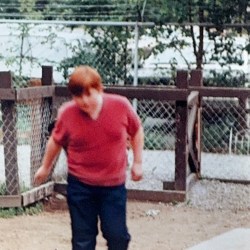
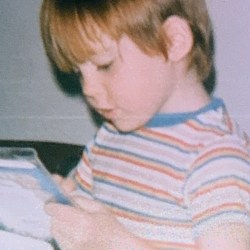
Before I was a man, I had man boobs. Not a punchline, just a fact that lived under every t-shirt and never in silence. My pecs were far more than mere specks, and my older brother never let me forget it. He was eight years older than me, which meant he was bigger, stronger, and already living inside a different version of life. I was still trying to play with friends in the yard while he was chasing girls and becoming the kind of guy everyone watched on the basketball court.
He had a way of turning my body into entertainment for himself. He would sit on top of me, grab my chest, and twist hard while laughing, calling it a Texas Titty Twister. Damn, it hurt! The pain was sharp, but what stayed longer was the laughter that followed, like my body existed for his amusement. I had no chance against him.
Being fat already felt like a burden I carried everywhere. My brother made sure the weight felt double, evenly distributed across both tits. At eight years old, I learned quickly that parts of a body could become public property if someone else decided they were funny enough. I remember wanting to disappear, wanting my body to shrink into something invisible so no one could grab it, name it, or twist it into a joke. Even then, I sensed that shame does not arrive loudly. It seeps in quietly and settles where a child does not yet have language to push it back.
We lived in two different realities. He wanted to fuck his girlfriend. I wanted to be left the fuck alone long enough to feel like a kid. The house did not hold those two worlds very well at the same time. Somehow my piece always felt smaller, dimmer, easier to overlook. I learned how to laugh through the tears because that is what kept the peace. And in my house, keeping the peace was paramount. If stress hit the adults, shit hit the fan for the kids. So, it was easier to call it a joke than to admit that it left a mark, both in the moment physically and emotionally for years to come.
Years have passed, and I have not seen my brother in some time. Still, when I do see him, the first image that arrives is not a flashback of a deep conversation or a shared memory of fishing together. It is his face scrunched with laughter, hands reaching down, ready to twist my man boobs right off my body. That is the strange thing about judgment made about a body. It does not fade the way people assume it will. It settles into muscle memory. It echoes through mirrors, locker rooms, and quiet moments when a shirt feels tighter than it should. Memory does not always return as a story. Sometimes it returns as a sensation. Shame.
But it was just a joke, right? Maybe that was true for him. For me, it was a lesson about power, about how easily someone else’s humor can shape how someone else sees their own body. The words and the hands both left impressions that took years to untangle. I have learned since then that bodies change, grow, harden, soften, and carry stories that no one else fully sees. What stuck was never just the twist or the laughter. What stuck was the feeling of being reduced to an amusement instead of being seen as a person.
And maybe that is where healing begins. Not by pretending it did not happen or by excusing it as harmless, but by naming it honestly and giving the younger version of me the dignity he did not get in that moment. My body was never the joke. It was simply a body learning how to exist in a house where strength and tenderness rarely spoke the same language. Now, when I think about that boy, I do not see weakness or shame. I see someone who survived long enough to tell the truth about what it felt like to be seen and unseen at the same time.
| M | T | W | T | F | S | S |
|---|---|---|---|---|---|---|
| 1 | ||||||
| 2 | 3 | 4 | 5 | 6 | 7 | 8 |
| 9 | 10 | 11 | 12 | 13 | 14 | 15 |
| 16 | 17 | 18 | 19 | 20 | 21 | 22 |
| 23 | 24 | 25 | 26 | 27 | 28 | 29 |
| 30 | 31 | |||||
 Muddled Soma