
Civilian Rules – Day 40

Prompt: A time a friend betrayed you

As a child, I was raised inside a system that offered basic training on how to exist with people that have an expiration date. Military bases were full of kids like me, changing addresses like refugees with pink slips. We learned how to attach quickly and detach cleanly. Friendships were intense, immediate, and understood to be temporary. When orders came, and they always came, we did not fight the ending. We practiced kindness in the present and disappearance in the future. It was not cruelty. It was survival. We handled each other gently because most of us already knew what heavy felt like at home.

I was hurt by friends during those years, but the hurt was diffused and governed by an agreed-upon set of rules. It belonged to circumstance more than intention. No one was really betraying anyone. We were all obeying the same unwritten code. Stay light, do not burden each other, and leave cleanly. This code failed me the first year my family became civilian.

Lawton, Oklahoma broke something open that I did not yet have language or experience for. My father could not find work. My mother worked in another state. Home still felt temporary, but without the structure that once explained why everything was temporary. At MacArthur High School, the rules I knew did not apply. Belonging was transactional and visibility was dangerous.

I was bullied for opting out of football, for choosing books and observation instead of collision. That alone would have been survivable. What I was not prepared for was betrayal disguised as friendship.

Tracy was my first real civilian friend. She listened. She asked questions. She made space for the softer parts of me that had never needed armor before. I trusted her because trust had always been safe inside temporary worlds. I told her my fears. I told her my uncertainties. I told her where I felt small.

She took those truths and passed them along to the very people I spoke about. She did not confront me. She did not warn me. She turned my vulnerability into currency. When the laughter came back to me secondhand, something inside me collapsed. This was not the clean ending I had been trained for. This was exposure. This was humiliation. This was betrayal with witnesses.

For a long time, I believed the lesson was that openness was a mistake. I learned how to seal myself. I learned how to withhold. Betrayal does not only break trust in another person. It fractures trust in the self who chose to believe. I was not only angry at Tracy. I was ashamed of my own hope.

It took years to understand that what happened in Lawton was not proof that I was naïve or weak. It was proof that I had crossed from a world governed by impermanence into one governed by performance. The hope arrived later, quietly. I did not lose my capacity to trust. I learned how to place it with care. I still believe in connection. I just no longer hand it over to civilians.

February 2026
M T W T F S S
 1
2345678
9101112131415
16171819202122
232425262728  

Borrowed Fire- Day 37

Prompt – A friend who pulled you toward trouble.

I have never had a true friend who pulled me toward trouble, but I did have a lot of trouble that pulled me toward people I called friends. In Plattsburgh, there was a kid who was more of a friend of a friend, or a friend of the group, a kid that drifted in and out of our orbit when he wanted. His name was Mike. He was short, quick to anger, and always looking for an edge to push. His dad was frequently gone on temporary assignments, and I never knew what his father’s job actually was. I only knew his absence hung in the air and created a lot of strain for Mike.

Mike’s height may have been part of his meanness, but the larger truth was that he lived inside a story that felt humiliating and painfully public. Even at thirteen, my group of friends knew what was happening at his house. Mike’s mother was finding her physical needs elsewhere when her husband was gone, and the worst part was not only that we knew, but that Mike knew we knew. That kind of knowledge does not sit quietly in a kid’s body. It turns into heat and rage. It turns into dare after dare. It turns into a need to control the narrative by burning it all down first.

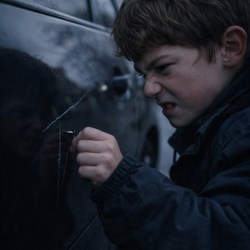
Mike taught us all how to smoke. He taught us how to drink. We objectified women in magazines together in the South Side Trails. We were mean together. We keyed cars, put sugar in gas tanks, made prank calls, snuck into movies on base, shoplifted, and treated other people’s property like it was a joke we deserved to tell. When Mike was around, the meanness had a sharpness to it, like we were proving something. When he was not around, some of the same dumb choices still happened, but the cruelty did not have the same appetite. Mike did not just bring trouble with him. He brought a mood. He made all of us meaner than we were on our own.

The father situation was Mike’s issue, but it was also part of the wider tone on base. Plenty of fathers carried their own damage, and plenty of homes ran on alcohol, abuse, pornography, and the kind of quiet debauchery that never stayed as quiet as adults thought it did. Mike’s particular version of it was personal and specific. He believed someone else’s father was sleeping with his mother, and he believed everyone knew, and he lived inside that humiliation like it was a locked room he could not escape. So he pulled us down with him, and we went because we were young and because we were bored. We did not understand the difference between loyalty and participation. We were far too young to know how to pull someone up, and we were not yet brave enough to refuse the gravity.

Years later, I can see the shape of it more clearly. Trouble was never the point. Trouble was the language. Mike was trying to say, I am hurting, and I cannot stand being the only one who has to carry it. That does not excuse what we did, and it does not clean it up into something noble, but it does make the story more human.

What I hold now is this. I cannot go back and un-key the cars or un-make the cruelty, but I can tell the truth about how it happened. I can name the moment trouble stopped being thrilling and started being a warning. I can also be grateful that something in me eventually reached for a different kind of friend. Hope, I have learned, is not the denial of what I did or did not do. Hope is the decision to grow past it, and to recognize that pulling someone up sometimes starts with stepping out of the dark first.

February 2026
M T W T F S S
 1
2345678
9101112131415
16171819202122
232425262728  

Negative Space? – Day 29

Prompt – Refusing to Fit In

In an earlier post, I wrote about wanting to belong rather than fit in. That distinction took time to learn. In junior high, fitting in would have been enough. I would have accepted it without hesitation. I would have traded pieces of myself to fit in. At that age, fitting in felt like survival, and survival always felt like success.

By high school, something shifted. After years of practice and a near-perfected “fuck off all the way to the summit of fuck off mountain” routine, isolation no longer felt like punishment. It felt like control. What once registered as exclusion began to register as choice. The same distance that had hurt me earlier now protected me. The difference was not the space itself, but who claimed it.

After the absolute horror of my tenth-grade year in Lawton, Oklahoma, I arrived in Nashua, New Hampshire with no interest in entering the social hierarchy of high school. Lawton had taught me that visibility often came with a price tag I could not pay.

Coming from Oklahoma to New England carried its own gentle violences. More than once, I was asked if I lived in a teepee or wore a feathered headdress. Each question was delivered as entitled humor, which made refusing to answer them even more satisfying. I guess, I was supposed to absorb the insult and provide comic relief in return. Fuck off!

So I withdrew. I did not explain myself. I did not correct anyone. I did not soften the moment for their benefit. I simply refused to participate in the shenanigans at all…until Ms. Peregrine taught me to channel my rage.

Ms. Peregrine’s art class gave me a sanctioned place to not fit in. It was a room that did not require compliance. Rage had somewhere to go. Antisocial behavior was both subject and medium. Silence was not interpreted as failure but as process.

That room held others like me, though we would not have named it that way at the time. Tom, Carol, Zach, and Keith all refused the social hierarchy differently than me. None of us were trying to be alike in our rage. That was the point. Our work shared no aesthetic beyond defiance. The refusal showed up in charcoal, paint, warped proportions, and negative space. What we had in common was not style but stance.

Art allowed me to say things I never had in words. It did not demand neat conclusions or a unified thread that ran through the entire piece. It allowed contradiction. It allowed ugliness. It allowed intensity without apology. For the first time, not fitting in did not feel like absence. It felt like presence, contained and visible. This was the beginning of belonging.

Looking back, I can see the quiet irony. What I thought was withdrawal was actually alignment. Refusal was not the end of connection. It was the beginning of something more honest. Art did not make me belong, but it gave me a place to stand without erasing myself. Sometimes that is enough. Sometimes that is everything.

February 2026
M T W T F S S
 1
2345678
9101112131415
16171819202122
232425262728  

Piercing the Silence – Day 17

Prompt – A time that the role you played in your family cracked or stopped fitting.

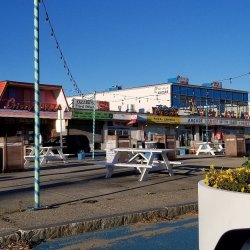
I never found Salisbury Beach to be subtle. It did not whisper. It announced itself with salt hanging heavy in the air, fried dough grease clinging to clothes, and the low mechanical groan of rides that had already lived several lifetimes past their prime. The boardwalk felt stitched together from weathered planks, cigarette butts, suntan lotion, and memory, each step resting on layers of use and neglect that no one bothered to hide.

The boardwalk was loud in a way that felt earned, and I understood that kind of noise, as I lived close to Massachusetts, rough and entirely unapologetic. Arcade bells rang like slot machines, triggered by quarters warmed in palms that had already lost far too many and still kept feeding the machines anyway. Everything about Salisbury felt temporary and permanent at the same time. Rust showed through peeling paint. The ancient ocean breathed steadily just beyond the chaos, indifferent to the noise, the prizes, and the bravado. And still, the boardwalk pulsed with life, a narrow strip of wood holding together sound, sugar, salt, and the stubborn insistence that summer might last just a little longer.

I watched teenagers strut in loose packs, performing indifference while carefully cataloging everything around them. Eyes slid past one another on purpose, yet nothing escaped notice: tank tops, cutoffs, and hair stiff with salt and AquaNet. Every glance carried calculation, and every laugh landed a little too loud, revealing confused confidence. Everyone was playing a role and trying on identities that only summer allowed. Some aimed for tough, others for untouchable, desired, dangerous, or simply older than they were. The boardwalk served as the stage, the crowd became the mirror, and becoming someone new felt possible as long as the lights stayed on and the night refused to end.

I went to Salisbury Beach in Buckie’s 1982 brown Ford LTD that smelled like vinyl, heat, and his mother’s lipstick stained Virginia Slims butts still sitting in the ashtray. I wanted to get my ear pierced on the boardwalk. I wanted proof that I could change something about myself, even if it was small and permanent at the same time. I knew my father would flip out. I carried that knowledge with me the whole ride, heavy but no longer enough to stop me. I was sixteen and exhausted from being quiet and observant. I was tired of shrinking. Tired of watching life happen from the edges. That hole made by the needle was not about jewelry. It was about choosing to be heard, choosing to be seen, and deciding that silence was no longer the safest version of who I could be.

When I got home, my father did exactly what I expected. He unloaded every fear he carried about himself into me as certainty. I would never find a job. I was unworthy. I was a failure, just like my brother. The words came fast and sharp. But something had shifted. The role I had played my whole life no longer fit the moment. Observation failed me. Silence offered no protection. Keeping the story suddenly felt like complicity.

So I spoke. Not carefully. Not strategically. I told him to go fuck himself.

That was the crack. The moment the observer stopped being useful. The moment the storyteller stepped into the story and risked becoming the problem instead of the witness. I did not become safer that night. I became louder. And once I crossed that line, there was no returning to the quiet child who believed that watching was enough.

February 2026
M T W T F S S
 1
2345678
9101112131415
16171819202122
232425262728