Fine, and Other Lies We Learned – Day 14

Prompt – What was a secret your family carried?

Pink Floyd, Van Halen, Skid Row, Meat Loaf, U2, Ozzy Osbourne, and even Barry Manilow gave me heart and gave me a language I could own. Their songs taught me how to feel without apology and how to sit with emotion long before I had the words, the permission, or the safety to do so. Music became my private tutor. However, that education came at a cost.

At fifty-one, my ears feel at least twenty years older than the rest of me because concerts were never simply live shows. They were full-body immersion experiences built from stacked speakers, vibrating floors, and sound loud enough to register as belonging, even for the most awkward of us packed into the crowd. Like most people my age, I never protected my hearing because it never occurred to me that I was borrowing against something future me would need to navigate ordinary life.

Now conversations require intention and precision. If someone does not speak clearly, with attention to tone, volume, and rhythm, the words scatter before they reach me, and I find myself asking for repetition or filling the silence with a reflexive huh. I miss parts of sentences and occasionally whole meanings, and whispers are simply not accessible to me anymore. Still, I carry no regret because losing the ability to hear whispers forced me to notice something I had been living with all along.

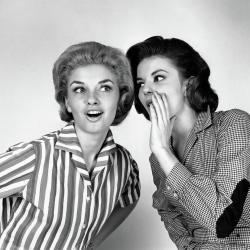
Whispers had always been part of my life, long before the music ever stole them from me. Whispers and mumbled speech were the true secret my family carried, not one dramatic confession or a single locked drawer hiding a headline-worthy truth, but something far quieter and far more durable. The secret was cumulative, made of a thousand small omissions, a thousand almosts, and a thousand things that were never named but were felt every single day.

The secret lived in the spaces between words. It lived in dinners where everyone ate but no one spoke about what hurt. It lived in rules enforced without explanation and affection that arrived sideways through duty. It lived in silence that passed for peace and order that pretended to be safety. Nothing was hidden exactly. Everything was simply unattended.

Each person in my family carried their own version of the unspoken. Grief without language. Anger without permission. Fear disguised as discipline. We learned to move around one another carefully, like furniture in a dark room, memorizing where not to step. Over time, caution became habit, and habit hardened into our culture.

Those secrets were never malicious, at least not at first. They were inherited. They were learned through the belief that survival mattered more than honesty, that stability mattered more than intimacy, and that asking for help meant failure. The secrets survived because they felt normal, because they never announced themselves, and because they whispered. That was the most dangerous part. No one ever learned how to hear them.

No one named the absence. No one said that something essential was missing. We were fed, housed, dressed, and moved efficiently from place to place. On paper, we were fine. The secret hid inside that word until fine became the highest achievement and the finish line. I grew up believing that families simply endured one another, that love was proven by staying rather than speaking, that conflict was something to avoid rather than move through, and that feelings were personal inconveniences best handled alone. I did not know these were beliefs. I thought they were facts.

When the secret finally revealed itself, it did not arrive as scandal, but as grief. Grief for what none of us were taught. Grief for the conversations that never happened. Grief for the care that wanted to exist but never learned how to speak. Our secret was grief.

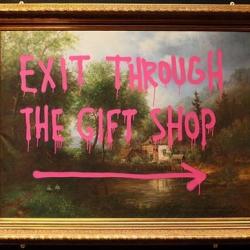
Exit Through the Gift Shop – Day 13

Prompt – What did conflict look like in your home?

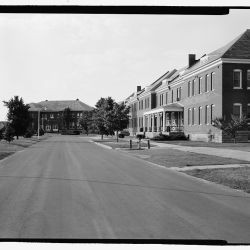
In the museum that was my family, exhibits were arranged with great care, but no one ever explained how to walk through the space and appreciate it. There were rules, but they were invisible. There were expectations, but they were never spoken aloud. Reverence was required, though no one ever showed what reverence looked like. Conflict rose and settled, mostly silent, like high blood pressure. It was present and deadly.

I was expected to know how to move, how to speak, how to respond, without ever being taught. Love was supposed to be understood. Respect was supposed to be automatic. No questions. If something felt off, it was never the environment. It was me. If someone felt unseen, it became my responsibility to fix it, even when I did not know what was broken.

There was very little modeling and no learning together. There was quiet judgment when the performance did not match the script that existed inside someone else’s imagination. So I studied faces and read spaces the way visitors study paintings. I read silence the way curators study cracks in marble. I anticipated needs that were never spoken. Over time, I confused vigilance with care. I confused fear with respect. I confused self-erasure with love.

Having my own family, I know that healthy families teach. They model love for each other. They meet you where you are. They invite you into the room instead of scolding you for not knowing the path. They offer maps. They offer language. They practice connection in the open, not behind glass. They make mistakes out loud. They apologize out loud. They are noisy. They are alive.

I am still unlearning the rules of the gallery. I am still learning that I do not have to bow to every display or stop at every exhibit. I am allowed to ask questions. I am allowed to exist in the room without shrinking to fit someone else’s idea of beauty. I am allowed to walk past what harms me. Little by little, I choose different architecture for my own family. There are far fewer exhibits and a hell of a lot more living. I teach my children that conflict is not something to fear. It is something we move through together. I make space for mistakes. I say what I feel and let them say what they feel. We practice beginning again. We learn in the open.

Sometimes the old museum haunts me with its polished floors and quiet shame. Sometimes I still find myself whispering in rooms that no longer require my silence. But I notice it now. I pause and I breathe. I set down the old way.

As an adult, I am beginning to believe something I could not have imagined as a child: love is not earned through performance. Love is not proven through suffering. Love grows in rooms where people are allowed to exist as they are.

The museum will always be part of my story, but I am learning how to walk out of the gallery without carrying the blame as a souvenir.

January 2026
M T W T F S S
 1234
567891011
12131415161718
19202122232425
262728293031  

This Quiet House – Day 12

Prompt – What did love look like in your home?

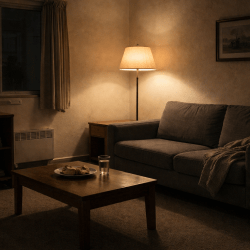
Love in my home was quiet…deathly quiet. I never heard it spoken out loud. The physicality that usually travels with the words was absent too. There were not regular hugs between family members. I never saw my parents kiss, embrace, touch, hold hands, or say the words. No one stood with open arms waiting to receive another.

Love was present, but it moved sideways. It slid into the room through ordinary things like dinners made, lights kept on, floors swept, bills paid, and food in the refrigerator. The house stayed in order even when everything else in life refused to cooperate.

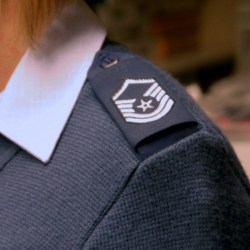
Love in my home felt like survival, and it felt like duty. Jesus, tell me you are a military family without telling me you are a military family. Love meant getting up the next day and doing it all again because that was what was expected, and that was what kept everyone together. Constant motion. Keep moving. Keep going. Stay together?

There were no grand speeches of love. There was laughter sometimes, but it often worked as camouflage. There were rules and there were consequences, all unspoken of course. There was the expectation that you toughen up, keep moving, and never fall apart where anyone could see it. Feelings were a private hobby, like stamp collecting. Keep them in a book and do not show them off!

Love also carried shadows in my house. There was anger at times. There were hands thrown. There was tension. There was silence that filled the room so thick that breathing felt like a risk. Doors stayed closed. Words stayed trapped. I learned to read moods and rooms the way meteorologists study tornadoes. I could feel a storm coming long before it arrived. I took cover. I stayed small. Head down!

And yet, there were thin places where love created a spark. Small cracks where love slipped through, quiet and unannounced. A plate of food placed on the table. A blanket tossed my way when I fell asleep on the couch. A hand resting on my shoulder for one second longer than usual. Love never said, I love you, rather, love was being careful not to upset a balance that was always changing.

As an adult, I look back and I name it honestly. Love kept the house upright, but it did not teach me how to feel safe. It did not teach me how to be held without earning it. I learned to survive. I did not always learn how to be loved or to believe I was worthy of it.

So my house now looks different. I say the words out loud. I open my arms. I let laughter fill the room without hiding anything behind it. I tell my children that they matter before they prove anything. I let feelings exist without needing to be translated. I am learning, in real time that love is not only duty and not only survival. Love shows up. Love speaks. Love stays, and lets itself be seen.

And maybe this is the quiet miracle of adulthood. I get to choose a different way. I get to let love speak in a voice that does not whisper sideways anymore.

January 2026
M T W T F S S
 1234
567891011
12131415161718
19202122232425
262728293031