Family Rules Silence – Day 6

Prompt – A rule you did not understand but followed anyway.

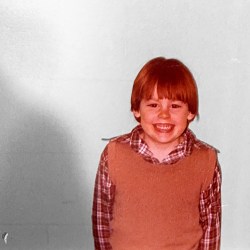
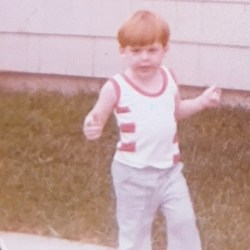
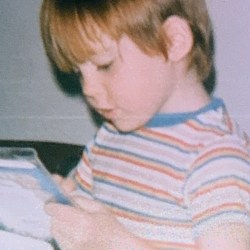
As a child, because I said so had a different flavor in my house. It showed up inside the command, Do what you are told, when you are told, and how you are told. I always wondered where the who and the why disappeared to in that little piece of military mantra nonsense. Every time I asked, the answer never arrived in words. It arrived through clenched teeth and lips pulled tight, the way a body looks when the mortician fucks up, followed by insults sharp enough to make my questions feel like crimes. The message was simple. Obey. And at the time, that is what I did.

Growing up under that rule taught lessons no curious child is meant to learn. I learned that questions were dangerous and not appropriate. I learned that curiosity was rude. I learned that authority did not need to make sense because authority owned the room. I began to shrink my voice. I memorized the script. I moved with a fixed response instead of a living person, at least inside the walls of my house.

Later, when I stepped into other systems as an adult, I recognized that same mantra living under different names. I saw it forcing its way into classrooms. I saw it showing up in workplaces built on top-down structures that pretended to be leadership. I saw it sitting quietly inside families that claimed love while everyone hid the truth. Do what you are told. When you are told. How you are told. It sounded efficient. It sounded orderly. It sounded like discipline. But beneath all of that shine, it trained me to doubt me and silence my own gut.

As a kid, I obeyed, even when nothing made sense. Obedience created quiet. It created peace, or at least the illusion of peace. But, like all things, there was a cost. What I believed to be obedience was actually just braided fear and respect until both looked the same. Obedience convinced me that the loudest voice in the room must also be the smartest. Obedience placed me inside someone else’s version of right and wrong.

I followed that rule because I believed it made me good. A good child. A good son. Much later, I began to notice the cracks. The whole thing felt like a performance. It was less about obedience and more about fear. Fear that if even one of us asked too many questions, the fragile idea of family might shatter and reveal what was already broken.

Real families ask questions. Real families sit in the discomfort of truth. Real families refuse to treat because I said so as a final answer. It took years for that realization to settle into my bones. My life’s work has become the practice of asking why, again and again, and creating spaces where others feel safe asking as well. And I am grateful to report that the world does not collapse when why is asked. The opposite happens. Everything begins to breathe.

January 2026
M T W T F S S
 1234
567891011
12131415161718
19202122232425
262728293031  

Secrets the Air Remembers – Day 5

Prompt – The first time you felt left out.

The third grade was my year, but not the banner kind of year. I began to understand that the world is not only what sits in front of my eyes. There are other layers beneath the seen, humming quietly, sending signals that not everyone can receive or understand or even wants to comprehend.

Another move pressed my family into boxes as we traveled from California to Alaska. The world grew colder and wider. The sky stretched in a way that felt endless. Mountains rose like silent witnesses to something that could not be named. This move felt different. It carried secrets. Each of us held our own private weight, and each of us carried it alone.

At eight years old, I could barely understand the ordinary world that everyone else seemed to agree on. Then something was added. Colors slipped out of their lanes. New surroundings arrived with weight and feeling attached. I began to hear with my whole body. I remembered air. I understood that walls could breathe, floors could whisper, and space held echoes of grief and laughter at the same time. I had no language for any of it, and I would not for years. What I had instead was loneliness, and the quiet fear that something in me was wrong.

The other eight-year-olds in my class spoke of Saturday morning cartoons, which kid cheated on the playground, and who ran the fastest at recess. Their worlds felt simple. Contained. Safe. When I shared my experiences, I noticed the slow and careful distance that formed around me. There was no vote. No raised hands. No secret ballot. Only the quiet math children learn too early…subtraction. A new seating chart formed without the teacher. Conversations paused when I walked by. The circle tightened, and I found myself outside of it before I even knew it was happening.

That was the first time I remember being excluded because I was myself. Not because I misbehaved. Not because I broke a rule. In that moment, I learned to step backward, to become smaller, to study the room before the room had the chance to study me.

However, every story finds its own way to balance loss. When some people leave, others arrive, carrying lessons that are needed. Ms. Mullins, my third grade teacher, was one of those people. She carried lessons, and she carried me, for the entire year. She noticed. She always noticed. During recess she invited me to sit beside her and asked me what the day felt like. Not what happened. Not what I saw. But what it felt like. I told her the room felt loud even when no one spoke. I told her the air remembered things. And she listened. She did not laugh. She did not try to make it smaller. She spoke in words an eight-year-old could hold. “Your brain is paying deep attention,” she said. “That is not broken. That is a gift. You will learn how to walk with it. I did.”

January 2026
M T W T F S S
 1234
567891011
12131415161718
19202122232425
262728293031  

Good Bones & All The Damn Receipts – Day 4

Prompt – A moment when you felt small in a good way.

The fat never goes away. I carry it with me like a witness that knows what has been seen cannot be unseen. The fat settles into hidden corners of my body and builds its own archive, not just on a cellular level, but the fat moves into identity, into the story I tell myself about who I am. The mirror changes. The scale changes. Clothes fit differently. People respond differently. But my mind has all the damn receipts. My mind remembers the weight…that one picture…that one shirt that clings. In a real way, fat becomes my lens and an unwanted narrator. I feel it when I choose a seat. I feel it when someone lifts a camera to take a picture. I hear it whisper when I try on clothes, and it is there when I decide who I am allowed to become.

Diet. Exercise. Programs. Pills. Injections. All the glittering promises that sound like salvation never shrink the fat. Through the discipline, the tracking of steps, and portion control, the fat remains. No longer on my body, but in memory sitting quietly ready to apologize for taking up too much space. Over time, as the fat weaves itself into identity, it becomes the voice that reminds me to be careful and not draw attention to myself. The fat wants to be heard and invisible at the same time, and I feel the contradiction living under my skin.

Hollywood gets a fat suit. Put it on. Learn a lesson. Take it off. Credits roll. Real life does not work like that. My body remembers. My skin remembers. My joints remember. My heart remembers. Once fat, always fat is not shame. It is truth. My body carries history, and history does not vanish just because I walk it away.

So the work is not pretending I have lost the fat. The work is staying honest inside the body that carries me. I name the pain. I admit the embarrassment. And I honor the parts of me that survived and have thrived anyway. The parts that keep loving. The parts that laugh. The parts that refuse to disappear, even when disappearing seems easier. The story of fat is not only about size. It is about protection. It is about comfort. It is about armor I once needed. And slowly, I am learning that I am worthy inside a body that shifts and changes. I am worthy when the mirror tells complicated truths. I am worthy without shrinking myself to make other people comfortable…including myself.

This morning, I read this prompt and laughed. I had just finished getting ready. I caught my reflection and almost missed it because my fat lens was still doing its job. But there it was. My clavicle. Beneath everything…bones. Strong bones that have carried this body through more than I ever thought I could hold. It feels like a quiet gift to know I have good bones. And it feels even better to finally see them.

January 2026
M T W T F S S
 1234
567891011
12131415161718
19202122232425
262728293031  

Storms Outside, Stories Inside – Day 3

Prompt – A childhood place that made you feel safe.

Axl Rose sang about a warm, safe place where, as a child, he would hide and pray for the thunder and the rain to quietly pass. When I sang those lyrics, I kept circling that place in my mind, like walking past a house at night and wondering who lives there and what stories are inside. Where was it? What did it look like? Did it smell like rain, or like dust, or like a home that has been carrying histories longer than I had ever experienced. Was there room for another heart, or was it meant to be a solitary shelter? I also wondered why thunder and rain carried fear at all. Guns N’ Roses never revealed any detail about the space, but they hinted at a world without violent streets, without addiction, without love that wounds, and without that deep, rattling question of whether I deserve to exist here. They hinted at a place where the mind loosens, the body unclenches, and the soul finally exhales. A place that leans close and whispers that I matter. Everyone needs a space like that, especially in the years when the world grows louder than any child can tolerate.

My safe place was never a single room or secret hiding spot. My refuge arrived as words. School became the doorway, books the shelter, and language the quiet country I could travel without asking permission. Inside sentences, storms that belonged to me lost their teeth. Inside stories, I could breathe. I could sit with characters who carried their own griefs, their own bewilderment, and still somehow moved forward. In those pages, a different kind of safety revealed itself, not the kind that erases the world, but the kind that steadies a body long enough to survive it.

Nine schools before graduation. New towns. New faces. New rules about belonging. Again and again. The desks I occupied became the closest thing to permanence. The classroom did not care about orders, moving trucks, or how many times a heart could be asked to reset. Bulletin boards held more order and consistency than the houses I called home. School libraries felt like cathedrals, quiet and alive, each book humming with an invitation: Sit. Listen. Stay awhile. On air bases that never quite turned into home, the constants were teachers taking attendance, paper waiting for stories, and books wide enough to hold a kid who needed a place to land.

Over time, I learned something that felt almost sacred. Safety is not always locked behind a door. Sometimes it lives inside a paragraph, inside a voice on the page telling the truth without apology. Sometimes it lives in the discipline of showing up, sitting down, and letting language hold what feels too heavy to carry alone.

That was my warm, safe place. Not made of walls. Not built with wood or brick. My shelter came stitched together with words, strong enough to weather the thunder, patient enough to wait for the rain to pass, and honest enough to remind me that I matter, even when the world forgets to say it out loud.

January 2026
M T W T F S S
 1234
567891011
12131415161718
19202122232425
262728293031  

East of Hoth – Day 2

Prompt – The first time you realized the world was bigger than your house.

Alaska is a large state. So large, in fact, that it pumps Alaskan egos up enough that people have created shirts with the outline of Texas carved out of Alaska with some smart-ass one liner bannered across the chest. For folks from Texas, this lands about as good as a well-done ribeye and a warm beer at a Sunday tent revival in west Texas.

Jeremy had lived his entire life on Randolph Air Force Base outside San Antonio. Same streets. Same house. Same bedroom. His father never had orders to move. Not once. Then, suddenly, they were ripped from south-central Texas along the San Antonio River and dropped at Elmendorf Air Force Base, somewhere just east of Hoth.

All this kid talked about was how bad Alaska sucked and how amazing Texas was. It was exhausting because I had no understanding of the words he spoke. I had never lived anywhere long enough to grow brand loyalty, root for the home team, or care two shits about the dump we were calling home that year. But Jeremy loved Texas. Fiercely. It was his. It was his home. And he reminded everyone that his home was better than this frozen hellhole.

Until Jeremy, I had never stood next to someone who had actually belonged to a place. The military does not usually allow that. On paper, the reasons sound noble. Rotations create experience. Rotations build leaders. Rotations prevent complacency. New base. New mission. New commander. Pack the boxes. Sign the forms. Start over.

But that is the polished version.

Underneath, constant movement serves the system more than the families inside it. When people stay rooted too long, they grow networks. They build equity. They find their own worth outside the rank on their shoulders. Roots create options. Options create questions. And questions slow obedience. So the military keeps the ground shifting.

Families never quite become local. The church is temporary. The school is temporary. The friendships are temporary. Even the dog feels temporary because the next base might be overseas and not allow pets. Moving trains the family to quietly to pack fast, detach sooner, and care, but not too deeply.

War needs people who will go where they are told and fight who they are told without needing to reconcile that decision with a neighborhood they have loved for twenty years. Do what your told, when your told, how your told! When you belong to the uniform more than you belong to the street you live on, it becomes simpler to leave. Simpler to fight. Simpler to lose and keep moving. Movement builds loyalty upward, not outward.

That was the world I lived in. So normal I could not see it. Then came Jeremy.

He had blown out candles at the same kitchen table for his third birthday, his fifth birthday, and his ninth birthday. He knew which tree in the yard was his climbing tree. He had a house that remembered him. Standing beside him on top of a mountain of snow pushed into the middle of the cul-de-sac while he mourned Texas like a lost Tauntaun, I felt something crack open. It was at that moment I knew the world was bigger than my house. And some people actually got to keep theirs.

January 2026
M T W T F S S
 1234
567891011
12131415161718
19202122232425
262728293031  

Rot, Silence & Salt – Day 1

Inevitably, after the assignment had been described with as much intention and story as possible, after a small spark of curiosity has finally begun to glow in the room amongst the students, a hand goes up – Liam. Jesus Almighty! The question lands like cold water in the crotch.

How many words. How many pages.

In that moment, the invitation to think, to feel, to wrestle with something real collapses into a set of measurements. Not a conversation. Not discovery. Just requirements. Every. Damn. Time.

Discovery through writing has never been about word counts. It has never been about minimum or maximum lengths. Hell, it is not even about grammar, syntax, or the cleanest turn of a phrase. Writing is the practice of staying. Writing is remaining in the chair while the world keeps spinning, choosing to study whatever the last swirl left behind. No prescribed number of words will ever manufacture meaning in a soul unwilling to face what hurts long enough to understand it.

Writing is salt in the wound. It burns. It draws out what has been hiding. The good. The bad. The unspeakable. It makes the environment less friendly for the slow rot of memory and the quiet infection of trauma. The work is to sift through the mess and keep asking the questions that insist on being asked. What happened? How did it unfold? Where did it mark the body, the heart, the mind? Who stood inside that moment, and how might I be slowly forming because of it.

The work is not pretty. The work is excavation. Writing is digging through memory, through failure, through rage, through grief, and asking questions that do not care about comfort nor wish to answer the question of  who left the scar or cut the bone.

Sometimes the words slam the door on repetition. Sometimes repetition of the same word is the only victory. A thin, trembling layer of a word laid across chaos to create order just long enough to hear a whisper calling from underneath the shit. No healing. No closure. Just enough clarity to understand a moment or a thousand without continuing to lie it is all going to be okay.

Sometimes the words keeps the moment from returning. Sometimes the words reveal that the moment will return again and again. But sometimes this means 200 words on the back of scratch paper, other times it means two years of journaling daily. Pages cannot measure that. Word counts cannot measure that. This is not the filling of space. This is the uncovering of something quieter, something that only surfaces when a I stay long enough for the truth to step forward.

And the part my students never could stomach and took me years to learn. The words and the story will not fix the past, repair the fracture, or reconcile anything that has been lost. The story simply refuses to look away like some fucked up carnival mirror bearing witness to the pain just to know it happened. There is a violence in that kind of honesty. A necessary violence. A ripping away of the polite fabric that keeps everyone smiling while they bleed out of sight. Writing does not draw the curtain, rather it pulls it down and throws it on the floor and forces the scene to stand there naked in the dark. And write enough, and a candle may be lit to see there needs to be more work done!  Because the page keeps its own ledger. The page knows when it is lied to. The page knows when the writer flinched and pulled back and dressed the truth up to make it digestible. The page waits. The page holds the line until the writer returns with something real enough to remove the fig leaves and know this is holy ground.

And so, Liam, I cannot tell you how many words it will require. I can tell you that if you do not write the alternative is rot. The alternative is silence, and silence is where the worst lies grow strong. Writing is the refusal to feed them. That is the assignment. That is the cost. That is the only way any of it matters.

But, let’s start with 500 words. Daily. Prompt in hand. And try to make a connection after every month and theme. Sound good?

January 2026
M T W T F S S
 1234
567891011
12131415161718
19202122232425
262728293031  

Pass the Salt

Burning linoleum clings to the nostrils like damp fabric to the skin. It is an unshakeable, sharp, acrid, and chemical fume with a synthetic odor of something unnatural breaking down. It has a mix of plastic-like fumes and an rubbery undertone, as if the very chemical seams holding it together were unraveling in the heat. It evokes a sense of danger or urgency that requires a brief search for smoke or flame. And the stench lingers long after the flames have been extinguished seeping into the air and memories alike.

Fried chicken was meant to be dinner that night, but it never came to be. After burning down the kitchen, the very thought of eating, or even cooking, felt out of reach. That afternoon, after school, I rushed through my homework so I could spend time with my baby niece, who lived with us along with my brother and his wife. We curled up on the couch, her tiny body nestled on my chest as we watched television. When she finally drifted off to sleep, I gently carried her upstairs and settled her into her crib.

My parents would be home around 6:00 or 6:30 that night. Of course, as a veteran latch key kid, I had mastered the art of self-sufficiency, patching the gaps where parents might normally step in. I was accustomed to an empty house. To be honest, the house wasn’t filled with any more sound with them there…the silence between all of us filled every room, even when they were home. I helped out where I could to keep the peace. I mean, what do you say to two adults acting like children that have not broken the silence in years?

“Pass the salt?”

Indeed, it is straightforward, unbothered, and void of ceremony. It skips the heavy lifting of awkward small talk and jumps directly to the kind of casual familiarity that says, I could hold a grudge, but honestly, I’m just trying to eat. It’s not an olive branch, it’s a salt shaker. Simple, necessary, and just enough to break the silence without opening old wounds or inflicting new ones. Because sometimes, the best way to bridge years of silence is to pretend they never happened and hope no one asks about the smell of burning linoleum lingering in the air, right?

A Gramme is Better than a Damn

I started numbing at age twelve. Life hurt before that, but twelve was two after ten and a lifetime before I understood why. Fast forward nearly forty years and it seems learning is not as intuitive as I once believed. I’ve been rereading all the classic dystopian novels recently, and soma offered a little pill with big relief in Brave New World. Of course, this chemical escape was more about control and pacifying a population than a recreational drug, but the two indeed have something in common. Soma was never forced; however, it was wanted. It was welcomed as an eager surrender to blissful oblivion – “I’m breathing in the chemicals…I’m breaking in, shaping up, then checking out”.

Distraction, sedation, and instant gratification are on demand and reek of the ash of soma. It now comes in the form of glowing screens, endless scrolls, and curated algorithms that keep attentions locked and minds numb. Binge-watch, doomscroll, and swipe…all losing hours, sometimes days, to what feels like nothingness. When the discomfort bubbles up whether it be it existential dread, social unrest, or the ache of disconnection, the soma of the fingertip drowns it out.

Being numb and enjoying soma is not about addiction, rather it is the desperate cycle of opting out. It is a collective shrug in exchange for the illusion of contentment. And in a world where disconnection from nature, from each other, and from ourselves is the norm, opting out has never been easier. My social media accounts have been dark for more than a month and as I wake up, I ask myself was I self-medicating to endure the noise, or to anesthetize myself to avoid asking hard questions about the systems I live in and the life I lead? Did I trade freedom for comfort or critical thought for convenience. Did we all?

Ship of Fools

“Imagine then a fleet or a ship in which there is a captain who is taller and stronger than any of the crew, but he is a little deaf and has a similar infirmity in sight, and his knowledge of navigation is not much better. The sailors are quarrelling with one another about the steering — every one is of opinion that he has a right to steer, though he has never learned the art of navigation and cannot tell who taught him or when he learned, and will further assert that it cannot be taught, and they are ready to cut in pieces any one who says the contrary. They throng about the captain, begging and praying him to commit the helm to them; and if at any time they do not prevail, but others are preferred to them, they kill the others or throw them overboard…”

Fast forward two and half millennia and people are holding signs in an empty National Mall that read, “We Won”, “God, Country, and Trump”, and “Make America Great Again” celebrating a man who moved his inauguration indoors due to the cold weather and did not invite the masses. The compass needle doesn’t have seemed to move far in two and half millennia.

Hyōshigi Scraps

Funny how a simple block of wood can turn you into a walking pool of nostalgia. Kari and I cleaned out a closet yesterday and we stumbled across this unassuming piece of hardwood, still bearing its faded Joyful Honda price tag from Japan. To most, it’s just a scrap of wood, a forgotten remnant from an unrealized project, but to me, it’s a time capsule.

This block of wood holds the weight of moments and choices with a sense of possibility that comes with raw materials. It is a reminder that we all could be shaped and reshaped into something new. Objects, even the ordinary, become talismans of who you were and what you carried through a moment. I don’t know if I’ll ever do anything with this block of wood. Maybe it’s destined to stay as it is, a reminder of the unspoken poetry in our everyday choices.

For now, it will sit on my shelf to remind me to remember where I’ve been and that there is beauty in unrealized projects and scraps.

Lj