Ginger, Interrupted – Day 43

Prompt – Something about your appearance you struggled with.

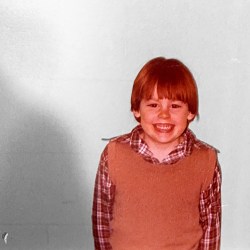
I hated my red hair as a kid. My parents always framed it like it was a blessing, as though it was some strange cosmic DNA secret upgrade that unlocked every fourth generation. They said it was rare. They said it made me memorable. They said it like I was chosen; however, I felt as though I was exposed because kids never called it rare. Kids could see my flaming red hair and used it as target practice.

Carrot Top. Big Red. Fire starter. Every nickname made sure I knew I was different. Houses changed often in the military with new classrooms and new people, but the insults never were new because the hair stayed the same. Somehow those that slung the insults thought they were original poets that uttered the insult at me first. Not the brightest bulbs in the pack, but still difficult to ignore.

Like most gingers, my skin sure as hell did not help matters. I was pale in a way that felt almost unfinished, like I had been sketched and colored in by the white Crayola crayon. Twenty-four seconds in the sun turned me into a walking warning label for future skin cancer prevention. Freckles multiplied overnight and merged together like some ancient protection rune drawn across my face and shoulders. Adults called them cute angel kisses. I called them evidence that a host of angels took a shit all over me.

There were moments I tried to negotiate with my red hair and fair skin. They always won. So I found myself standing just out of reach of direct sunlight. I watched other kids tan into some version of confidence that felt foreign to me. I was either white or lobster, a permanent contrast against whatever landscape I happened to live in that season. I wanted invisibility more than anything. I wanted to look like everyone else long enough to walk through a hallway without hearing insults.

Time did what time does. It softened some edges, sharpened others, and still others faded. Somewhere between leaving childhood and stepping into adulthood, the hair I tried to outrun began to feel less like a spotlight and more like a marker as it faded into auburn. It carried the memory of “carrot top” with it, but it turned out to be a good color. The freckles stopped feeling like a flaw and started to feel like a map of where I had been.

I still catch my reflection sometimes and see the kid who wished for darker hair, darker skin, anything that might let him disappear into the background noise of a hallway. He thought blending in would make him safe. He thought invisibility meant peace. What he did not know was that standing out would one day become a quiet kind of permission. The thing that made me feel exposed also trained my eyes to notice the other kid carrying something visible they never asked for. Different hair. Different language. Different body. Same feeling.

The red faded into auburn over time, softer at the edges, less fire and more ember. The freckles stopped feeling like a flaw and started to feel like coordinates, small constellations mapping where I had been rather than where I failed to belong. I stopped negotiating with the mirror. I stopped trying to outrun a color that had already outrun me.

I hated my red hair for years. Now it feels less like an accident and more like handwriting. Not a super power. Not a curse. Just a mark that stayed when everything else kept moving. And maybe that is what growing up really is. Learning that the parts of me I tried hardest to erase were never asking to be loved loudly. They were only asking to be allowed to stay.

February 2026
M T W T F S S
 1
2345678
9101112131415
16171819202122
232425262728  

Under the Square Light – Day 42

Prompt: The First Time I Became Aware of My Body

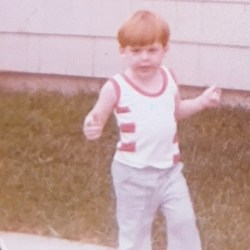
I was young, maybe three years old. Dates blur as much as addresses when life moves from base to base, so I cannot swear to the age. We had just moved again. New walls with new sounds. New shadows stretching across a room that did not yet belong. I woke in the middle of the night needing to take a leak. I do not remember the urgency itself, only the pattern; as a child, every trip to the bathroom felt like an emergency because children wait until the last possible moment.

I remember standing on cold, ugly linoleum and flipping the light switch on. The bathroom filled with that sudden brightness from the generic square fixture that lived in every room of base housing…wide, practical, square glass that never changed unlike the people in the house. I saw only the top of my head at first. Then I adjusted, lifted myself higher on the step stool, and there I was. A body. A somebody?

I talked to myself. Not in full sentences, just sounds and small words. I moved my mouth and my arms and watched them both follow my instructions. I turned sideways. I leaned closer to the mirror from the step stool. I remember feeling both surprised and completely certain at the same time. That was me. I could talk. I could move. I could do things. The awareness had nothing to do with my looks. It was about my agency. I was something inside this shape I was seeing in the mirror that obeyed me.  It felt like discovering a toy I had always owned but had never played with until now.

Years later, a different type of body awareness arrived, and it was nothing like that first quiet moment in the mirror. The awareness did not come from me. It came from others. From glances that lingered too long. From jokes that sounded like laughter but felt like measurement. My body became something public before I understood it privately. I learned what I looked like through other people’s reactions long before I learned what I felt like inside my own skin.

At three, the mirror gave me independence with possibility. It was movement and voice in a body that could carry whatever story I wanted to tell. Later, the world handed me a different mirror. One that reduced me to my weight and size. One that suggested my body was something to manage, something to correct, something to explain. Both moments were awakenings.

What I know now, years later, is that neither version was the whole truth. The child in the bathroom mirror was right. The body was never a problem to solve. It was a place to live. A place to feel safe enough to grow, even when growth looked messy or uncomfortable or misunderstood.

Sometimes I think back to that kid standing in the bathroom, talking to himself like he had discovered a secret language. He did not yet know about weight or judgment or how easily a body becomes a story other people try to write for you. He only knew that he was there, awake inside his own reflection, testing what it meant to exist.

And maybe that is the first real awareness. Not the shape of the body, but the quiet recognition that someone is living inside it, watching, learning, waiting to decide which stories belong and which ones can be set down.

The mirror did not give me answers that night. It only gave me a beginning. And beginnings, I am learning, are often small, incandescent, and easy to miss until years later when the light finally makes sense.

February 2026
M T W T F S S
 1
2345678
9101112131415
16171819202122
232425262728  

Left at the Base Gate – Day 41

Prompt – What friendship meant then versus now.

Friendship for a Gen X military brat was never abstract. It was immediate, physical, and temporary. It lived on a base for a season. It was whoever arrived where I landed and stayed until the orders changed things. Closeness did not require history because the history was already baked into the coming and going. It required only shared space and a shared understanding that the now mattered.

Moves arrived without negotiation. One day there were no boxes, and the next day there were boxes. No one framed it as loss. It was logistics. Adults talked about duty and opportunity while kids learned how to say goodbye without ceremony. Grief did not get named or recognized, so it learned how to hide. It was hella efficient.

That efficiency shaped all parts of life including friendship. I learned how to read people and rooms quickly. I learned which parts of myself to lead with and which parts to keep packed. I learned how to belong without attaching too deeply because attachment always came with a cost that would be collected later. Leaving did not mean the friendship was not real. It only meant it had run its course.

There was a raw honesty in those friendships. There was no time for slow reveals or performative closeness. We went deep because the clock was already ticking. Loyalty was not measured in years. It was measured in moments by who stood next to me right then, and who kept my secrets when it mattered.

Years later, Japan reinforced that lesson in a quieter way. Friendship there came with an expiration date written directly into the contract. One year, sometimes two. The system itself discouraged permanence, as if rotation could prevent attachment from taking root. It felt almost sacred, like impermanence was a value worth protecting. I understood the rule. I broke it anyway.

In Japan, friendship was full and immediate. We did life together knowing it would end. There was no pretending otherwise. That honesty made the closeness sharper. We shared meals, mistakes, and small triumphs without the illusion of forever. When the goodbyes came, they were clean, even when they hurt like hell. The ending did not erase what had been real. Then time moved on, and the rules of friendship shifted again.

Adult friendship now is persistent and networked. It lives in texts, threads, and long digital echoes. Distance no longer explains disappearance. Silence gets interpreted. Absence becomes personal. Continuity is expected, even when life makes that continuity hard.

For someone raised where friendship ended cleanly at the base gate, this can feel disorienting. The instinct to give space can read as withdrawal. The habit of packing light can look like detachment. What once kept me steady can now feel out of step. And yet, something endures.

That upbringing left behind a particular strength. The ability to go deep without guarantees. The capacity to choose people deliberately rather than by convenience. A sensitivity to character, to kindness, to how someone treats power and vulnerability. There are fewer friendships now, perhaps, but the ones that remain carry real weight.

There is also a fluency in difference. I learned how to translate myself across places, cultures, and expectations. I learned that belonging is not automatic, but it is possible. That skill does not disappear. It matures. What can look like guardedness is often discernment. What can look like distance is often respect for the truth that closeness should be intentional. Friendship was never something I assumed would last forever. It was something I honored while it was true.

And maybe that is the quiet gift. Knowing that connection does not require permanence to be real. Knowing that love can be fierce and temporary and still shape a life. Knowing that when I choose to stay now, it is not because I have to. It is because I mean it.

February 2026
M T W T F S S
 1
2345678
9101112131415
16171819202122
232425262728  

Civilian Rules – Day 40

Prompt: A time a friend betrayed you

As a child, I was raised inside a system that offered basic training on how to exist with people that have an expiration date. Military bases were full of kids like me, changing addresses like refugees with pink slips. We learned how to attach quickly and detach cleanly. Friendships were intense, immediate, and understood to be temporary. When orders came, and they always came, we did not fight the ending. We practiced kindness in the present and disappearance in the future. It was not cruelty. It was survival. We handled each other gently because most of us already knew what heavy felt like at home.

I was hurt by friends during those years, but the hurt was diffused and governed by an agreed-upon set of rules. It belonged to circumstance more than intention. No one was really betraying anyone. We were all obeying the same unwritten code. Stay light, do not burden each other, and leave cleanly. This code failed me the first year my family became civilian.

Lawton, Oklahoma broke something open that I did not yet have language or experience for. My father could not find work. My mother worked in another state. Home still felt temporary, but without the structure that once explained why everything was temporary. At MacArthur High School, the rules I knew did not apply. Belonging was transactional and visibility was dangerous.

I was bullied for opting out of football, for choosing books and observation instead of collision. That alone would have been survivable. What I was not prepared for was betrayal disguised as friendship.

Tracy was my first real civilian friend. She listened. She asked questions. She made space for the softer parts of me that had never needed armor before. I trusted her because trust had always been safe inside temporary worlds. I told her my fears. I told her my uncertainties. I told her where I felt small.

She took those truths and passed them along to the very people I spoke about. She did not confront me. She did not warn me. She turned my vulnerability into currency. When the laughter came back to me secondhand, something inside me collapsed. This was not the clean ending I had been trained for. This was exposure. This was humiliation. This was betrayal with witnesses.

For a long time, I believed the lesson was that openness was a mistake. I learned how to seal myself. I learned how to withhold. Betrayal does not only break trust in another person. It fractures trust in the self who chose to believe. I was not only angry at Tracy. I was ashamed of my own hope.

It took years to understand that what happened in Lawton was not proof that I was naïve or weak. It was proof that I had crossed from a world governed by impermanence into one governed by performance. The hope arrived later, quietly. I did not lose my capacity to trust. I learned how to place it with care. I still believe in connection. I just no longer hand it over to civilians.

February 2026
M T W T F S S
 1
2345678
9101112131415
16171819202122
232425262728  

Decimal Down in Front – Day 39

Prompt – A time you betrayed or hurt a friend.

I went off to Oklahoma Christian University in the fall of 1992. At the time, I did not yet know how to name what I was running from, only that leaving felt necessary, even to a shitstorm like OC. My first year unraveled quickly. I drank too much, stayed numb on purpose, and called that suspension “figuring things out.” When the year ended, my GPA arrived like a small, undeniable truth…a decimal lead the way, as if even the numbers were hesitant to claim me other than the zero.

So, I went home for the summer and worked at Pepsi, driving a forklift.  They were long days that left my body tired and my thoughts loose. My house felt quieter than I remembered, as though something had already begun to close. I did not linger there. Most nights, I met old high school friends after work. We went to Applebee’s because no one questioned our age. We drank and talked and tried to decide who we were becoming by comparing ourselves to who we had already been.

Steve appeared in those quiet spaces at my house, a friend from before I had figured out how to be me. Back when I still rode the bus to school! Steve had learning disabilities and parents who seemed permanently absent in all the ways that count. He was kind, earnest, and always a little behind the moment, though never behind in heart. When he asked what I was doing, I told him about college in Oklahoma, about going back in the fall, and about my plans to figure things out.

Later that summer, he told me he had applied to Oklahoma Christian University and had been accepted. He said it with a kind of hopeful certainty, as though being near to my opportunity might offer him a door of his own. I remember feeling surprised, then unsettled, then quietly embarrassed by that reaction. I told myself a story about standards and readiness and merit, though what I was really protecting was distance.

When fall came, we were on the same campus. Steve arrived unprepared for the weight of it. The rules, the expectations, the rituals of belief that asked for performance more than understanding. Chapel, bible classes, the careful obedience that hung in the air all about. I recognized his confusion because it mirrored my own when I first arrived. I understood his shock because I had already absorbed it once. And still, I stepped back.

I told myself I was busy. I told myself he needed to figure things out on his own. I told myself I was trying to survive. All of those things were partly true. None of them were generous. I spoke to him when we crossed paths. I was kind enough to avoid guilt. But I did not offer help. I did not walk beside him. I did not lend him language when he had none.

The truth is simpler and hell of a lot more harsh. Steve reminded me of who I had been. Staying close to him felt like risking my fragile reinvention. So I chose distance. I chose silence. I chose myself. That is how I betrayed him. Not with cruelty, but with absence.

February 2026
M T W T F S S
 1
2345678
9101112131415
16171819202122
232425262728  

Cheese Metal Belonging – Day 38

Prompt – Inside jokes that felt like belonging.

Chris and I played baseball on the base league at Plattsburgh Air Force Base. He went to a private Catholic school in town, and sports leagues on base were one of the only organized ways we were able to spend time together outside of our South Side Trails adventures. When one of our baseball seasons ended, we decided to extend that sense of belonging and proximity into a new sport. Soccer. Oh Jesus. Soccer meant crossing over the tracks to the old base, where most of the officers’ kids lived because they made up the majority of the soccer teams.

Chris and I crossed over to the old side of base and brought our inside jokes with us as a talisman. They were not especially clever, and they were certainly not kind. They were observational. They were earned. We joked about the officers’ kids we suddenly found ourselves surrounded by. We joked about how they wore Umbro soccer shorts and we called them “UmmmBros”. We told jokes about how they listened to U2 as we listened to glam rock cheese metal, and how they carried themselves like they were already officers themselves. We called them snobs, but the joke was less about them and more about us. It was about noticing patterns and naming them together.

We were enlisted kids. That mattered. Officers’ kids lived on a different side of the base, quite literally and indeed metaphorically. They had better lawns, better clothes, better toys, better posture, and what appeared to be better confidence. At least that was how it looked from where we stood.

The jokes worked because we both saw what we were joking about. We were not inventing the distinction. We were recognizing it. Every time one of us made a crack about the “UmmmBros” or U2’s latest album, it was not really about taste in music, sports, or clothes. It was a shorthand. A nod. A way of saying, I see what you see. I live where you live.

That is what inside jokes do. They compress shared experience into something small enough to carry in a sentence. They let two people signal belonging without having to explain themselves with no footnotes or justification. It is just recognition. We needed that on our side of the base.

Those jokes were not inclusive. That was the point. They carved out a small, protected space where we did not have to translate ourselves. In a life built on impermanence and rank, that mattered more than I understood at the time. We were not laughing to exclude others. We were laughing to anchor ourselves.

I think now about how much of my childhood was spent learning which version of myself would be safest in which room. Inside jokes short-circuited that work. With Chris, I did not have to perform. I did not have to prove anything. The joke itself was the proof. If it landed, I belonged.

Years later, I understand that belonging does not require permanence. It requires recognition. It requires someone else noticing the same absurdities and letting you laugh about them without explanation. That kind of belonging is fragile, but it is real. It lives in memory. It survives distance.

I do not remember every joke. I remember the feeling of them…the ease, and relief. The sense that, for a moment, I was not alone in my noticing.

And maybe that is the quiet truth. Belonging does not always announce itself. Sometimes it shows up as laughter that would not make sense to anyone else. Sometimes it sounds like a joke about “UmmmBros” and “U2, but not you”. Sometimes it is simply the moment you realize someone else is standing beside you, seeing the same thing, and choosing to laugh instead of explain.

February 2026
M T W T F S S
 1
2345678
9101112131415
16171819202122
232425262728