Maps of Exposure – Day 26

Prompt – Where you sat, and what that said about you.

School desks were small. I was never small after the third grade. So, I sat wherever I thought I would be seen the least, both because my body had to be crammed into a tiny desk and because I wanted, metaphorically, to be small. It was not always the back. Sometimes teachers watched the those seats more closely than other seats, and the front row was never safe. The middle was impossible. The rule was simple. Find the fringe. That choice said everything about me in school.

Classrooms were maps of exposure. Desks were not neutral furniture. They were declarations. The front row signaled confidence or compliance. The back row suggested resistance or disappearance. Corners belonged to those who understood angles and sightlines, who learned early that bodies are measured long before words are heard.

I was fat. I do not mean that as confession or insult. I mean it as fact, the kind that preceded me into rooms and sat down before I did. Fatness was not something I carried. It was something assigned meaning by others. The room knew this before it knew my name.

So I chose seats strategically. I sat behind taller kids, near the wall, and close to exits. I learned how to fold myself inward, shoulders forward and spine curved just enough to suggest apology. I sat where teachers would scan past me while taking roll. I did not want to be called on, not because I did not know the answer, but because answers came with eyes, and eyes came with judgment.

The seating chart never asked why I sat where I did, but it enforced the order with precision. That structure was almost a relief because the cafeteria was different. Seating there required social currency. Tables formed tribes with unspoken rules. Athletes claimed space with backpacks and elbows. Beautiful people took up room without consequence. I sat where there was an empty chair that no one would miss if I disappeared, often with the other island-of-misfit-toy kids. Sometimes I chose solitude on purpose, but even that came with risk. You did not want to be that kid for too long.

Assemblies were worse. Bleachers turned bodies into sound. There was no hiding when the seat itself complained. Metal creaked and plastic bent. I learned to sit carefully, distributing weight and moving slowly, as if gentleness could erase mass. I learned to arrive early so no one would watch me navigate the row.

Teachers often said things like, sit anywhere or choose your own seat, as if freedom were evenly distributed. It was not.

Where I sat became where I learned to observe. From the edges, patterns reveal themselves. You notice who gets interrupted and who gets forgiven. You hear shifts in tone. You learn that authority prefers neat rows and quiet bodies, and that some children are allowed to sprawl into themselves while others must shrink to earn tolerance.

I became good at being small, not physically but socially. I learned to take up intellectual space while minimizing bodily presence. I learned to be useful, funny, compliant, insightful, anything that might justify the space my body occupied. Somewhere along the way, that strategy stopped being situational and started feeling like identity.

Years later, I still notice where I sit in meetings, restaurants, and waiting rooms. I still scan for sightlines and exits. I still choose chairs that feel forgiving. Healing has not erased this instinct. It has taught me to name it, to see the trade I was making. Safety over visibility. Shame over power. Survival over learning.

But hell, at least I was paying attention!

January 2026
M T W T F S S
 1234
567891011
12131415161718
19202122232425
262728293031  

Names Without Addresses – Day 25

Prompt – A friendship that changed during school years.

Travis, Chris, Jeremy, Brian, Mike, Michael, Christopher, Anthony, Kyle, Ryan, Matthew, Steven, Daniel, Eric, Timothy, Joshua, Nathan, Aaron, Adam, Greg, Zachary, Thomas.

I can still name them with little effort. The order shifts sometimes, but the names remain. They belong to different places and different years, but they sit together now, flattened by time and repetition. They are not ghosts. They are proof I was taught to leave and there was never just one friendship to lose.

Growing up in the military meant learning early that friendships were temporary by design. Orders for a PCS – a Permanent Change of Station – arrived whether readiness existed or not. Houses emptied, seating charts changed, and class rosters reset. The language adults used was efficient and calm to describe all of this, which suggested they understood exactly how volatile it all was and handled it accordingly. They insisted it was temporary, while everything about it felt permanent. It was right there in the fucking name, and it never felt clean!

Goodbyes rarely hurt out loud. The grief was quieter and had to be swallowed. Tears would have been easier, but instead there were promises to write and addresses exchanged even when no one actually knew where the next place would be. The ritual carried the seriousness of a contract everyone understood would be broken, like a gym membership signed in January with full confidence and no follow-through in February. The gestures were always the same and never lasted. Over time, something quieter replaced them. I learned to pull back before the leaving began. I learned how to be present without anchoring. I learned how to be liked without being known.

School became the laboratory where this skill was sharpened. I could enter a classroom midyear and read the social map quickly. I knew where to sit, who to mirror, and how to fold myself into whatever rhythm already existed. I learned how to make friends fast because speed mattered. I also learned how not to need them and how to release them just as quickly. That felt like maturity at the time, something adults rewarded and praised. It was really anticipation, loss managed in advance.

There was always one friend who carried the weight of the others. Pick any name from the list and the story holds. Jokes were traded, lunches shared, and backstory learned. There was nothing wrong with the friendship, which turned out to be the problem. When the countdown began, I felt myself lighten. I did not resist it. I became efficient. The friendship did not end in conflict. It ended the way it had been designed to end, quietly and on schedule.

Adults praised my adaptability. Teachers admired my resilience. I absorbed those words and wore them like credentials. No one asked what the cost was, and I did not offer the answer. From the outside, social withdrawal looked like independence. Inside, it functioned as an emotional clusterfuck reset with a bleaching, a clearing of the slate so the next arrival would not hurt more than the last one had.

Years later, the pattern still surfaces in adult relationships. I must work at not keeping connections portable. I notice the impulse to prepare for departure even when no one has said goodbye. Readiness still gets confused with distance. Self-sufficiency still masquerades as safety. Awareness does not erase the habit, but it does give it a name.

Those names remain because they taught something durable. Not how to stay, but how to leave. Not how to hold, but how to let go before being asked. The system did its job well. It made me fluent in beginnings and endings with no required translation, but meaning was clearly optional.

January 2026
M T W T F S S
 1234
567891011
12131415161718
19202122232425
262728293031  

Typecast – Day 24

Prompt – A teacher who misunderstood you.

Some misunderstandings arrive loudly. Others settle in quietly and take up residence for a year.

I have always hated sports, especially the kinds tethered to institutions that claim to build character while quietly reinforcing outdated power systems. Organized athletics, particularly in schools, often function as rehearsals for outdated hierarchal power structures where bodies are ranked, obedience is rewarded, and aggression is sanctified. It is an impressive trick, really, dressing control up as virtue and calling it tradition.

The move from Plattsburgh, New York to Lawton, Oklahoma happened without ceremony. My father retired and received his ceremony, but the rest of us got Lawton. Plattsburgh had been a place of friendships, small freedoms, and the early shaping of who I thought I might become. Lawton felt like the opposite of aspiration. It sat flat and exposed, surrounded by land that did not soften itself for anyone. The Wichita Mountains loomed nearby, ancient and tired, as if they were retires and had already delivered their lessons and were content to watch the rest unfold without comment.

Everything about Lawton felt temporary. Fort Sill, an Army installation, fed it and drained it in the same breath. People arrived. People left. The town understood itself as a stopover, and that knowledge seeped into its schools, its rhythms, its expectations.

I arrived at MacArthur High School for tenth grade already out of place. I came from upstate New York into a culture where teenagers watched CMT, drove lifted trucks, wore boots like uniforms, and treated football as a civic religion. The worship of the pigskin was not casual. It was culture and religion.

At orientation, I went to pick up my schedule and tour the school. A coach saw me before anyone else did. He did not ask my name. He did not ask what I liked, what I read, or what I had already learned to survive. He saw my size and filled in the rest of the story himself. In his mind, I was already useful.

He wanted me on the field, blocking for a quarterback whose future everyone already knew would peak early and flatten out into something like selling roofs. The coach spoke with certainty, the way people do when they believe their imagination outranks your agency. He framed it as opportunity. He framed it as belonging. What he meant was ownership.

Why would I not want this, he assumed. Why would a body like mine not belong to him.

For weeks, he pursued me in the hallways with passing comments and encouragement that felt far more like pressure. Compliments came preloaded with expectations. Interest came with conditions. When it finally became clear that I cared far more about books than drills, words than whistles, his attention shifted. Not away. Sideways.

He did not apologize for misreading me. He did not correct himself. He simply adjusted the narrative so that my refusal became a flaw instead of a choice.

He spoke to his team.

For the next year, I was punished for refusing a role I had never auditioned for. The same boys who sat in church pews on Sunday spent the week reminding me that difference was not tolerated and would be corrected through cruelty. They bullied with the confidence of the absolved. It was cruelty wrapped in ritual, consequence-free and self-righteous. Repentance on Sunday. Retribution on Monday. A very efficient system.

What hurt most was not the bullying itself. It was the loss of sanctuary. School had always been the place where I could breathe, where the chaos of my family receded into the background. That year, even school became unsafe. The teacher who misunderstood me did not see that he had taken more than a season from me. He took the one place where I had believed misunderstanding might be corrected through learning.

Years later, I understand that his failure was not personal. It was structural. He was trained to see bodies as tools, not stories. He mistook size for allegiance, silence for agreement, and refusal for betrayal. He never learned to ask who a student was before deciding what they were for.

I learned something else entirely. Refusing a script can cost comfort. Teachers, when they misunderstand, can leave marks as lasting as those left by the ones who see you clearly. And some confuse authority with insight and never notice the difference.

Some misunderstandings pass. Others teach you exactly how carefully you will guard your interior life from that day forward. Hut Hut Hike!

January 2026
M T W T F S S
 1234
567891011
12131415161718
19202122232425
262728293031  

The Grammar of Noticing – Day 23

Prompt – A teacher who noticed something in you.

Non solum oculis.

I took Latin in high school after taking French in junior high with an evil little man who had a bad comb-over, worse teeth, and no patience for ignorant little children messing up his language. I was absolutely not going to continue with French. So I switched to Latin. Latin was a dead language, at least on paper, but it turned out to be the most alive class I had ever taken.

What I learned in that room had very little to do with memorizing declensions and everything to do with how ideas are made. Mr. Duffy taught me that thinking is not a silent, private act that happens first and then gets dressed in words. Thinking is social before it is individual. Ideas are formed through interaction, through dialogue, and only later do those shared ways of thinking move inward, where they begin to feel private and personal. Language was not an afterthought. It was the place where thinking happened.

Mr. Duffy taught that language is not a box that holds ideas. Language allows ideas to form, collide, revise, and grow. Words do not simply name thoughts. They shape them. The structure of language influences what can be noticed, compared, questioned, and remembered. He showed us that expanding language, even by adding a so-called dead one, expands cognition. I did not have an academic understanding of all this then, but I understood it intuitively. He was right.

Because of Mr. Duffy, I became interested in languages and in what becomes possible when more than one linguistic system lives in the same mind. I learned that knowing more languages does not simply add vocabulary. It adds ways of organizing experience. Each language carries its own metaphors, its own logic, its own relationships between time, action, and responsibility. The more languages a person has access to, the more tools they have for connecting ideas, negotiating meaning, and making sense of the world with depth instead of speed.

Mr. Duffy noticed this curiosity about language in me before I did. He shared his thinking about language and life without making it feel like something that needed to be swallowed whole. He taught us Horace, the Roman poet made known by a new generation because of Dead Poets Society, and he used that film to draw us in and teach. He understood that attention is earned, not demanded.

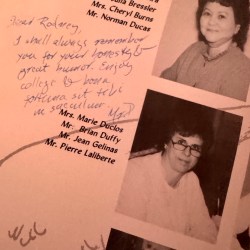
Recently, I found my old senior year book, and inside it he had written that he would always remember me for my honesty and my sense of humor. That line landed harder than it probably should have. He did not praise intelligence or achievement. He named qualities that suggested presence, risk, and a willingness to say what was true even when it was inconvenient.

Looking back now, I understand that what he really noticed was not an aptitude for Latin. He noticed a hunger for connection and a comfort with language as a living thing. He saw the possibility of a life built around words, meaning, and noticing, and he named it out loud. That naming mattered. There are moments when a teacher does not give you something new, but instead reflects something back to you that you had not yet trusted. Sometimes being seen is not about praise. Sometimes it is about recognition arriving early enough to change the shape of a life.

Thank you, Mr. Duffy.

January 2026
M T W T F S S
 1234
567891011
12131415161718
19202122232425
262728293031  

Fear and the Motherfucker – Day 22

Prompt – Your first day of school that you truly remember.

The first day of school that I truly remember was fourth grade, and the memory was all due to Mrs. Blue, my new teacher. I came into that year riding the high of third grade with Ms. Mullings, a teacher who made the classroom feel alive and safe at the same time. Learning had felt expansive. Mistakes were part of the process. Curiosity was welcomed. And I am sure she was a witch – both a real witch and a good witch. There were big shoes to fill, but Mrs. Blue arrived wearing none of them. She could not find the stride, the rhythm, or the balance required to lead a room full of children. What she brought instead was pain, grief, and an atmosphere so tight with fear that it pressed against my chest before the first recess of the year.

Her classroom had rules. Rules stacked on rules. Rules with no context and no grace. On the first morning, we were seated quickly and told to listen. This was not an invitation. It was a warning. She began listing expectations of the classroom as if reading a rap sheet of a lifetime criminal. Sit this way. Speak this way. Do not do this. Do not do that. The room grew smaller with every sentence.

Then she introduced the concept of “bad words.” Words we were never to say. She told us there would be zero tolerance for language that did not belong in her classroom. What counted as a bad word, however, was not left to interpretation. She turned to the board and began writing them out in chalk, one by one, with a precision that felt practiced. Fuck. Shit. Ass. Asshole. Bastard. Bitch. Damn. Piss. Dick. Cock. Motherfucker. Prick. Douchebag. Jackass. The list kept growing, long past the point of instruction and well into spectacle. Even sailors would have felt seen.

I sat there stunned. My house rarely swore. My father believed swearing disrespected the uniform, whatever the fuck that meant. Hearing those words written so boldly on a school chalkboard felt illicit and dangerous, like being handed contraband and told not to touch it.

When her imagination finally ran dry, she turned back to us and asked if anyone wanted to volunteer additional bad words she might have missed. She reminded us we were not supposed to say them, which meant no one moved. Fear had already done its work. Eventually, a few hands went up, tentative and shaking, offering words like they were confessions.

Then I raised my hand.

When she called on me, I volunteered “rat bastard.” Mrs. Blue wrote it on the board just as she had with the other words.

That was the first day of school I remember clearly.

Now, as an educator, I think back to what Ms. Blue taught me, even if she never meant to. She taught me how fear shuts down learning. She taught me how control masquerades as structure. She taught me that classrooms are laboratories, and what we model becomes the experiment. I did not learn fourth grade content that day. I learned how not to teach. And some lessons, once learned, never fucking leave.

January 2026
M T W T F S S
 1234
567891011
12131415161718
19202122232425
262728293031  

All the Ingredients, Yet No Meal – Day 21

Prompt – What dinner time taught you about belonging.

Dinner was never about the table in my house. We rarely gathered around a full place setting of dishes spread around the table. By the time my siblings were gone and I had reached my formative years, the chairs stayed pushed in and unused, as if they were props from a different version of life. The table was not for meals, conversations, homework, or family meetings in my house. The table, like the house itself, was quiet, and quiet was something my family wore well.

The kitchen, however, told a different story.

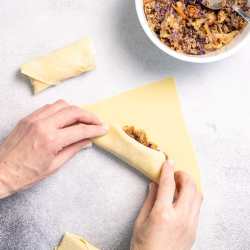
Cooking was where my mother spoke, at least with me. She talked while her hands worked, as if movement unlocked language that stillness could not. She told stories while we rolled egg rolls together, her fingers moving with confidence and memory. While her chili simmered, she explained things that were never addressed directly, lessons tucked into technique and timing. She talked while I grated potatoes for breakfast, the raw metallic sound of the grater filling the room with a steady, unforgiving rhythm. That sound still lives in my memory, carrying both comfort and sadness in equal measure.

Those moments were where belonging happened because those moments were where actual communication briefly lived. I heard history while standing at the counter. She talked about Papa, her father, owning a restaurant and a bakery, and about growing up inside that world of work, responsibility, and food. She talked about my siblings when they were younger, sharing stories from before I arrived, memories I inherited without ever living. I learned who they were through her voice and through the rhythm of her hands as she cooked from memory. I learned where I might fit by listening carefully to places where I had not been.

I was allowed and encouraged to help. I added ingredients. I stirred pots. I rolled wrappers. I watched closely. Participation was welcomed in pieces, but the whole recipe of family was never quite assembled. We could gather parts and play our roles, but the finished pie never made it to the table.

That became the pattern.

Belonging, for me, was never about sitting down together. It was about proximity and presence. It was about standing nearby, being useful without being central, and being present without being required. Love arrived in fragments, measured in shared tasks and quiet moments in the kitchen. I learned that connection did not always look like unity. Sometimes it looked like parallel movement within the same small space.

Dinner taught me that families can function without ceremony and that care can exist without coordination. It taught me how to listen while working, how to receive stories instead of affection, and how to recognize that some people only know how to give when their hands are busy.

Even now, kitchens feel safer than tables. I trust the hum of preparation more than the stillness of unspoken expectation. And maybe that is not a flaw, but a beginning. Maybe belonging does not always ask us to sit down and face one another. Sometimes it simply asks us to stay close enough to hear the stories while something nourishing is still being made.

January 2026
M T W T F S S
 1234
567891011
12131415161718
19202122232425
262728293031  

Calibrated Containment – Day 20

Prompt – When you noticed adults whispering.

No one whispered in my house!

There were never any hushed conversations behind closed doors. I never heard urgent murmurs trail off when I entered a room. Nothing was whispered because everything was already hidden. Whispering would have required language, and language was not how things worked in my first family. What spoke instead were bodies, looks, pauses, and absences. Meaning traveled without words and landed hard.

I noticed it early. My mother and father communicated with eyes, arms, and shoulders. A look across the room could shut everything down. A kick under the table reminded everyone who was in charge. A tightened body carried far more information than a sentence ever could. A chair angled slightly away or a hand resting too long on a table meant something was about to happen, or had already happened, and no one was going to name it.

A sudden quiet did not mean peace. It meant pressure was building. Laughter that arrived too fast meant something was being smoothed over. Silence that lingered too long meant something had gone wrong and everyone was pretending it had not. The air itself felt instructional and stale. It taught me when to enter a room, when to disappear, and when not to come back. It taught me how and when to swallow words whole and pretend they never existed.

No one whispered in my house. Instead, we all performed containment in my first family. Feelings were managed, not spoken. Tension was absorbed, not released. I did not learn this because I was gifted or intuitive. I learned it because my nervous system depended on it. Survival required constant adjustment. That was the whispering. Not in words, but calibration. Read the room…soften your presence…do not add weight…and for all that is holy and righteous, do not be the reason something breaks.

It followed me everywhere!

When adults do not whisper, but instead communicate through omission, children learn that truth is dangerous. They learn that naming something risks collapse. They learn that harmony is maintained by not noticing what everyone already feels. I learned that survival lived in reading the room instead of living in my body. I learned to trust posture more than language and absence more than invitation.

Now, I am learning to translate posture back into language. I am learning to replace looks with words and silence with clarity. I am learning that healthy adults do not require children to become interpreters of tension. I say what I feel. I invite others to do the same. I name discomfort before it hardens into something heavier. I stay present when it would be easier to disappear. I refuse to let absence speak for me anymore.

No one whispered in my house, but much was being said.

And still, here is what I know to be true. Language can be learned, even later than it should have been. Silence can be interrupted without everything falling apart. The body can be taught that it no longer has to listen for danger in every room. I am building a life where words arrive gently and honestly, where meaning does not hide, and where nothing has to be carried alone. That feels like hope, not loud or dramatic, but a whisper at least!

January 2026
M T W T F S S
 1234
567891011
12131415161718
19202122232425
262728293031  

Head, Shoulders, Arms, & Toes – Day 19

Prompt – What is something you inherited that is invisible.

Meeting new people is routine for me as an educator. Conferences, professional development sessions, even the pedagogy aisle of a bookstore invite brief conversations with strangers. If the talk lasts long enough, the question of where I am from eventually appears. My answer lands in an awkward nowhere. There is no single city or state to name. I follow it with military brat, and more often than not, the response is me too.

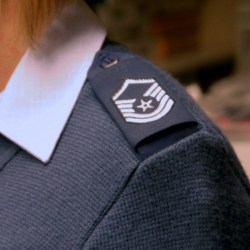
That is usually all it takes. From that short exchange, I can place them – NCO kid or officer kid. The distinction is not always visible, but it is all too familiar. For those that do not speak military, NCO stands for noncommissioned officer, while officers hold formal commissions granting authority to lead and command. In plain terms, NCOs resemble blue collar middle managers, while officers mirror executive leadership. The stereotypes of each military group carry over from the groups in civilian life all too well. I recognize the difference not because I am trying to sort people, but because I learned to read hierarchy long before I understood its cost.

As the conversation continues, my eyes drift where they always do. Look at the shoulders. Look at the arms. Look at the posture. I look for rank even when it is no longer stitched into fabric. Power announces itself quietly, through who stands at ease and who remains alert, through who speaks freely and who measures every word. Authority does not require a uniform. It lives in tone, in social standing, and in permission.

I carried that awareness out of childhood and into adulthood, from military structure to religious hierarchy to professional systems. Each one promised order. Each one insisted it was different. The symbols changed, but the sorting remained. Stripes became titles. Doctrine became policy. Obedience learned new language. What made each system dangerous was its invisibility. Power no longer lived on sleeves. It lived in access, approval, and exclusion.

I thought I was adapting. I thought I was growing. I did not realize I was just learning new ways to disappear to survive. By the time I saw it clearly, it had already shaped me. The reflex stayed. Even now, I scan for hierarchy, not because I want to participate in it, but because I know how quickly it hardens and who it leaves behind.

Throwing it off was not dramatic. It was an internal unlearning. A refusal to confuse structure with safety or authority with worth. I no longer measure myself by proximity to power. I measure myself by who I stand next to when belonging is being decided.

What I carry is invisible and indeed inherited from growing up in a military family, but it continues to show up whenever authority appears and decides who belongs and who does not. It keeps me honest. It keeps me watchful. It reminds me that seeing exclusion is already a kind of resistance. And now, I always make sure to stand with the other, if for no reason to make sure they do not feel alone – me as well!

January 2026
M T W T F S S
 1234
567891011
12131415161718
19202122232425
262728293031  

Asshole or Not – Day 18

Prompt – The first time you realized your parents were human.

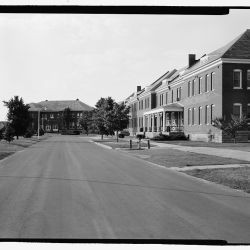
When I was twelve years old, I went with my father to his office in the evening, housed in the old hospital on the far side of Plattsburgh Air Force Base. The building had been retrofitted for administrative use, but it had not been emptied of its past. During World War II, wounded soldiers had been flown in from Europe and treated there, and whatever could not be healed had stayed behind. The hallways still held that weight, and the air carried its residue in ways that were difficult to ignore. I already knew some places remembered.

My father asked me to go along with him, so I grabbed my radio controlled car and ran it down the long corridor while he gathered paperwork. The fluorescent lights hummed overhead, steady and indifferent, and the sound of my car rolling along the floor occasionally drowned them out before fading again. By then, I had lived with my way of feeling space for four years. I had learned not to talk about it after Alaska taught me that honesty could make adults uncomfortable and cruel. I stayed quiet, observant, and turned inward, practicing a kind of silence about my gift that felt safer than any explanation of it.

I did not see ghosts. What I felt was closer to a shift in temperature and color, like the cool rush that slips through an open door on a hot day and changes the room without asking. It was the aftermath of pain rather than the pain itself. I could feel sorrow pressed into the walls and sense fear lingering where it had once been experienced. Adults liked to say I had an imagination or that I was overly sensitive, but none of those explanations accounted for how a place could hold what happened there long after the people were gone. At twelve, I already understood that some spaces spoke and that not everyone was taught how to listen.

That night, the building responded. Lights turned on after being switched off, sounds traveled from empty rooms, and doors settled without hands. My father stopped moving, and I watched him listen as his shoulders tightened, as if his body understood before his mind caught up. It was the first time I had ever seen fear arrive without permission.

Until then, he had existed as certainty, military strong and commanding, the final word in every room he entered. Standing in that hallway, surrounded by something neither of us could control, he was no longer shielded by rank or routine. His fear did not make him weak. It made him ordinary and placed him back among other people, subject to the same unease that finds everyone eventually.

I did not feel triumphant or vindicated as I witnessed my father’s fear. I grew quiet as something inside me recalibrated, subtle but permanent. That night, I understood that my father was not immune or protected by authority or belief, and that military strength did not mean exemption from being afraid or human. Watching him stand there, facing something he could not explain and something I had already learned to live with, showed me who he was. In that recognition, I understood myself, and something I had trusted and known about him loosened. Asshole or not, he was human.

January 2026
M T W T F S S
 1234
567891011
12131415161718
19202122232425
262728293031  

Piercing the Silence – Day 17

Prompt – A time that the role you played in your family cracked or stopped fitting.

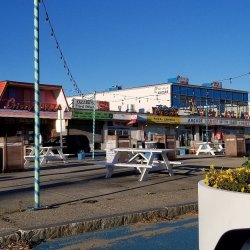
I never found Salisbury Beach to be subtle. It did not whisper. It announced itself with salt hanging heavy in the air, fried dough grease clinging to clothes, and the low mechanical groan of rides that had already lived several lifetimes past their prime. The boardwalk felt stitched together from weathered planks, cigarette butts, suntan lotion, and memory, each step resting on layers of use and neglect that no one bothered to hide.

The boardwalk was loud in a way that felt earned, and I understood that kind of noise, as I lived close to Massachusetts, rough and entirely unapologetic. Arcade bells rang like slot machines, triggered by quarters warmed in palms that had already lost far too many and still kept feeding the machines anyway. Everything about Salisbury felt temporary and permanent at the same time. Rust showed through peeling paint. The ancient ocean breathed steadily just beyond the chaos, indifferent to the noise, the prizes, and the bravado. And still, the boardwalk pulsed with life, a narrow strip of wood holding together sound, sugar, salt, and the stubborn insistence that summer might last just a little longer.

I watched teenagers strut in loose packs, performing indifference while carefully cataloging everything around them. Eyes slid past one another on purpose, yet nothing escaped notice: tank tops, cutoffs, and hair stiff with salt and AquaNet. Every glance carried calculation, and every laugh landed a little too loud, revealing confused confidence. Everyone was playing a role and trying on identities that only summer allowed. Some aimed for tough, others for untouchable, desired, dangerous, or simply older than they were. The boardwalk served as the stage, the crowd became the mirror, and becoming someone new felt possible as long as the lights stayed on and the night refused to end.

I went to Salisbury Beach in Buckie’s 1982 brown Ford LTD that smelled like vinyl, heat, and his mother’s lipstick stained Virginia Slims butts still sitting in the ashtray. I wanted to get my ear pierced on the boardwalk. I wanted proof that I could change something about myself, even if it was small and permanent at the same time. I knew my father would flip out. I carried that knowledge with me the whole ride, heavy but no longer enough to stop me. I was sixteen and exhausted from being quiet and observant. I was tired of shrinking. Tired of watching life happen from the edges. That hole made by the needle was not about jewelry. It was about choosing to be heard, choosing to be seen, and deciding that silence was no longer the safest version of who I could be.

When I got home, my father did exactly what I expected. He unloaded every fear he carried about himself into me as certainty. I would never find a job. I was unworthy. I was a failure, just like my brother. The words came fast and sharp. But something had shifted. The role I had played my whole life no longer fit the moment. Observation failed me. Silence offered no protection. Keeping the story suddenly felt like complicity.

So I spoke. Not carefully. Not strategically. I told him to go fuck himself.

That was the crack. The moment the observer stopped being useful. The moment the storyteller stepped into the story and risked becoming the problem instead of the witness. I did not become safer that night. I became louder. And once I crossed that line, there was no returning to the quiet child who believed that watching was enough.

January 2026
M T W T F S S
 1234
567891011
12131415161718
19202122232425
262728293031