Prompt – Where you sat, and what that said about you.
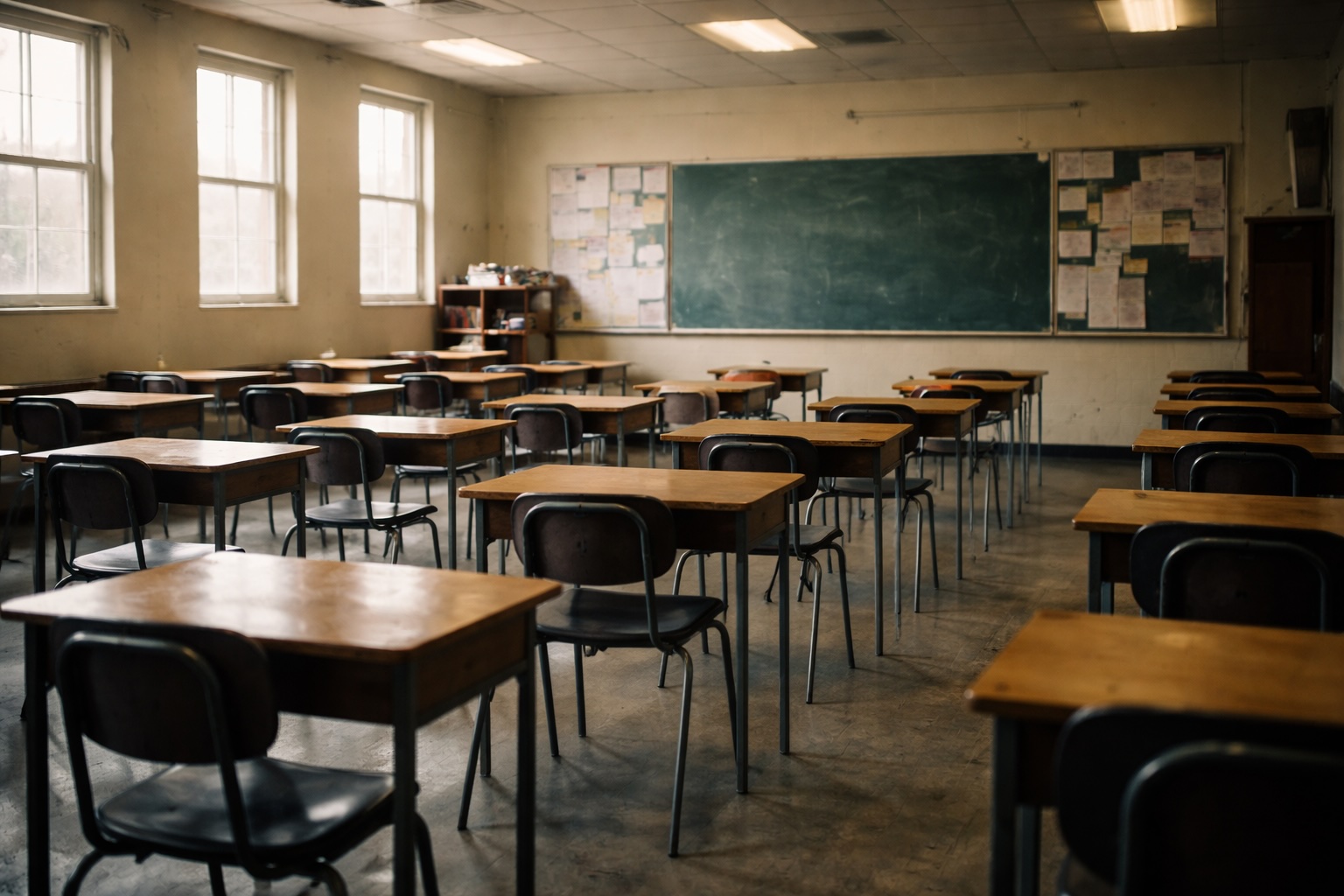
School desks were small. I was never small after the third grade. So, I sat wherever I thought I would be seen the least, both because my body had to be crammed into a tiny desk and because I wanted, metaphorically, to be small. It was not always the back. Sometimes teachers watched the those seats more closely than other seats, and the front row was never safe. The middle was impossible. The rule was simple. Find the fringe. That choice said everything about me in school.
Classrooms were maps of exposure. Desks were not neutral furniture. They were declarations. The front row signaled confidence or compliance. The back row suggested resistance or disappearance. Corners belonged to those who understood angles and sightlines, who learned early that bodies are measured long before words are heard.
I was fat. I do not mean that as confession or insult. I mean it as fact, the kind that preceded me into rooms and sat down before I did. Fatness was not something I carried. It was something assigned meaning by others. The room knew this before it knew my name.
So I chose seats strategically. I sat behind taller kids, near the wall, and close to exits. I learned how to fold myself inward, shoulders forward and spine curved just enough to suggest apology. I sat where teachers would scan past me while taking roll. I did not want to be called on, not because I did not know the answer, but because answers came with eyes, and eyes came with judgment.
The seating chart never asked why I sat where I did, but it enforced the order with precision. That structure was almost a relief because the cafeteria was different. Seating there required social currency. Tables formed tribes with unspoken rules. Athletes claimed space with backpacks and elbows. Beautiful people took up room without consequence. I sat where there was an empty chair that no one would miss if I disappeared, often with the other island-of-misfit-toy kids. Sometimes I chose solitude on purpose, but even that came with risk. You did not want to be that kid for too long.
Assemblies were worse. Bleachers turned bodies into sound. There was no hiding when the seat itself complained. Metal creaked and plastic bent. I learned to sit carefully, distributing weight and moving slowly, as if gentleness could erase mass. I learned to arrive early so no one would watch me navigate the row.
Teachers often said things like, sit anywhere or choose your own seat, as if freedom were evenly distributed. It was not.
Where I sat became where I learned to observe. From the edges, patterns reveal themselves. You notice who gets interrupted and who gets forgiven. You hear shifts in tone. You learn that authority prefers neat rows and quiet bodies, and that some children are allowed to sprawl into themselves while others must shrink to earn tolerance.
I became good at being small, not physically but socially. I learned to take up intellectual space while minimizing bodily presence. I learned to be useful, funny, compliant, insightful, anything that might justify the space my body occupied. Somewhere along the way, that strategy stopped being situational and started feeling like identity.
Years later, I still notice where I sit in meetings, restaurants, and waiting rooms. I still scan for sightlines and exits. I still choose chairs that feel forgiving. Healing has not erased this instinct. It has taught me to name it, to see the trade I was making. Safety over visibility. Shame over power. Survival over learning.
But hell, at least I was paying attention!
 Muddled Soma